Our long #youngstar programming nightmare is over. About two years ago, Michael and I noticed that the aforementioned Apple Music playlist had veered from its Japanese roots and presented differently to international users. The English picks were mediocre, and not edgy or innovative in line with the playlist’s stated purpose. And then it fell into a memory hole and wasn’t updated for months. Well, the localization experiment is over! I’m now seeing the Japanese version here in the Singapore ‘store’. Good on you, Apple Music editors.
Category: Links
Link posts, mostly old and imported from my other sites over the years (e.g. Tumblr)
-
Chris Brandrick of the Switch Weekly newsletter provides more reasons for gamers to leave Twitter for Bluesky on his gaming site, Overkill. Check it out for lists and accounts to follow. https://overkill.wtf/gaming-on-bluesky-social-network
-
Link: Blue Giant interview
I mentioned Blue Giant in last week’s post, and coincidentally just came across this new interview with its director. I wonder why it’s getting attention, a new home media release maybe?
-
Week 26.23
There was a massive thunderstorm Wednesday morning, and we woke up to water leaking across our living room floor, dangerously close to some power sockets, which would have totally ruined the not-on-fire vibe I’m going for in this apartment. It seemed that some fault on the rooftop was letting water into an unused cable housing that runs through the entire building. Once upon a time, this “pipe” used to carry terrestrial TV signals from the antenna above, and it’s definitely not supposed to have water in it.
The storm continued all morning, and I was mopping up water and wringing towels every 10 minutes while trying to be on work calls and contacting the authorities and arranging for our own contractor to do something about it. Although the town council sent someone down within a few hours, he turned out to be not so useful, firstly by not understanding the size of the problem (it was already sunny and dry by then), and then by trying to tell me there wasn’t really a problem on the roof. There was no other possible ingress point for the water.
Because the next day was a public holiday, I was pretty anxious to get it resolved ASAP as staying up 24/7 to be a squeegee operator was not acceptable. By the end of the day, thanks to some prompt private sector assistance — albeit at my own cost — I had the issue resolved (and I was right about the source).
The leak added unnecessary stress to an already difficult week, exacerbated by the tough transition back to work after my holiday. As if on cue, I came across this piece in the New Yorker on “The Case Against Travel” which I won’t try to summarize. It ends with a sobering observation that holidays are a salve for the grind of working life, and that first-world people just live looking forward to the next trip and the next, each time believing in some life-changing outcome of travel that never actually materializes. This reliance is something I never believed applied to me before, because I’m quite alright not traveling for long stretches — dear god, I just want more time left to my own devices — yet, startlingly, the absence of any further planned trips and the abyss now facing me feels… depressing?
It’s definitely about being tired. I also read this article (a book plug) about the “cost of traditional masculinity”, mainly centered on the role of providing, which powers economic growth but maybe not happiness. What would the world look like if every socially enforced achievement target was replaced with an appreciation for “enough”? Human progress would be hindered, I can hear you say, but the human-driven damage would be too, and that seems worth it.
I took a couch break one afternoon and read this other article in the New Yorker about quack surgery for a certain masculine insecurity, which was very, very disturbing. It’s about as graphic a piece of writing as I can ever recall reading. I am still trying to forget some details! Ah, modern life is closing one’s eyes to tragedy.
===
Other bits:
- We went out for dinner Friday at a Sri Lankan restaurant called Kotuwa in Little India. I don’t remember half of what I ate, but it was very enjoyable. Since Peishan and James were there to enforce vegetable eating, I was able to try the cashew curry — literally a little bowl of boiled cashews in a sweet gravy, which worked.
- We finished Silo on Apple TV+ and enjoyed the season overall. I’m told the books are light and not very good, so it seems this was an adaptation that took a good central idea and nailed the execution. I’m pretty sure a second season will be coming.
- I chanced upon an Apple Music page of DJ mixes made to celebrate two Tokyo clubs that closed last year, and I’ve been enjoying a few of them. I don’t think I’ve been inside a club in years, but I remember the feeling of often being disappointed in the music and thinking, “I’m gonna get home and listen to XYZ instead”. But I think I would have loved hearing some of these mixes irl.
- I started using Vibes, the latest app in the (Not Boring) series by Andy Works. These functional apps (calculator, weather, etc.) borrow video game aesthetics and interactions to offer an appealing alternative to Apple’s flat design, and they’re winning — they won an Apple Design Award last year, and the standard Weather.app has grown increasingly rich and playful of late. Anyway, Vibes generates a real-time videogamey soundtrack for your life, based on your sleep and movement patterns, helping you to rest and focus throughout the day. I usually use Brain.fm or lo-fi music for this, but Vibes is simple: just hit Play and it’ll do what it thinks you need.
- After watching some Bob Ross on Twitch one night, I fooled around on the iPad and drew a landscape in ProCreate. It’s nothing great, but then I tossed it into Midjourney and said ‘do this like Bob Ross’ and oh my lord. It makes me both want to improve and to never draw again — like, what’s the point?


-
LifeWear Music
If you’re lazing about/working/reading in front of a TV and want some music with visuals, Uniqlo’s series of LifeWear Music compilations is pretty good! I’m now watching the one set in a cafe and they’ve left mics on so you get little hints of conversation and movement in the mix.
-
Olympus falls, and Sigma adds L-Mount options
A couple of developments in the photography world caught my eye this week.
Olympus is apparently giving up on their camera business and looking to sell it off, which is not entirely unexpected, but still staggering news. Perhaps it’ll find new owners willing to make their products authentically, or at least have their IP absorbed into another Japanese camera maker’s portfolio. The worst outcome would be for it to go to a licensing outfit that will churn out unrelated nostalgia merchandise or even more mediocre cameras than they’ve put out themselves lately. I can’t help but fear Ricoh-Pentax will be next.
Update: It seems one Japan Industrial Partners will buy Olympus over, like they did Sony’s VAIO business at one point, and “continue to offer high-quality, highly reliable products; and also continue to provide supports to the imaging solution products that have been distributed by Olympus.”
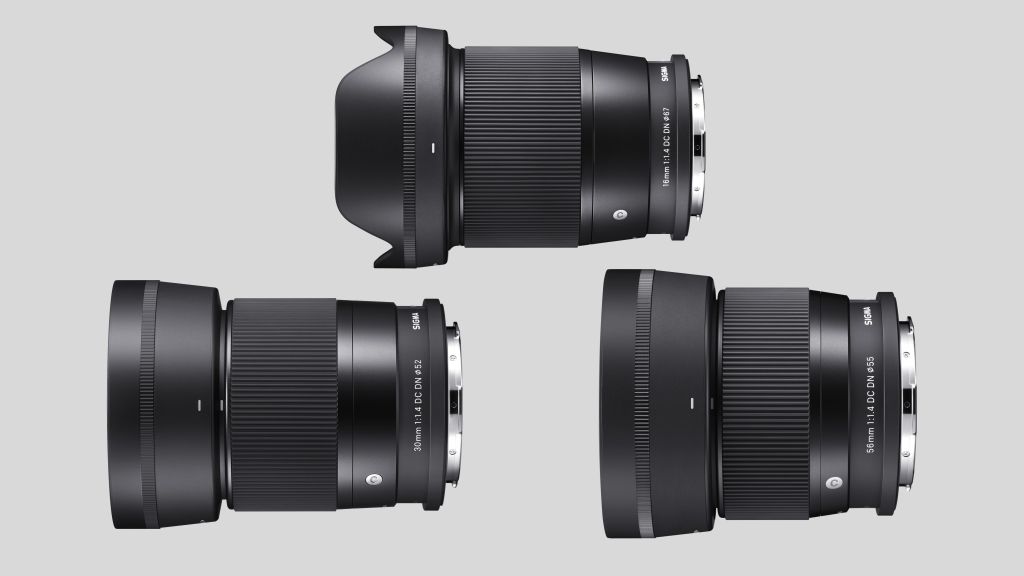
Sigma is adding an L-mount to three existing APS-C lenses, giving users of Leica’s CL/TL series cameras three pretty easy purchase decisions to make. These are fast prime lenses (f1.4) equivalent to 24mm, 45mm, and 84mm lengths. They’re compact, significantly lighter than their German counterparts, plus support autofocus and in-body IBIS (which no Leica APS-C camera even has yet). As the Macfilos blog notes, you can buy all three lenses for less than the price of a single 23mm f2 Summicron. I’ve been wanting the 35mm f1.4 Summilux for awhile but haven’t been able to square the bulk with the price. This Sigma model looks close enough to be a no-brainer.
-
➟ Dean Kamen’s Prosthetic Arm, Luke, Cleared by the FDA

Mind-controlled prosthetic arm from Segway inventor gets FDA approval
By Dante D’Orazio, theverge.comThe Food and Drug Administration (FDA) has granted its approval to one of the projects that came from that effort: a mind-controlled prosthetic limb called the DEKA Arm. A number of other scientists and engineers around the world are working on similar devices, but this is the first such prosthetic to get FDA approval. The prosthetic device comes from a company founded by Segway inventor Dean Kamen, and it is roughly the size and weight of an adult arm.
Four decades after television audiences were treated to a bionic man and woman, we finally have the technology to replace lost arms with something more human and natural than the crude poles many have to use today. In the opening credits to a movie where soldiers spend days instead of years recovering from injuries, and society comes to terms with its members turning part machine, and an internet of limbs becomes a ripe battlefield for cyberwarfare, this development begins the spinning newspaper montage.
-
➟ “Open” Makeup as a Disruption of the Beauty Industry
 The Woman Who Figured Out How To 3-D Print Makeup Explains How It Works
Jillian D’Onfro Tech May. 10, 2014, 2:31 AM, businessinsider.sgChoi has created a prototype for a printer called “Mink” that will let users choose any color imaginable and then print out makeup in that exact same hue (at this point, she’s only done demonstrations with blush). By allowing people to skip the expensive department store prices to make the perfectly colored products themselves, Mink could completely revolutionize the makeup industry.
She’s being deceptively conservative when she says this product would be targeted at teenaged girls; it has far larger implications for the beauty industry.
If every shade and the chemically simple products that allow people to sport them are fully open and commoditized, and large brands have few qualities to offer beyond “packaging”, and the customer knows it, what will happen? Will advertising continue to be able to sustain them by selling a lifestyle, or will the images of beauty grow wider in scope and fragment as new tastemakers emerge from online communities, e.g. YouTube stars? Sure they exist now, but the collapse of beauty brands as a chief influence for consumers would create a vacuum for new ideas to take hold.
What happens in societies where billions of advertising dollars currently spent by a few large entities, to push narrowly defined images of beauty, just evaporates?
 sangsara.net