Category: Photos

Posts with photo galleries or an emphasis on photography

  • Week 34.24

    Week 34.24

    It seems like there’s always something wrong, and I feel like it’s one problem after another these days. The same night as my near-death experience (previously on…), I came home to find that our bedroom’s air-conditioning had died instead. It would put out only semi-cool air, then just regular air, in a cycle that lasted all night. The next day, I dragged a standing fan into the room to make things a little more livable. A few nights later, when Kim returned from Australia, we started to sleep in the living room where the air-conditioning still works.

    What followed was a series of visits by different servicemen, each finding something legitimately “wrong” but none ultimately solving the problem. There was the simple fact that the unit was clogged and dirty — despite another company just having “cleaned” it two months ago. They did a regular wash (S$66), but had to return on Wednesday for a deep chemical overhaul (S$150), and a washing of the outdoor compressors ($50). When that didn’t solve it, it was discovered that the outdoor compressor was flashing an error message, and the entire power PCB (printed circuit board) needed replacement ($711.50). FWIW it’s a Mitsubishi Starmex system; future buyers beware.

    One week later, and the problem still hasn’t been addressed, and we’re still sleeping in the living room.

    I need to mention how this has lived in my head as a much bigger problem than it objectively is. After getting home from the hospital, I just wanted to lie in bed and have everything be absolutely NORMAL. To have no outstanding problems in the world — just being in a state of calm to mentally recover. But immediately, something was wrong in the home, a psychological intrusion in my metaphorical safest space. This has just made me an anxious freak all week, feeling low and spiraling into worst-case scenarios. Like, what if they find there’s a problem with the piping in the walls and need to hack them out in our bedroom? What if this is going to cost even more money than what’s already been spent? I do believe this is all likely in the coming week.

    Another source of anxiety is the actual repair visits themselves: not only is there cleaning up to do after (which I couldn’t really with a foot injury), but our compressor units are installed outside the bedroom window, over a fragile “roof” that probably can’t take a person’s full weight. To work on them, a technician has to climb out (one even did it without safety gear) and stand precariously on a tiny parapet, dangerously close to either tumbling into our living room or down several storeys. At work, seeing all the things that can go wrong is my superpower, but it’s not a useful one to have right now.

    On the bright side, my foot is much better already, and I’m able to walk normally enough to go out for short periods. I expect I’ll be back to normal in another week. Whenever the feelings of doom reach a critical point, I remember that I’m actually alive and uninjured, and a lack of air-conditioning rarely (but not never) kills anyone, and then I get a spiritual HP reset. I just need to think like that all the time and take it easy.

    ===

    Once I was able to hobble well enough, we went to see Trap (2024), which lived up to my expectations of a fun little outing. As of right now, Shyamalan’s second wind as a maker of tight little B-films based on killer elevator pitches is looking pretty sustainable, and I’m hoping for many more. Next, I’m gonna finish watching the final season of Servant, his series on Apple TV+.

    We also had time for a quick lunch with Uma of Goggler Malaysia, a media criticism outlet after my own heart that I encourage checking out even if you, like me, have nothing to do with Malaysia on a regular basis. They do a fun podcast and publish spot-on film and television reviews. We talked about his new Apple Vision Pro and I outed myself as someone who’s never seen any of the Godfather films. But I’ve taken the first step: buying the entire trilogy on the US iTunes Store at the current sale price of US$9.99. I’m planning to watch it in the AVP’s Cinema environment someday soon.

    Finally, we visited the Olafur Eliasson exhibition at the Singapore Art Museum (Tanjong Pagar Distripark) with Cien, Peishan, and James. I say finally because this visit has been postponed three times on account of our various illnesses and accidents. Unfortunately I was not moved by anything, and it felt like a series of science experiments crammed into a small soulless space that lends no gravitas or beauty to an artist’s work.

    I remember the original SAM fondly, and hope the museum will move back into its former space off Orchard Road although that’s looking more unlikely. The news can sugarcoat it all they like, but calling a remote concrete slab beside a container port ’eminently suited for contemporary arts purposes’ is a stretch. I’d love to see the so-called ‘positive feedback from visitors’ they’re receiving. Art doesn’t belong out somewhere you need shuttle buses for people to encounter it. The museum’s rightful place is wherever ordinary people are already going.

  • Week 31.24

    Week 31.24

    It’s been about three months since I embarked on a break from full-time employment, but my subconscious seems determined to remind me of what I left behind. I’ve had about a half-dozen dreams about work: either I’m being called back to help fix something “for just a few days” and finding I can’t leave, or I’m being given some “urgent” problem that is really a big overreaction — I must stress none of them were actually based on real situations or people, which is the weirdest part. Each time, I wake up and realize it’s not just that the problems aren’t real, but I haven’t got ANY problems like them at all, and it makes the whole thing worth it despite opportunity costs.

    With Kim’s leg injury improving, my focus shifted from caregiver to caretaker of my own neglected digital life. The first task was reviewing my digital security practices: passwords were reset, new tools deployed, and unlikely edge cases considered and guarded against. Take this as your reminder to please sort this stuff out for yourself! You must get a password manager. Use 2FA and unique passwords for every website, no exceptions. Protect yourself with a Recovery Key for your iCloud account, and add some trusted people as Account Recovery contacts and Legacy Contacts so you/they can access your data in the event of a hack or your demise.

    Next: email migration! Whoo!

    Four years ago, I switched from Gmail to Hey.com, a $99/yr email service that offered an opinionated user experience which meant leaving behind nearly two decades of history for a fresh start. They don’t support you bringing your email archives along. They don’t even let you use your own choice of email app; their web app and hybrid apps are all you get. I wrote two posts about it back then, saying I would probably not continue with my free trial. But I ended up doing it anyway, and for the most part I’ve really enjoyed trying a new approach to such an ancient, core component of online life.

    For one thing, I never got spam in my inbox. Hey unfortunately lets a lot of spam through, but they land in a separate zone called “The Screener”, along with any mail from an unknown address mailing you for the first time. From here, you can either let them in or block them. It’s a small difference, reviewing a bunch of possible spam on a separate page versus seeing them mixed in with all your legit mail, but feels huge because your inbox becomes a serene, protected space. Admittedly, taking care of “The Screener” has become daily work because spam always gets in.

    From what I’ve seen of Gmail in the past four years whenever I log in for a peek, it’s a post-spam apocalyptic wasteland. It looks like Google has just given up on detecting and filtering spam because some data-driven PM decided it won’t hurt their bottom line.

    Since my current Hey subscription ends in September, I looked into whether it might be time to switch again. Three key reasons: Apple Intelligence, performance, and $99/yr is money I don’t need to spend on email right now.

    Apple Intelligence: I’ve never liked the Apple Mail app on iOS. It felt a little underdeveloped for handling the different needs of modern email — without the tagging and search filters of Gmail, or the segregation of personal mail, newsletters, and receipts that Hey.com built their UX around.

    But the new AI-powered Mail app in iOS 18 looks exactly like what I want, and I’ve decided to embrace the power of defaults. I’m bearish on some aspects of generative AI, but this stuff is where it shines. Because Apple Intelligence will be able to understand what emails are about, it can summarize and prioritize messages while sorting them into categories like “Updates” and “Invoices”, so you can tackle them with different mental modes. I’m hoping that AI will also bring spam filtering that really works. Sadly, because Hey.com intentionally won’t support IMAP and SMTP, I can’t use them with Apple’s new app and have no choice but to leave. The Hey manifesto also contains strong wording that suggests they won’t be adding any AI features soon.

    Hey.com’s performance: It was never blazing fast to use their apps because they’re hybrids with seemingly little caching, and it annoyed me to death every time I ‘backed out’ of a link to find that the whole thread of newsletters I was reading had refreshed and I was back at the top again, but lately things have gotten even worse. About a year ago, the Basecamp/Hey founders went on a crusade against cloud hosting services and decided that they could self-host their services and save millions. I have to assume their infrastructure is extremely Western world or US-centric, because speeds have become terrible for me here in Singapore. I’m talking about noticeably slow performance waiting for EMAILS TO LOAD. I got even more confirmation of this when I tried downloading my 1.6GB .mbox archive to move elsewhere: it was capped at 100kb/s and took me over five hours. I can normally download a file of that size in maybe a minute?

    Ninety Nine United States Dollars A Year: Yeah, I can’t justify paying this much to have my email load slowly AND miss out on exciting AI features. I’m already paying for iCloud+ with tons of storage, so it seems logical to just use iCloud Mail as well. Bless Hey though, they let you keep your @hey.com email address for life even if you leave, so I’ll continue using mine and forward everything to my Apple address.

    A note about concentration risk: I’m aware there are risks in letting one company handle your entire digital life. All it takes is one successful hack locking you out of your iCloud account and it’s game over. For that reason, I would recommend NOT using the new Apple Passwords app coming in iOS 18 if you know how to select and use a third-party one. It’s a great default for people who wouldn’t use a password manager otherwise, but if you can have another basket for that egg, do it. Email is particularly important to keep separate, as most of your account passwords can be reset in the event of a hack if you still control your email address.

    But like I said about the Vision Pro and its integration with Apple Services like Arcade and TV+, I’m finding myself getting even deeper into their ecosystem and liking it fine. Where I once subscribed to differentiated, prosumer-serving alternatives to Apple’s ‘good enough’ apps, these days I prefer their simplicity and constraints.

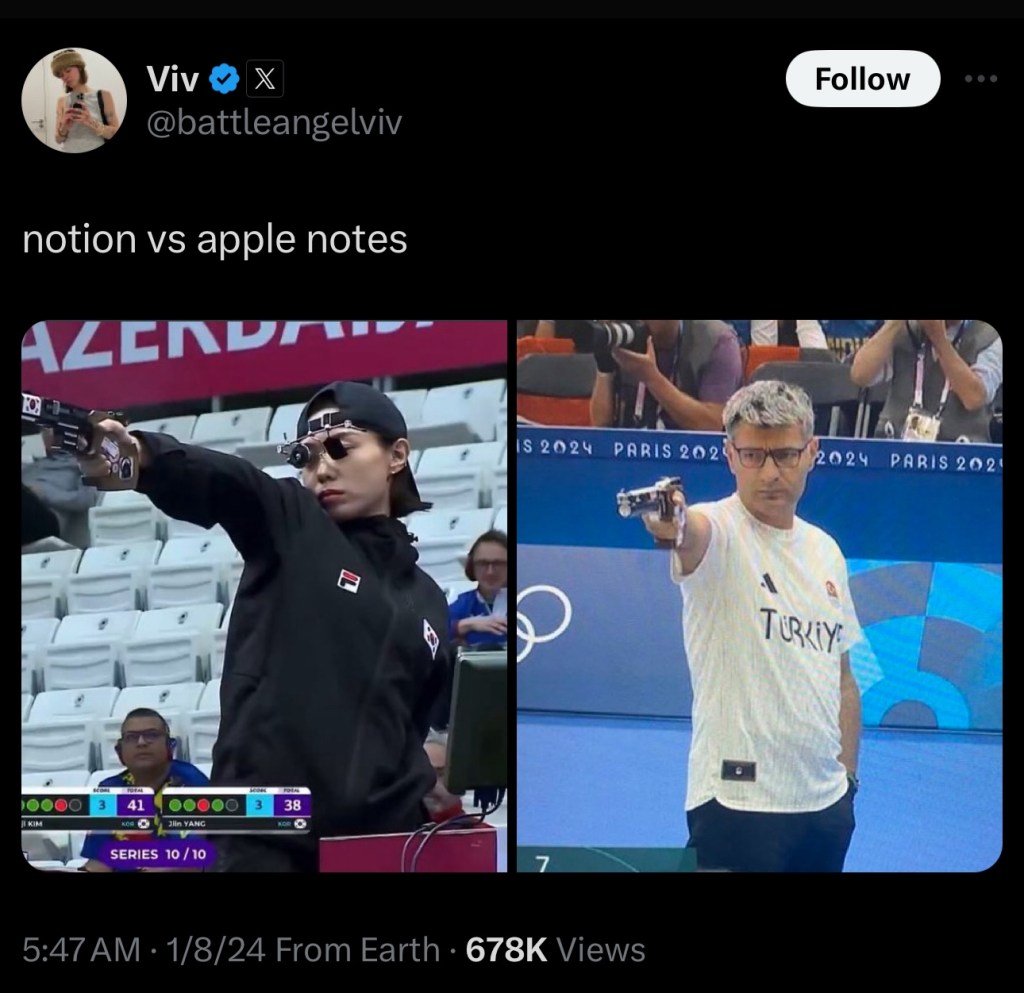
    I switched from Evernote to Apple Notes several years ago and haven’t looked back. Side note: I’ve been on an anti-Notion campaign ever since I saw an unsuccessful rollout in my last team; it’s another overpowered tool for fiddly people who like to overcomplicate their tasks. I’ve used iCloud Calendar since leaving Gmail. I’ve even ported a lot of ancient files from Google Drive and Dropbox to iCloud Drive. And now email, arguably the most crucial service of all.

    “Hang on, Apple Intelligence in the Mail app isn’t out yet and might not be until the end of the year! How will you live until then?”

    Thanks, little imaginary reader, I’m glad you asked! I’m using Spark Mail in the meantime, which I’ve dabbled with in the past using my Gmail account. It’s a mail client with a bunch of smart, AI features (for a price) that are pretty close to what Apple promises. For one, a smart inbox that works quite well at sorting your different mail types, and a feature called “Gatekeeper” that works just like Hey’s “The Screener”. Their asking price is less than Hey’s, but more than Apple’s (free, if you already pay for iCloud+).

    Just a couple of days into using Spark with iCloud Mail, and two things stand out: One, it’s so nice to use a native email app, and two, I’m actually reading my newsletters again. In Hey, newsletters are collected on a a separate, infinite-scroll page called “The Feed” which suffers from an ‘out of sight, out of mind’ problem. In Spark, received newsletters sit inside the main inbox, just collapsed into a single line. This seems to make a difference. It’s a visible nudge to check them out, and because they load and react instantly, you can actively triage them and unsubscribe/block/delete if you find yourself asking why you ever signed up for one. Where Hey’s endless stream of newsletters can get overwhelming, Spark’s (and I assume Apple’s) approach is more like a physical magazine or newspaper with a finite amount of content, which most people prefer.

    I should have taken my own advice in 2020 — it turns out Spark’s approach was always the better fit for me. I even made visual aids to explain it!

    This diagram above is how HEY is laid out, if you think of each column as a screen. In the Imbox and Paper Trail, each email is a single line item, while they are larger previews in The Feed, which is designed to give a peek into newsletters so you can decide if you want to expand and read them. This doesn’t work for me because I don’t want to keep all of Graniph’s new product announcements, but I do want to see them.

    And this is an illustration of how I’d prefer to handle my email. A single inbox view encompassing important emails and personal letters, newsletters, and updates/receipts/notifications from other services. Spark … is the closest thing I’ve found to this.

    All in, it’s been a week of fiddling with things that seemed to work just fine, but hopefully I’ve simplified and improved them for the future and not introduced more things to maintain.

    ===

    Media Activity

    • Before I could move off Hey Email, I had to finish my backlog of favorite newsletters. One of them was Craig Mod’s “Return to Pachinko Road” series from earlier this year. Over 18 days, he walked 694,942 steps and wrote close to 50,000 words in daily email updates. I read them while waiting those five hours for my mail archives to download. He’s such a good writer, and I can’t recommend enough that you sign up for his newsletters and/or membership if you can spare the money (regretfully, I can’t right now as a member of the unemployed class).
    • MUBI’s collection of films by Abbas Kiarostami is leaving the service over the next couple of weeks, so I prioritized watching them, starting with the Palme d’Or-winning Taste of Cherry (1997). God, I was not prepared for it on a Monday afternoon and fell to pieces during the old man’s monologue in the final third. Fortunately, I watched it on the TV because I don’t think Vision Pros have an IP rating. 5 stars.
    • Next was Through the Olive Trees (1994) which was very charming — the Iranian actors’ performances are fantastic, and perfectly naturalistic in keeping with the cinematography. I initially score this a 4, but it’s now a 4.5-star film for me.
    • The Wind Will Carry Us (1999) shares some landscapes and in-car camera angles with Taste of Cherry, but where the latter is heavy with life’s troubles, this one centers hope and rebellion against the narratives we find ourselves in. One could even read it as an anti-work parable: forced on a business trip of indefinite length, neglecting his family’s pleas to return home for a funeral, summoned to give gravely inconvenient (hur hur) updates to his boss at all hours, a workaholic asshole learns to relax, enjoy the local milk, and finally give his assignment the finger. 4.5 stars.
    • Fresh off Presumed Innocent, we were looking for another legal thriller to watch and discovered neither of us had seen The Firm (1993) starring Tom Cruise. Welp, it turns out there are no courtroom scenes in the film at all, and he’s a tax lawyer. Still, a very enjoyable 3.5 stars.
    • The Paris Olympics are on, and despite not caring much for sports I’ve found myself unable to resist watching competition on a global scale. Mostly tennis, but also archery, shooting, diving, gymnastics, and some athletics.

  • Week 30.24

    Week 30.24

    An enduring memory/scar I have from my university days is watching a documentary on the UK’s Channel 4 called Fat Girls and Feeders. It was about women who were extremely overweight (the term ‘morbidly obese’ may not be strong enough), to the point of being completely dependent on others for everything, and the (non-fat) men who liked and kept them that way. These women were immobile prisoners, either confined to bed or needing support to get around their homes, which were fitted with handlebars and accessibility fixtures everywhere. It was a saddening story of abuse and sadism in the guise of a consensual kink.

    But why am I mentioning this? Well, the week got off to an awful start with Kim slipping at home and pulling/spraining/tearing a leg muscle, badly enough that she couldn’t put any weight on it without wincing. So she’s spent the last six days lying in bed resting and icing it, and I’ve been the nursemaid and caregiver helping her to the bathroom, making dinner, fetching water, just being on call for whatever. And having gone through this, let me just say! Those feeder guys are really sick if they find this fun!

    Thankfully, the swelling has gone down and the pain is moderating. She can now get up and walk around slowly on her own, but sitting in certain positions still hurts. It’ll probably be a few more weeks before life gets back to normal, but this was an eye-opening preview of elderly life and if we don’t make it rich enough to afford the best AI robocare, then I hope I die before I get old.

    ===

    • 📺 We’ve been watching Netflix’s new Japanese reality series, The Boyfriend. I’d hoped it would be a spiritual successor to my beloved Terrace House, only with gay men, but it doesn’t quite capture the essence of what made TH great. Perhaps because of what happened with TH, the commentary panel here never goes too hard on the ‘contestants’, but more than that, I think it’s just a different sort of show. Terrace House was more about watching young people learning to live together and develop over a longer period, whereas The Boyfriend is overtly about “finding love” and takes place over just a few weeks.
    • 📺 We also resumed and finished Season 8 of Below Deck after a break of several months. My usual complaints about Captain Lee’s leadership apply: he’s not hands-on at all, communication is poor, and his boundaries/consequences aren’t clear and can’t be taken seriously. However, because this season took place in Feb–Mar 2020, just as Covid was brewing, seeing the crew get increasingly ominous updates from family abroad and ultimately being shut down two charters early makes for an interesting document of a very strange time.
    • 📺 The season finale of Apple TV+’s true crime/courtroom drama Presumed Innocent came out on Wednesday, and I think they stuck the landing. It’s one of the better shows on the service, and has apparently been renewed for a second season, which I assume will feature a completely new story and setting, in the manner of True Detective.
    • 📺 I’ve started on Season 1 of The Big Door Prize, also on Apple TV+, and think it’s rather good. It’s about a small town that receives a mysterious machine that tells you what your potential is, and soon everyone is reevaluating their lives and having crises. But it’s also a comedy with surprising emotional depth.
    • 🎬 I watched the seminal short film La Jetée (1962) on MUBI and immediately thought, ‘Oh this is quite like 12 Monkeys’, and unfortunately saw its twist ending coming. I wrote “√12 Monkeys” on Letterboxd, thinking I was very clever. Then I looked it up and hey, 12 Monkeys was explicitly inspired by La Jetée, so that makes sense. Despite that, it’s a must-watch because the form of it (a slideshow of black and white stills with a voiceover) is ingenious and works so well to create a slippery narrative vehicle: is this all a document? A memory? An oral story passed around in a broken future? —4 stars.
    • 🎬 I also watched The Bat Woman (1968), a truly terrible B-movie, only because it was due to leave MUBI. It reminded me of some schlocky sci-fi Singaporean films from the 60s that I’ve seen at film festivals; the acting is either hammy or wooden, the special effects are often just literal toys, and the story is a nonsensical farce. A rich lady solves crimes as Batwoman, which is also her Lucha wrestling persona (I suppose to sidestep any copyright claims), and helps the police catch a mad scientist who is trying to breed a fishman monster. It ends with a sexist joke: Batwoman, in her civilian clothes celebrating victory with two male partners, screams and hides upon seeing a mouse while the men laugh. —1.5 stars.
    • 🦻 Very little music was played this week, but I enjoyed a run-through of Jesse Malin’s first album, The Fine Art of Self Destruction, in preparation for Silver Patron Saints, the tribute album due out in September to raise awareness and funds for his recovery. It will feature covers by Bruce Springsteen, Willie Nelson, Bleachers, Counting Crows, Dinosaur Jr., Lucinda Williams and Elvis Costello, The Wallflowers, Spoon, and many more.
    • Oh I nearly forgot! XG released Something Ain’t Right, the first single from their second mini-album (out 8 Nov) and it’s another banger!
  • Week 29.24

    Week 29.24

    I managed to go a whole week without visiting the Apple Store.

    We did visit a new branch of Go! KBBQ at Bukit Timah Plaza; the original on Amoy Street is perpetually busy and comes recommended by the Korean community (so I’m told), and even has its own aging room in the back with a viewing window. The new one lacks the aging room but IS in an aging suburban mall, which increases your chances of getting a table. We overestimated as usual, and ordered a 690g set of pork belly, neck, and jowl. They do the cooking for you — there are illustrated STOP! signs telling you not to even attempt it yourself — and everything was perfect.

    ===

    I was saddened by the passing of another senior relative, aged 86, apparently from heart failure. The shock was compounded by the fact that I had just seen him a few weeks ago for the first time in years, at another uncle’s memorial, and he looked in great health. I remember him for hosting some of the more enjoyable Chinese New Year get-togethers of my childhood, where I learnt to play blackjack at the dinner table together with adults, spinning the lazy Susan around to draw cards off the pile, sweeping the pot (ashtray) of coins into my arms after winning a big hand, then experiencing the pain of losing everything — great preparation for the Terra Luna collapse decades later.

    Due to a contagious illness at my parents’ place, I attended the wake alone and discovered a massive 9-storey building in Woodlands with multi-faith halls and columbarium facilities. The majority of these that I’ve attended have been at Singapore Casket in the Lavender district, a much humbler affair. Woodlands Memorial feels modern, which is to say efficient, cookie-cutter, and almost soulless. That joke is nowhere as distasteful as the marketing position I found on one of their posters: “Singapore’s premier one-stop afterlife venue”.

    ===

    I spent almost all of Monday installing Windows XP on my iPad and MacBook using the newly approved UTM SE app from the App Store. The goal was to play an old Windows game that I have fond memories of: High Seas Solitaire. It’s really not much to look at, and the entire package weighs in at under 800kb. Published by ZapSpot, the game was part of a series of ad-supported titles that make Flappy Bird look like a big-budget production.

    But in the early 2000s, I was stuck in a dreary clerical job that involved juggling Microsoft Excel and Access, stacks of official papers, and a cabinet full of file binders. High Seas Solitaire was on my Win95-powered computer, and it might as well have contained an entire 3D metaverse. When I found the above gameplay video on YouTube, I was shocked at how much detail my nostalgic brain had invented: I remembered a calming nautical world with ocean sounds, a creaking wooden ship, and seagulls flying overhead. In reality, the game has like four SFX clips that it plays at various times and that’s it.

    I’ve forgotten the exact rules, but it wasn’t your standard solitaire game. You had to match cards that added up to 14, but pairs could also be matched, I think? It was just very satisfying to complete, and easy enough to do that a few times during each lunch break. I haven’t found any game based on the same mechanics since, but I dream about it.

    Alas, while I managed to get Windows up and running, the game itself would not run. This led me to install VMware and try other online emulators, repeatedly install Windows, and even create CD-ROM images containing the game file for the virtual machines to mount. But each time, the game wouldn’t get past the loading screen. Finally, I asked Ci’en if she would try running it on her PC, and when even that didn’t work, I threw the whole project out of the window. Small comfort: perhaps even if I had succeeded, the CrowdStrike BSoD debacle this week might have wiped out my VM.

    When I’m rich, I’ll bankroll the creation of a new, truly immersive version for visionOS.

    ===

    I watched two video essays from the Digging The Greats YouTube channel which usually focuses on music history and song breakdowns, but these were about an “experiment” where the host tries to only listen to music off an iPod for a month. He deletes streaming apps on his phone, commits to use aux cables for in-car listening, and eventually goes down a rabbit hole where he also quits social media and starts using a dedicated digital camera and prints photos in lieu of Instagram (why? It’s not as if he was using Instagram to take the photos).

    This sort of modern tech consequence confluence happens over and over throughout the videos. He says this experiment changed his life and his whole outlook on music, especially regarding the influence of algorithms. Because he has an iPod with finite storage and no internet connection, he has to make choices about what music to buy and load onto it; he can’t just rely on an omnifarious cloud library. Thus he makes it into a whole personality: he introduces the idea into his everyday conversations and asks musicians and DJs he meets for music recommendations. He thinks ahead about what music he’s going to listen to. And music takes up even more space in his mind (if that were even possible).

    None of these benefits actually required an iPod! He could have conducted the same experiment on his iPhone with some self-discipline, e.g. only listening to music downloaded offline, which can only be done at home near a laptop. But the iPod is a physical object that makes limitations tangible and the experiment is a construct that reminds you of a goal — these sorts of things are great for creativity and focus. It’s the intentionality and “mode setting” of what he’s doing that’s producing the results. And this is something we can and should all practice from time to time.

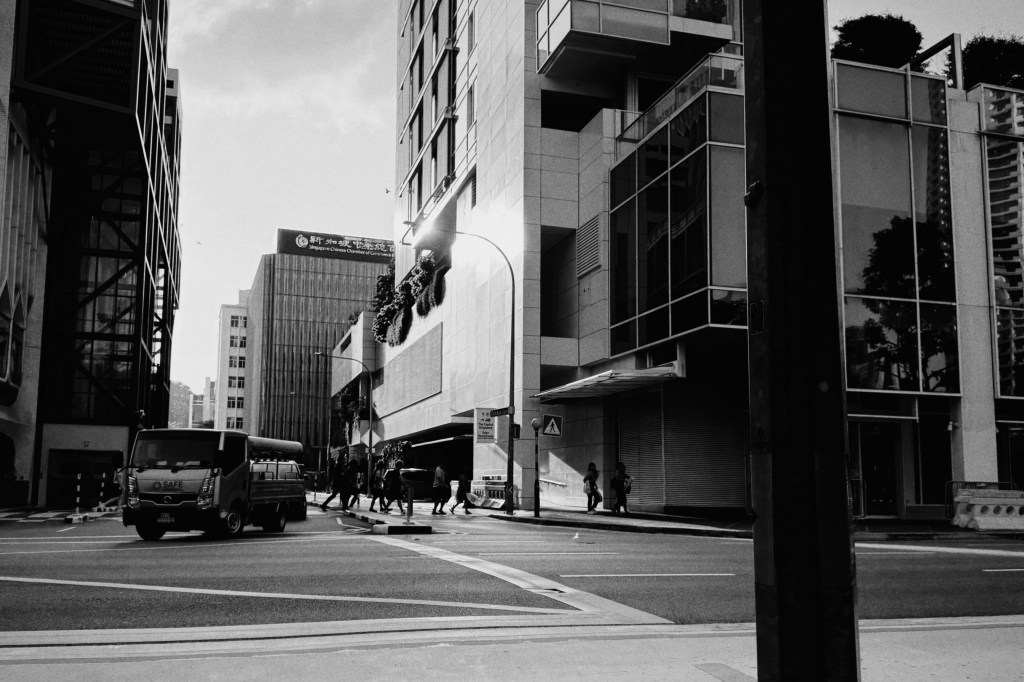
    A few years back, I committed to taking only black-and-white photos for an entire month. I can now identify that period very easily when scrolling through my photo library. It was an exciting, liberating, and frustrating exercise all at once that forced more conscious decisions and felt like I was working with new gear (sans the expense). When you keep a mission like that at the front of your mind, you look out for interesting photos everywhere, which is why so many people take their favorite photos on holiday.

    The same applies to writing (“I will blog every week”), music (“I will write an entire album in one key”), or anything that gives you joy (“Let’s do an Arnie movie marathon this weekend”).

    ===

    Media activity

    • 💿 Apropos of the above: I listened to that new Travis album during a long cab ride and it was okay but didn’t make a huge impression. I considered deleting it, but then thought, “if I’d bought this on CD years ago, I’d listen to it at least a few more times, and the songs would probably stick in my head and years later I might even be thrilled to hear one of them come on somewhere in public”. That’s how my relationships with many of my favorite albums began anyway. This endless queue of options and dopamine-driven consumption pattern is not good for culture.
    • 🎮 Ghostopia Season 1 continues to be an intriguing journey on the Nintendo Switch. It reminds me a little of Doki Doki Literature Club, not in content but in manner: layers of subversion and unexpected metaphorical depth under cuteness and comedy. I will be sad when it’s over (soon).
    • 🎬 The following were all watched on MUBI.
    • Saw a Tsai Ming Jiang short, The Night (2021), which is nothing more than a series of still camera takes of nocturnal Hong Kong street scenes. The bright, digital-looking aesthetic resists the traditional romantic notion of Hong Kong as a neon-soaked, tattered metropolis. It’s dirty, yet cold and empty. Perhaps that was the point, but it did nothing for me. 1 star.
    • Saw One More Time with Feeling (2016), the first of the two Nick Cave films by Andrew Dominik. The inconsistent use of black-and-white footage upsets me. I probably should have watched this before This Much I Know to be True, but coming off that one I’m feeling that Dominik has a limited approach to getting things out of Cave, and when you hear him in the background asking questions, he can barely articulate them, sometimes letting his fumbling interrupt Cave’s train of thought, and that to me is an awful shame. He and the film crew also seem to greatly irritate Cave, which sadly continues in the sequel. They’re also transparently making a film, not a documentary, directing naturalistic actions to be repeated so they can be shot on the 3D camera. 3.5 stars.
    • Saw 24 City (2008), another pseudo-documentary, this time about the closure of a long-running factory in China. As you may have heard, the scale of these operations makes them cities in themselves, with the children of workers attending school within their walls and identifying more as ‘of the factory’ than the communities around them. There are interviews with real people recounting their lifelong experiences at the factory, including some devastatingly emotional stories, interspersed with actors being interviewed as characters for reasons unexplained. This dilutes the effect and makes it hard to stay invested as you never know when you’re being ‘lied to’. One scene has the legendary Joan Chen playing a factory worker who grew up with the nickname “Little Flower” because of her resemblance to a character in a film played by Joan Chen. I mean, that’s some genius casting but also too much. 3 stars.
    • 🛣️ I also rewatched David Lynch’s Lost Highway (1997) and ended up writing a longer review, below:

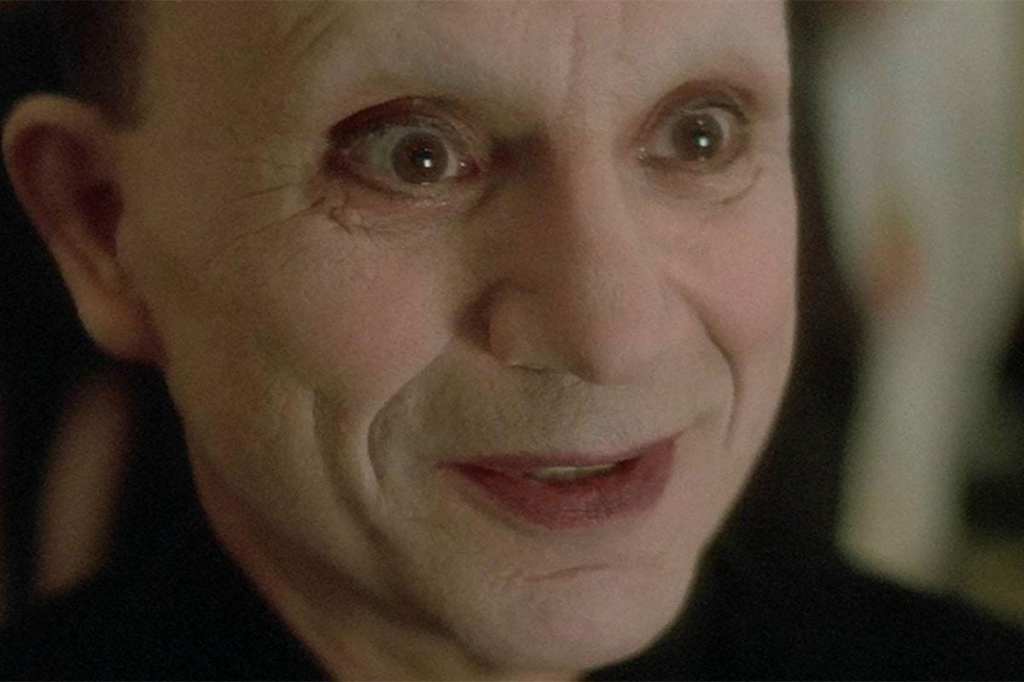
    This film made a huge impression on me as a teenager, the early scene with the Mystery Man’s wide-eyed mask of a face staring spookily at Bill Pullman like Ryuk the ‘shinigami’ in Death Note — so grotesque and caked in unearthly tones that I remember it as employing special effects, but no, it was just Robert Blake’s face — talking to him from both sides of a phone call, surreal and inexplicable just like much of this entire film, it scarred me deep.

    It seemed like a shockwave of audacity to have a main character morph into another person completely without any satisfying followup, just rolling into a new story completely. I remembered that, but mostly forgot the ending where the two halves converge. Making sense wasn’t the point anyway, it was a vibe. It’s jazz cinema.

    I don’t think I had much early exposure to challenging art and I was making up for it through a phase into which Lost Highway fit perfectly, like William Burrough’s cut-up texts and visual poems like the Qatsi series: peering into randomness for meaningful patterns, meditating on nonsense to glimpse truth. Maybe even more than the film itself, I was really into the soundtrack, which featured David Bowie right in the middle of his Outside/Earthling era (which is where I started with him), the Nine Inch Nails, Rammstein, The Smashing Pumpkins. Teenager catnip. Was it also the first time I heard Antonio Carlos Jobim? Maybe!

    Rewatching it now over two decades later, I expected to understand things at a deeper level, but maybe I’m just a boring old guy now or got stupider because all I can focus on is how ugly or sloppy things are from a craft perspective: Pullman’s tacky LA apartment with odd furniture, the awkward fight scene between Pete and Andy that ends with a forehead embedded in a glass table, the VHS look. Sure, I have theories about what it’s all about but come on, who casts Gary Busey as a caring dad? It’s all corny af. The cinematic vocabulary hasn’t aged well and the once-cool cyclical timeline where the end is the beginning is the end isn’t mind-blowing anymore, just lame. Marilyn Manson’s inclusion in a snuff porn excerpt isn’t edgy, it’s enabling a sex offender. The Mystery Man has lost all menace and looks pathetic in his white makeup; I bet I could take him. Yeah I’m boring now. 3 stars.

  • Week 26.24

    Week 26.24

    The week seemed to slip by with not too much to show for it until Friday, as I waited for the delivery of my Apple Vision Pro. I watched a couple of films, subscribed to the New York Times again, and made some plans for a personal creative project.

    In the meantime, I also made some memes for Instagram.

    I also resumed wearing contact lenses daily after years of relying on glasses, because I didn’t want the Zeiss lens inserts for Vison Pro. It will take a little adjustment; I definitely don’t miss the end-of-day dryness and irritation.

    Okay, so!

    The unboxing experience for this high-end device is suitably premium, despite being made from predominantly recyclable paper materials. You lift the cover — it releases with the usual deliberate, satisfying motion — and there it is, positioned as if on display in a museum, supported by a molded rest. All the accessories are neatly organized in a compartment underneath. There is an indulgent amount of unused space in this box; no squashing of the Vision Pro into egg carton cutouts like with some Sony products!

    Side note: I think I may have gotten measured for the wrong size of light seal (21W) as the sides feel narrower and less comfortable than 33W for me. I have an appointment at the Apple Store next week to hopefully get it swapped.

    First encounters

    I’ve already mentioned the magical and immersive experience of using it. Knowing that, it was still a shock when I ran the pre-installed Encounter Dinosaurs app (directed by Jon Favreau) for the first time.

    Some U.S. reviewers reported actually feeling the virtual butterfly land on their outstretched fingers at the start of the experience, to which I thought, “no way”. And yet when it happened to me, I swear I felt four distinct little pricks on my skin as its little legs shifted. That unfortunately primed me to feel what happened next even more acutely. The dinosaurs appeared on screen, with a fluidity and resolution that was greater than I expected, making the PS5 look like “video games”. I don’t think it’s an overstatement to say they were lifelike.

    You are warned at the start that the animals can “see you” and will react to your actions. As the largest dinosaur stepped out of its frame and stalked towards me, towered over my seated body, then stared me in the face while exhaling through its nostrils, I felt my body go into a fight-or-flight mode. No joke. I started to sweat. I avoided making eye contact, and turned my head away hoping it would back off. The presence you feel is unbelievably tangible, and I know I will NOT be attempting any horror games in the future.

    Art of the future

    A much calmer experience I can recommend is Museas, which is a completely free journey through art history made by a single person (Miguel Garcia Gonzalez, who calls himself “a supply chain professional by day and spatial computing engineer by night”). You can see landmark artworks at phenomenal scale right in your home, or in “immersive environments”. These suddenly float your body in massive virtual spaces, surrounded by complementary imagery, with the original artwork in front of you. Think of them as frames, just 360º ones. For example, when viewing Hokusai’s The Great Wave Off Kanagawa, you see a florid Japanese garden scene all around, while a narrator explains the artwork.

    I suspect they’ve used generative AI to create these descriptions of the artworks’ history and meaning, the voice that reads them (it sounds to me like the actor Jared Harris, who plays Hari Seldon in Foundation), as well as the 360º immersive scenes. If so, the technology has clearly allowed a single person to achieve something that feels professional beyond their means. The voice is natural and doesn’t feel off to me at all. The immersive environments aren’t perfect, but they’re for your peripheral vision — you’re meant to focus on the original art. The wall text is accurate as far as I can tell. Was this labor that could have paid the salaries of a few more people? In theory, but it’s more likely this project wouldn’t have gotten made at all without AI.

    When I think about you I shush myself

    Apart from these new experiences that weren’t possible before, I think the primary application of the Vision Pro for me will be a personal cinema hall. I sat down with the Theater app to watch Adam Lisagor’s 3D recording of John Gruber interviewing Apple executives Joz, Craig, and J.G. at WWDC (regular 2D recording here), and for nearly two hours I was immersed and focused in its virtual space, surrounded by faintly illuminated empty seats and aisles. I felt notifications come in on my wrist, my phone was across the room, and I ignored all of it the same way I would watching a film in a real theater.

    I think the Vision Pro is the antidote to the iPhone that some thought the Apple Watch would be. Turns out the answer to destroyed attention spans, multi-screening, and screen addiction wasn’t to make it easier to leave your phone in your pocket by redirecting things to a watch, it was the skeuomorphic recreation of a giant screen in a dark room. I think this is the ideal way to watch Important Films. And as nice as our new TV is, I don’t think it compares in visceral terms. Tradeoff: focus and immersion vs. comfort and the ability to drink beverages.


    Media activity

    • Finished watching Constellations starring Noomi Rapace on Apple TV+. Mild spoiler: I complained on Threads about the way it handled a plot device thusly: “Sci-fi shows where science-literate people find themselves trapped in parallel universes, and literally don’t know the words “parallel universe” to explain to other people what’s happening, please gtfo”
    • Season 3 of The Bear is out this weekend and like most people (I did a poll on Instagram), we’re getting through it. That first episode? Wow, really special television.
    • Saw Aloners (2021), a film that tackles modern nowhere lives built around go-nowhere jobs, where even if you meet people worth connecting with, your social muscles may already have atrophied too far. Starts strong but doesn’t land the character development at the end for me. Also: is this a chaotic opposite world version of Perfect Days? I said on Letterboxd: “Say less” is the unofficial motto of Korean arthouse cinema. 3/5 stars.
    • Saw Zero Fucks Given (2021). It follows a young woman escaping grief and complexity by going headfirst into the soul-sucking worker bee life of a budget airline attendant, taking each day as it comes, never looking a day ahead as much as she can help it. Lovely work, and Adele Exarchopoulos is a talent. 3.5 stars.
    • Saw Uncle Boonmee Who Can Recall His Oast Lives (2010) through MUBI’s visionOS app, and I chose to watch it on the dark side of the moon. It was incredible to look up and see stars, look around and see a desolate rocky surface, and then at a giant floating screen ahead of me. The movie was also strange, unreal, and disorienting like being on the moon — it won a Palme d’Or when it came out, cynically I think because a Thai film like this was exotique. I enjoyed its atmosphere and ideas a lot, just not the stilted acting. 3.5 stars.
    • I don’t know where else to mention that I fulfilled a personal goal by minting a McDonalds Singapore NFT after Jose alerted me (with two hours to spare) that they were releasing a new Chicken McNuggets series. Their first release last year was of Grimace, and holders enjoy a stream of special perks. Interestingly, they are ‘soulbound’ NFTs, meaning they cannot be sold or transferred from the initial wallet that received them. Don’t ask me why McDonald’s Singapore is doing this (I doubt they do either), but I want it and I got it.
    • I’ve been long Camila Cabello since 2019 when I called her “possibly the most competent pop star and the new Rihanna”, but I have to admit I was nervous about her new album C,XOXO after recent racism accusations and piggybacking on Charli XCX’s party girl image and Brat aesthetic on social media. Thankfully, I’m on my third listen and it’s an enjoyable record apart from Drake appearing on two tracks (putting on his Jamaican accent, for chrissakes). She’s a big Drake defender, but even if she wanted to cut him after recent events, the album is only 32 minutes long and wouldn’t have survived it.
  • Week 23.24: Chilling with Sony’s Reon Pocket 5, New Camera Apps, and a Playlist

    Week 23.24: Chilling with Sony’s Reon Pocket 5, New Camera Apps, and a Playlist

    Sony Reon Pocket 5

    I discovered the existence of a cool new device this week when a Sony catalog wound up in my trad-mail inbox. After some online research, I visited the nearest Sony store for a demo of the Reon Pocket 5 device and ended up buying one for S$249. Okay, what is a “Reon Pocket” and why is this the fifth version? The four previous iterations were only sold in Japan, but the tech is now mature enough that Sony is launching it in the UK, Hong Kong, Singapore, and Thailand this year.

    It’s best described as a wearable gadget for helping you feel more comfortable by fooling suggesting to your body that the temperature is more bearable than it thinks. It does that by cooling or heating a small metal plate pressed against your skin (in this case, at the base of your neck), which contrasts with the environment and changes your perception of it. Surprisingly, it works with just a difference of a few degrees.

    I first learnt about this effect a decade ago from a Wired article about an MIT prototype and have been eagerly awaiting a commercial product ever since. I had no idea until after buying the Sony version that the researchers mentioned in that article have actually shipped their own wrist-worn product called the Embr Wave. It resembles a smartwatch and is more discreet than the bulkier Reon Pocket 5 which sticks out from beneath your shirt collar like some kind of life support system. However, since I already wear an Apple Watch, I don’t know if I’d wear an Embr Wave too.

    In some ways, I seriously see this device as a “life support” technology. I think I’ve struggled with heat regulation all my life — always feeling warmer and sweatier than everyone else; most days you can hold your hand over my head and feel the heat radiating off it. I read that our bodies’ core temperature doesn’t actually change much (when it does, that’s hypothermia or heatstroke), so how comfortable we feel is all down to skin temperature, which this sort of thing hacks.

    After a couple days of testing, I’ve found the Reon Pocket 5 doesn’t perform miracles but offers a different sort of relief than a handheld fan (though one could use both). But it’s like constantly holding a cool can of soda against your neck in hot weather, which is welcome! It’s a glass of ice water for someone in hell. Even when the temperature isn’t that high but it’s stuffy and humid, this takes the edge off. If you’re the sort who’s always feeling cold in Singapore’s air-conditioned spaces, it also heats up and offers the opposite effect.

    There’s a lot I could say about the app, and how it’s another example of Sony’s generally poor UX design, but once you figure out what settings you like, you can lock them in and operate the device without it. It also comes with a separate “tag” that you can attach elsewhere on your body, which monitors the external temperature and humidity so the device can automatically switch modes, but I haven’t bothered to take it out of the box at all. All they needed to do was put a button on the thing to switch between hot and cold, just like the Embr Wave does.

    Building a separate piece of hardware instead… reminds me of how Sony headphones try to “intelligently” adjust noise cancellation levels by guessing whether you’re commuting, or working, or lazing about, by using GPS location and accelerometer data from the smartphone app — an absolutely mental and roundabout solution to replace the user pressing a button. Incidentally, Apple’s Adaptive Audio mode on AirPods Pro is a much better take: they dynamically adjust the balance between noise canceling and transparency based on environmental noise, letting you be aware but not annoyed.

    The battery, if you’re wondering, should last an entire day out. At Level 1 cooling power it’s rated at 17 hours; at Level 3, 10 hours; and at Level 5, 4 hours. Operating on Smart Cool mode, it switches between them as necessary. There’s also a “wave” feature that I recommend turning on, which follows the same core principle as Embr’s device where cooling power fluctuates so you don’t become desensitized to it. If you need even longer performance, you can plug it into a power bank and it will work on direct power without charging. Imagine using it at the same time as Apple Vision Pro, with two power banks in your back pockets. That’s living in the future, baby.

    In conclusion, wearing the Reon Pocket 5 around your neck makes you look dorky or hooked up to some medical device, but when it’s over 30ºC in the shade, who gives a damn?!

    ===

    New camera apps

    I’ve been using two new camera apps: Kino, from Lux Optics who also make the Halide app, and Leica LUX (no relation).

    Kino is a logical move. Halide was a “pro” app focused on bringing intuitive manual controls for still photography. Kino does the same for video. Unlike Halide, it’s a one-time purchase ($20 USD) and a big part of its functionality is the ability to apply different looks (color grading via LUTs). I’ve always wished Halide would do something similar, to help lazy shooters get the most out of RAW captures. I hardly shoot any video but I thought Kino was worth buying, especially since I’ve let my Halide subscription lapse for lack of use.

    One of the best things Kino does is allow the system to shoot in Apple LOG but write the files in HEVC format instead of ProRes, which saves a lot of space but still conveys some of the benefits. You can also shoot in LOG, apply a color grade preset in real time, and save the baked file in HEVC. That’s awesome.

    Leica LUX is not so logical and I’ve been puzzling over why a company with their luxury brand equity would take a risk like this. On the page linked above, they’re saying the app “lets you capture the iconic Leica Look with your iPhone” using their “deep color science” and digital simulations of “legendary lenses”, like the Noctilux-M 50mm f/1.2 ($7,895 USD), and claiming it “reproduces” its “signature aesthetic bokeh”.

    I present two exhibits. The first (below) is what you see when selecting the “Leica Standard” profile: a statement that it handles color the same way as their cameras that cost upwards of $6,000 USD do, using your iPhone’s sensor. Whether it’s true or not is beside the point; Leica is saying you can enter their world with a free app and the phone you already own. To my eyes, it’s not far off from the iPhone’s default color handling, and looks like some gentle H/S/L shifts. The other Leica Looks are a mixed bag: I like the Leica Natural one, but some others are heavy and feel like “filters”. I’d hoped these would be more like Fuji’s in-camera film simulations, which are more like “color profiles”.

    The secret sauce is leaking out!

    The second shows how their implementation of a depth effect is inferior to Apple’s own Portrait Mode, with rough edge artifacts, despite the hyperbolic claims of giving your iPhone the “unique aesthetic of Leica’s legendary M-lenses” with their “distinctive look and beautiful bokeh”. If it did, that dark shot of my Misery Men mug would look like it came from a 28mm Summilux f/1.4 lens, and I can assure you it does not. Moreover, their digital depth effect only adds background blur, not foreground blur, which makes for a less realistic result that Apple’s own Portrait Mode which your iPhone already does for free.

    One nice feature is the photo library viewer they’ve built into it, which lets you switch between seeing All photos and Leica photos only, including ones taken with your Leica cameras. And photos taken with this app sit alongside them as equals! In the field where the camera model is specified, it simply shows “Leica LUX”.

    What are they getting out of this brand dilution? Well, the app is subscription-based and asks for S$99.98/yr to unlock more Leica Looks and lenses. They claim new ones will be added monthly. I think perhaps anyone who owns or intends to own a physical Leica camera will not bother with this, and it’s a move to grab all the aspirational customers who want to touch the brand — including a bit of overlap with the market they tried to target with their Huawei and Xiaomi smartphone collaborations. The question is whether this will do any significant reputational damage, and so far all the comments I’ve seen on Leica blogs and communities have been negative. Could they stand to make more on app subscriptions than they’d lose from upset camera buyers? Maybe! Is that capitalization model the right way to run a company? Maybe not?

    I’m still optimistic because I’m not emotionally or financially invested enough in the brand to care how they destroy themselves, and will wait to see if they update the app to improve edge detection and add some better Leica Looks. If it ever gets good enough to be my primary iPhone camera app, a hundred bucks a year is steep but not out of the question.


    Before: iPhone defaults. After: Custom Photographic Style

    Meanwhile, I’ve found the following settings get me calmer and more natural photos out of the default iPhone camera app. First, go to Settings > Camera and make sure you turn on “Exposure Adjustment” under the “Preserve Settings” section. Then in the camera app, set exposure to -0.3ev, and using one of the Photographic Styles as a base, change its values to -20 Tone and +5 Warmth. Note: If you have a 14 Pro, the only way you’re getting less crispy shots is to use an app like Zerocam or Halide and disabling smart processing.

    ===

    Media activity

    • Started playing Spider-Man: Miles Morales on the PS5. It feels just like the first game I played on the PS4 years ago and I can’t say I’m getting next-gen from this, but it’s good fun.
    • Finally got Balatro on the Switch, the highly acclaimed indie poker roguelike game. It reminds me so much of Solitairica, the indie solitaire roguelike game on iOS. That’s a good thing. It’s the kind of game you can play for a few minutes, or hours on end.
    • Started watching season 2 of Link Click, a Chinese-made “anime” series with a cool ‘catch a serial killer through time’ kinda story. I saw season 1 a couple of years ago and was impressed by how well executed it was.
    • Saw Still of the Night (1982), starring a young Meryl Streep and Roy Scheider. It’s a Hitchcock-inspired psychological thriller with Fatal Attraction vibes. 3/5
    • Saw The Ministry of Ungentlemanly Warfare, a Guy Ritchie WWII joint that feels like if Inglourious Basterds was a Jason Statham vehicle. Except he’s not in this, Henry Cavill is, as well as Alan Ritchson (of Reacher fame) who plays a gay Dane (Swede?) who loves killing Nazis almost a little too much. Quite a bit of fun. 3/5
    • Saw The Fall Guy, a movie I’ve been anticipating for a long time on the strength of its trailer and what little I’d assumed about its story. I didn’t know it was based on an old TV show. But it was a messy, empty disappointment of a blockbuster that even Ryan Gosling and Emily Blunt couldn’t save. 2/5
    • Saw Carnival of Souls (1962), a cult classic surrealist quasi-horror film on Kanopy, a video streaming service that’s free if you connect your library account. It’s got Ed Wood B-movie vibes and special effects, a lot of rough edges, but still manages to be a compelling work that I’ll probably remember for a long time. 3.5/5
    • Saw To Have and Have Not (1944) in which Lauren Bacall plays a character who is stated as being 22 years old, to which I thought “she’s gotta be a lot older than that”. I looked it up and she was probably 19 💀. So that’s proof that people really used to look older, and you’d be forgiven for assuming it was the copious smoking (on display in this film). It’s a weird one, almost a musical showcase for Hoagy Carmichael who shows up as the hotel bar’s piano man. Doesn’t quite have that Casablanca magic yet. 3/5
    • Saw Dream Scenario in which Nicolas Cage convincingly plays a loser who suddenly becomes famous due to an unexplained phenomenon (he starts appearing in people’s dreams). Towards the end, it pivots from uneasy mystery to comical cultural commentary. That’s not a complaint though. 3/5

    A playlist for you

    As reward for making it this far, here’s the next installment in my Blixtape playlist series, covering music I listened to from January to May this year. Hope you find something to like.

    Add BLixTape #4 on Apple Music

    The tracklist:

  • Week 18.24

    Week 18.24

    Last week marked the 200th installment of a blogging rhythm I wasn’t sure I could keep up for a year, let alone nearly four. I thank any readers I have, the makers of iA Writer, WordPress, and of course, my wife for graciously giving me space on Sunday mornings to engage in this act of reflection and blabbering.

    Except I’m not writing this on Sunday, no it’s currently Thursday and I’m getting a head start with some structure because we’ll be in Hong Kong for the weekend. It was a last-minute idea, driven by a primal craving for Chinese roast goose, a desire to escape the summer heatwave currently roasting all of SE Asia, and the realization that we won’t have a pocket of clear calendar space like this again for several months.

    I haven’t been back in the territory since May 2019, and so much has obviously happened since. Did you know that this very site was once blocked by the great Chinese firewall? I have no idea why, but I hope I don’t find myself unwelcome upon arrival. Anecdotally, I’ve heard the city doesn’t quite feel the same these days, and we’ve seen the numerous ChannelNewsAsia documentary features about people looking for fresh starts, emigrating to the UK and so on. But as an infrequent visitor with only superficial interactions to speak of, I don’t expect to sense any changes at all.

    What’s changed is that while I used to be excited about Hong Kong’s lack of sales tax and abundance of electronics and camera emporiums, not to mention official Apple Stores, those things are less interesting these days. I’ve got nothing on my shopping list (plus I’m in low-cost mode — see previous entries), I’m content with snapping photos on my iPhone and Ricoh GR III, and Singapore has so many Apple Stores these days I’ve started taking them for granted.

    (CW: some camera nerdery ahead)

    I am looking forward to photographing the city a little with Dmitri Novikov’s new camera app, Zerocam (in beta). The concept is an extremely simplified camera with one button; there’s not even a way to quickly look at the last photo you took. When you hit the shutter, a RAW image is captured with as little of the iPhone’s intelligent processing as possible, plus some specific settings that Novikov prefers (-0.5ev and some very light touch color grading, as far as I can tell), and then saved directly to a HEIF file.

    Unfortunately it only gives you photos at 12mp size, probably because third-party apps don’t have the option of 24mp and 24mp is a result of the computational photography processes that Zerocam avoids anyway. And while you can use Halide to capture similarly unprocessed photos (turn off “Enable Smartest Processing” in its settings), you can’t make it remember a lowered exposure setting between sessions.

    The intermediate solution I’ve landed on to retain 24mp files while getting better everyday photos is to set Apple’s stock camera app to remember a -0.7ev exposure, and tune Photographic Styles to -20 Tone and -7 Warmth. I really like the look of this “recipe” on iPhone 15, and it’s kinda like shooting with Highlight Priority exposure and the Negative Film effect on a Ricoh GR III (which I’ll also be doing).

    Actually in HK now:

    We’ve chosen a wet and gloomy weekend to stop by. Our flight was delayed by 2.5 hours, I suspect because of turbulent conditions at HK International Airport around our original arrival time. Just two days earlier, some Cathay Pacific passengers were tossed around and couldn’t land for six hours, with the descriptions of a vomit and scream-filled cabin in the news fulfilling the conditions of a personal nightmare.

    I take back a little of what I said — things do feel somewhat different. The city is grubbier than I remember; prices are higher and some people must be struggling to get by (well, HK isn’t alone in this); and there’s a hint of economic decline in the many empty shop units with ‘For Lease’ signs up.

    One tool that’s been super helpful all week has been the Arc Search app on iOS, which added a voice mode that you can assign to the Action Button on iPhone 15 Pros. When the app launched with an AI feature that summarizes search queries on custom-generated webpages, I was wary of this “browser that browses for you” concept, which gives users few reasons to visit the underlying pages being mined (thereby ruining the web), but maybe they’ve made some changes since. It’s easier to click through to the sources.

    I’ve been using it to answer questions like “what interesting art exhibitions are on in HK right now?” and it performs some light research, and I do end up visiting the linked websites for further details like location and pricing. It’s effectively a better way to present search results (albeit with the same bias and ranking concerns as search results). I hope iOS 18’s AI overhaul will see similar utility coming to Siri and Safari. Perhaps this is where the rumored Gemini partnership with Google comes in.

    ===

    Media activity:

    • I started on a new Jack Reacher book: Night School. It’s what I do when I can’t decide what to read next.
    • I’ve been watching the new-ish MF Ghost anime, which is a sort of sequel to Initial D. Some people seem to think it’s an insult to the original show, but I wouldn’t know — I might watch it after this? It’s got a funny premise: in a future Japan, electric vehicles are the norm and gas-powered cars are only allowed in a special racing tournament called MFG. But drifting has become a lost art! Enter Kanata Rivington, a hafu born in England who trained under a master who I presume is the main protagonist of Initial D, returning to Japan for the first time to find his lost father and school a nation on how to burn rubber while chucking a uey.
    • The Japanese saxophonist Sadao Watanabe is back with a new album at the insane age of 91. It’s called Peace, and I’m digging it. Speaking of, I first heard him as a child digging through my dad’s music collection.
    • I’m also loving Tigers Blood, by Waxahatchee, which I discovered on Pitchfork’s list of The Best Music of 2024 So Far. I’m aware that Anna Wintour fired a bunch of people from Pitchfork and it’s supposedly not the site it used to be, but this is a great pick. They say: “Recommended if you like — Indie-country; Sheryl Crow; Gillian Welch; that Brad Cook Sound; MJ Lenderman showing up; catchin’ skinks down by the creek; ice cream stand off the highway; letting your legs dangle off a pier”.
    • What a week in rap battle history! The beef between Drake and Kendrick Lamar has been giving us explosive drama and incredible diss tracks, sometimes more than one a day, and Kendrick’s the winner in my book but honestly I’m afraid just watching it unfold. It feels like someone’s going to get shot or jailed as a result of this.

    Oh one more thing! The Cannes Lions Festival announced the shortlisting juries for 2024’s awards, and I’m pleased to share that I’m on the panel for the Brand Experience & Activation Lions. That should keep me occupied for the next few weeks.

  • Week 12.24

    Week 12.24

    If you’re reading this on the web, you might notice that this site is now running WordPress’s new ‘Twenty Twenty Four’ theme, with a more traditional blog-like homepage (it has a sidebar) linking to single-column post pages. Navigation remains unchanged, but typography and minor details are improved.

    I’m happier with this than I was with the blocky grid of last year’s ‘Twenty Twenty Three’ theme, because this comes with the freedom to put up shorter posts without Titles or Featured Images. Over the years I’ve gone back and forth on microblogging here, or having all tweets mirrored here, but it’s never stuck. But at least I have the option again, especially since I haven’t properly posted on Twitter in a year and most people I want to follow are still scattered across Threads, Bluesky, Nostr, and Mastodon.

    ===

    We celebrated a little life milestone this week with a nature walk, a “Gold Class” viewing of Dune Part Two, a nice bottle of French Malbec, and a perfect Canadian pork chop with a side of the butteriest mashed potatoes. A mix of simple and simpler pleasures.

    I’ll expand: We were recently in New Zealand, and took a couple of walks in nature reserves. I’ve never bothered to attempt the same in Singapore because it’s ridiculously hot, but visiting the Rifle Range Nature Park in West Singapore was interesting for the stark contrast offered versus our recent experiences. Every step on its paths is sure footed by design; suspended walkways take you through the forest without trampling plants, and they’re so convenient all the monkeys we saw were using them as well, rather than walking in the dirt. You get the sense that everything is regularly inspected and all dangers have been scrubbed. It reflects the usual criticism of Singapore being a theme park, which is only a problem because living in a safe environment breeds complacency. At several points on the easiest routes at Te Mata Park in New Zealand, slipping off a path and tumbling into a ravine was a genuine possibility. I wonder what other metaphorical tumbles Singaporean life has not prepared me for.

    The new Dune is as superb as all reviews have indicated, and I could not imagine rating it any less than 5 stars in Letterboxd. The art direction and photography are flawless, and it looks twice as expensive as it is. Never once while watching did my brain check out and think, “oh, that’s CGI”. The only change I would dare suggest is Austin Butler’s casting, as he’s not anywhere as menacing as the movie treats him. His character is already a nepo baby who just enjoys killing defenseless slaves and servants, and Butler didn’t bring the presence to suggest he’s also one of the most dangerous people in a universe full of freaks.

    Another 5-star film for us this week was Wim Wenders’s Perfect Days (2023), which won a Best Actor award at Cannes last year for Koji Yakusho’s nearly wordless performance. I enjoyed it tremendously as a loving tribute to the city of Tokyo and its toilets (really), a meditation on repetition and routine, an ode to proud and purposeful work, and a parable about how avoiding the messiness of life might obscure living itself. The soundtrack is a Gen X dream. Visually, it’s filled with beautiful everyday moments so mundane as to be overlooked by most of us going about our daily busyness. The way all its themes and music choices come together in the film’s final minutes is worth half a star alone.

    Continuing the theme of Japanese films about appreciating life, we watched Living (2022), the transposed-to-England remake of Kurosawa’s Ikiru (1952). I’ve never seen the original, but it’s now high on my list. Bill Nighy is fantastic in the role of a civil servant who learns he’s dying and wonders what it’s all about, and plays his deconstruction with impressive vulnerability. I looked at the trailer for Ikiru afterwards, and while Takashi Shimura’s performance in the same role is regarded as iconic, it was a little theatrical and may not have aged as well.

    Anyhow, the message in both these films is timeless: stop working so hard at meaningless things, smell the roses (or watch the shadows cast by leaves — ‘komorebi’ in Japanese, as the end credits of Perfect Days tells us), and make a difference to another human being’s life.

    Take a little forest bathing break with this video I captured.

    ===

    Additional media activity:

    • We finished Season 1 of Below Deck Down Under at last, and I was glad to learn that Captain Jason and Chief Stew Aesha return for Season 2, which we now must see. The leadership and teamwork these two have put Captain Lee and Kate of the mainline series to bottomless shame.
    • The new Call of Duty mobile version of Warzone has finally come out, after being delayed for about a year. As a somewhat devoted player of the original Call of Duty Mobile title, I’ve been waiting with very high expectations for this. Unfortunately, the launch has been a bit of a dud, with many complaints from the worldwide community. For one, Android devices seem incapable of running it well. On my iPhone 15 Pro Max, it runs at peak performance and the graphics are truly console quality; I was running around maps that I knew instinctively, but my brain was exploding from how different and detailed everything looked. Sadly, the phone runs hot and it drained the better part of my battery in maybe an hour. I’ll wait to see if they improve anything before calling it quits.
    • The new Kacey Musgraves album, Deeper Well, is not bad at all. It even has a song called Anime Eyes which drops a line about a “Miyazaki sky”. Very weird times we live in.
    • I started using a new social app that tries to be a Letterboxd for music: Musicboard. Unfortunately, it doesn’t automatically log/scrobble your listening activity, so rating music and broadcasting your taste is a manual affair. You also can’t start playing an album directly in Apple Music from within the app — it only supports Spotify at the moment.