• Some books I have been reading

    A Study in Scarlet,
    The Sign of the Four,
    The Adventures of Sherlock Holmes:
    I wasn’t very much interested in reading any of the Sherlock Holmes stories, apart from the Hound of the Baskervilles, which I read on a whim maybe a year ago and found underwhelming. That story’s constant suggestions that the answers laid in the realm of the supernatural were more irritating than anything, but then I saw the new Guy Ritchie adaptation, which did quite the same thing to entertaining effect, and decided to give the detective another go (imagining him to be Robert Downey Jr. all the while).

    A Study in Scarlet is really a prequel to the stories, and a great idea for a first novel – to treat one’s protagonist as an established force, a genius in the imaginary present, and then head backwards in time to tell a story from his earlier days as an earnest student of his craft. The Sign of the Four, I’d advise you to skip. It’s not bad at all, but Sherlock Holmes really belongs in the format of the short story. There is a formula to them, and they do have a bit of a dimestore novel touch, but you can hardly regret reading at least one volume.

    Triplanetary:
    A great space yarn from the 1930s. This is the reading equivalent of going to a drive-in theatre to watch a science-fiction movie with men in silver suits wielding technology with names such as “ultra waves” and using “ether screens” to deflect attacks. But that movie will surprise you yet with high-budget escapes from flooded alien planets, large-scale space warfare, and the creation of the human race’s most powerful weapon.

    The Thirty-Nine Steps:
    With all the other trashy fiction already committed, I figured I should throw in a spy novel about an innocent man on the run for a murder he didn’t commit, framed by shadowy figures with a plot to throw the world into chaos. This is real pulp fiction country, where characters cross paths in the most unlikely of places, at the most convenient of times, and you’re expected to take it all in without any movement of the eyebrows. Accept it on its terms, and this is as much fun as watching North by Northwest.

    Greenmantle:
    A sort of sequel to The Thirty-Nine Steps, with John Buchan bringing that novel’s Richard Hannay back into another fine situation where he has to save the world from a German plot, except this time the novel’s twice as long, and he has multiple companions on his journey. Marvel as they separate and reunite many times across Europe through the power of coincidence. I enjoyed this enough, but will be taking a break before I read the remaining three Richard Hannay novels I’ve got.

    Botchan (Master Darling):
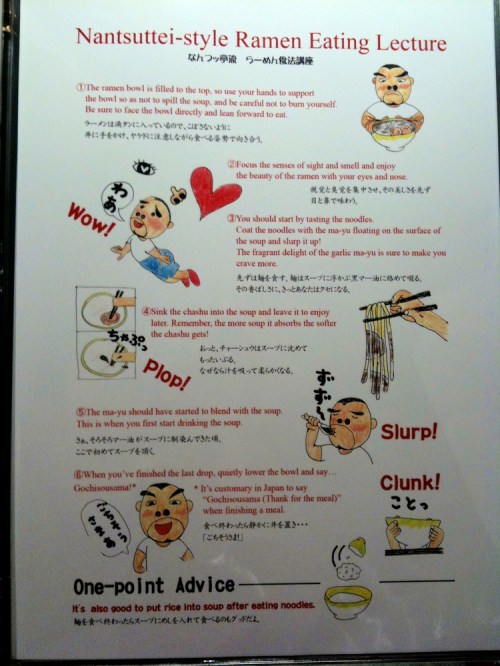
    A good-for-nothing young man with no particular talents, recently graduated, is sent into the Japanese countryside to teach although he has no talent for it. There, he faces political entanglement in the office and defiant opposition from students. Sounds like your typical JET story, except it’s the early 20th century, and this is one of Japan’s most beloved morality tales. Apparently, most Japanese encounter this novel as children, which I think is fantastic as it covers death, eating ramen, and dealing with the bullshit of others.

    The Remains of the Day:
    English butler goes on road trip in the 1950s, fondly remembers his old employer and some thirty years of service, while on the way to meet an old housekeeper he hasn’t seen in 20 years. Does he love her? Can he still polish silverware? Is the Japanese-born author’s ethnicity visible through the perfect period writing at any time? It’s almost implausible that such subject matter could be woven into the kind of story that resists the insertion of a bookmark, but Ishiguro is an amazing talent and this the best book I’ve read in a long while.


  • Looking forward to Heligoland

    The last time I was excited about a Massive Attack album, it was 1998. The album was Mezzanine, which I vividly remember for its fluorescent orange disc, set against a black and white digipak case with what looked like close-up photography of a dung beetle. It was a good album, but also a departure from their established sound. By the time 100th Window came out five years later, I’d moved on.

    Heligoland is their new album, and I’m interested in it mostly for nostalgic reasons. What struck me today was how, in the past, I would have known it was on the way for weeks ahead of the release date because interviews and articles would have been in all the magazines. And I would have known the day it was out because record stores in town like Tower and HMV had huge displays and posters up everywhere for big new releases. Granted, music was more of an obsession for me back then. I spent almost every dollar I had on CDs, and I spent hours each week going over the same racks in the same stores, waiting for something I hadn’t heard of to suddenly turn up and blow my mind. And of course I used to read magazines, and music stores were huge, multistoried places in 1998. Both business sectors have seen a bit of a decline since then.

    In the past few weeks, I’ve had exactly two notices that Heligoland was coming. The first was an article that popped into my RSS feed reader a few weeks back, just one article out of the hundreds of feeds I follow, so maybe I’m following the wrong people, and one tweet from a friend today, which reminded me to look into it. All that information consumed daily, and music just isn’t on my radar anymore. Go into a store and chances are you’re not looking to buy the stuff being promoted on the big displays. I honestly don’t know who buys most of that, because the kids who love it are probably listening to it off YouTube for free.

    The first time I heard that kids use YouTube as a sort of on-demand radio, I didn’t believe it. How could they possibly settle for such crap audio quality? Then I remembered all the articles I’d read over the years, each one more urgent and alarmist than the last, claiming that MP3 compression was going to ruin our ability to appreciate proper music. Last year it finally happened. Someone claimed to have evidence that young people prefer the imperfect sounds of digital music to uncompressed audio.

    The state of pop music is part of the reason why I can’t keep up with news anymore. It’s too hard to browse those racks, too much chaff to separate from what I might want. If I subscribed to a general feed, that’s probably going to be another 50 headlines I’d have to scan each day, to find maybe one item of interest every couple of weeks. My tastes have obviously changed (narrowed), and I’m not likely to care about most of the things MTV or Pitchfork covers. I just want a site that will tell me, old man that I am, when a new Massive Attack or Tricky album is near.


  • Two points relevant to my last post about ebook and iTunes pricing

    1) Lifehacker recently ran a poll on how much people were willing to pay for an ebook, and only 5% agreed to go over $10. Most were happy to pay between $5 and $10.

    2) Warner Bros. has revealed on their earnings call that sales growth for certain music tracks on iTunes slowed after prices were raised. What seems like common sense is apparently a mystery to music executives.


  • Why the $14.99 Ebook is a Tragedy for Reading

    Edit: Inserted an extra paragraph before the last one, 20 minutes after hitting Publish. Sorry about that.

    I couldn’t believe my girlfriend was oblivious to the huge row between Amazon and the publishing houses of Macmillan, HarperCollins, and Hachette. Until I remembered that, unlike me, she has a real job, and that the whole thing only blew up one week ago.

    “The iPad was announced only last week? No way, it feels like two weeks at least!” I said, not realizing that the constant reading of similar news stories can cause a retardation of time (amongst other things).

    If you haven’t caught up on Amazon’s ebook troubles, this post by John Scalzi will serve as an excellent primer.

    Short summary: Amazon used to sell ebooks at a near-standard price of $9.99, reportedly at a loss on what they paid the publishers, to help sell more Kindles.
    Monkey wrench: Apple’s iPad bookstore will reportedly let publishers set their own prices, which will be $14.99 for most new books.
    Result: Publishers have started to push Amazon to raise its prices, obliterating the Kindle’s price advantage.

    There are reasons to be upset about all this, of course. Do I think the publishing industry is being extremely greedy, short-sighted, self-important, and ignorant of how much their situation mirrors the mistakes of the record industry not so long ago? Yes, I do.

    According to multiple sources, selling ebooks at $14.99 will net publishers the exact same profit as having Amazon sell them at $9.99, because Amazon sold them at a loss. This price increase to the consumer is being sold as a solution to what Rupert Murdoch has called the ‘devaluation of books’ (at the $9.99 price point), and the competition that ebooks pose to hardcover sales.

    Linking price to value is a pretty poor argument when it comes to books. Take anything else, say clothing – if Armani shirts were being sold for what they really cost to make, as opposed to the price commanded by the brand, sure, you’d see those suits being devalued real quick as everyone started wearing them to the supermarket – but books are a special case in media because of the public domain.

    Not too many audio recordings or films exist in the public domain, but being an older medium, lots of books do. Great Expectations and Moby Dick are completely free downloads from Project Gutenberg. I wouldn’t call them devoid of ‘value’ in any sense of the word. Their being freely available doesn’t hurt sales of physical printings either. This Penguin Classics edition has a retail price of $15 (discounted to $10.20 by Amazon). These are some of the best books ever written, available free for reading on nearly any digital device, and still millions of copies are moved each year.

    One aside: imagine if MacMillan started to dictate the prices at which Amazon and other bookstores could sell their physical books too. It would mean the end of discounts. Also consider that if one wanted to boycott the modern publishing industry completely, it would not be to the detriment of his reading. At last count, over 20,000 books in English reside on Project Gutenberg. Refusing to pay for music and movies, however, would leave one largely at the mercy of free-to-air radio and television programming; quite the inverse experience from book-reading in terms of quality.

    Given that they enjoy no increase in profits, it can hardly be argued that these publishers are seeking to cover the increasingly high costs of producing and editing new material, or to subsidize a supposedly shrinking physical books market with ebook sales. My guess is that a sense of wild fear and uncertainty drives these decisions, and artificially pricing these ebooks high is the only way they think they can convince an uninterested public of their worth. But that’s not true at all. People buy books, at the right price.

    $14.99 is not the right price.

    Apple knew something the music industry didn’t when it launched the iTunes Music Store: the right price. As the store grew more popular than any of the labels expected, their despicable instinct was to milk these new customers. They began to demand variable pricing schemes in place of Apple’s fixed price of 99 cents a track. Variable pricing sounded like a nice idea; new songs would cost more than old songs. What they really wanted was for most desirable songs to cost more than 99 cents, and have a few old crap songs nobody wanted at bargain bin prices. Steve Jobs held them off for six years until the industry agreed to sacrifice DRM in exchange.

    Apple understood the psychological appeal of a low, fixed price. The music guys couldn’t even understand the meaning of the money that came in from Apple each month. It amazes me that people who essentially failed to sell their own product could presume to meddle with a successful strategy someone else had come up with. Would you know it, that’s exactly what the book industry is doing right now to the people who sold a shitload of ebooks for them. And they’re succeeding.*

    Everyone knows the argument: ebooks cost almost nothing to copy and distribute, whereas pulp, ink, and an entire mechanism of printers, transporters, and physical stores exist to put books in our hands. That’s what gives a book value for most people, exchanging $14.99 for a piece of work in front of them, not an artificial price on a digital file they can neither keep forever not share with friends and family. People expect ebooks to cost less, the same way they expect a pizza to cost less if they drive up to the outlet and pick it up themselves instead of having it delivered. Instead, we’re getting a flavor pill that only tastes like pizza, delivered to our homes for the same price as a real pie sold down the street.

    That the publishing guys are able to ignore the threat of piracy is even more worrying. Once a book is scanned and processed into raw text (a trivial task these days), it’s even easier to distribute than an MP3 or movie. It literally takes seconds to shoot a novel of a few hundred kilobytes across the net; paste it into the body of an email, and it can’t be stopped. It seems to me that people are more likely to illegally download an overpriced book than a 99c song. Especially since almost half of all books bought are never finished.

    Now, it may appear that consumers took to the idea of buying and listening to digital music fairly quickly, which no doubt gives publishers the same hope for switching people over to a higher-profit digital medium. But the transition to digital music didn’t start with MP3s, it happened over a period of 20 years with the audio CD. Hungry to earn repeat sales on records they already sold once or twice, the industry weaned us off turntables, vacuum tubes, and cassettes. They got us used to the idea of digital reproduction, and even convinced most of its superiority. By the time MP3s arrived, an entire generation that never knew the warm sounds of analog reproduction was ready to embrace them, and eventually even pay for quite a lot of it.

    The fraction of music lovers who clung onto vinyl will look like nothing compared to the majority who will continue to prefer real paper. A lot of us read off screens every day, but it seems most don’t want the same experience when curling up with a novel. Even if we were to get used to it, there’s still the problem that reading is more prevalent in the older generations, who won’t jump to pay a couple hundred bucks for a fancy reader.

    For those reasons, I don’t believe real books face any significant cannibalization from ebooks in the near future. If anything, the number of actual readers will increase with ebook sales. And the more people read, the more they make recommendations to those around them. Invariably, some of those whispers will result in the sale of real books.

    Should this hold true, the initial cost of producing the content will continue to be shouldered by the process that creates paper books, as it always has. Real books can continue to be sold at their traditional price points. This leaves the sale of every ebook to be counted as pure profit. The day when major publishers put out new ebooks by noted authors without physical counterparts on store shelves, we’ll reevaluate.

    Pricing ebooks prohibitively high does nothing for readers in general. If successful, the industry will associate the numbers $14.99 with the idea of reading a book on a device like a Kindle or iPad, the same way we now think of songs on an iPod as costing 99 cents, only less attractive. When digital music went mainstream, it was with Napster. Legal alternatives came later. Because it’s the opposite for digital books, assuming the whole thing even takes off, how many will know to venture past the virtual display shelves and over to the free public domain section?

    Ebooks should be seen as alternatives, for those who don’t need or possess the means to house a large library of battery-free, device-independent books that may someday be passed on. We will buy these digital editions on impulse, out of fleeting interest, on the insistence of friends, from the comfort of our Sunday beds, or in the midst of long journeys, perhaps as other books are closed and some aching gap remains, or when we can no longer wait for a final installment, and consequently we will as a species read more, and our society will be the richer for it. In exchange for acknowledging their impermanence, we will hopefully be charged a fee more like a rental, and less like a scalping.

    * As to why Apple would play a curveball with the book guys and give them miles of rope to hang themselves, see Matt Buchanan’s post over at Gizmodo: Why (and How) Apple Killed the $9.99 Ebook.


  • The New Apple

    There’s a phrase that tends to pop up in conversations about the latest divisive move from Cupertino: “the new Apple”. There’s always a new Apple that threatens the way things have been, or turns its back on a loyal segment; doing something other than what we, presumably desirable, tech-savvy customers want for our money.

    Lately, it’s been the iPad and its being in bed with the iPhone OS when we’d already arranged for a marriage to Mac OSX. It’s a computer for grandparents that will have severe implications for their grandchildren’s ability to grow up into the kind of curious, tinkering hackers who poke their noses where they don’t belong and thereby discover new and better ways to write software and build hardware and renew the flattened spirit of progress, thus we are destroying the circle itself!, the naysayers charge, gasping for air.

    With the iPhone model, software developers leave Apple a cut of every sale on the sides of their plates, while suffering the indignity of letting the publisher have final veto rights. Tinkering and sales aside, the goddamned thing wants to be a computer but has no multitasking! – This is the work of the new Apple.

    When new MacBook Pros were released with the same glossy, reflective screens as consumer MacBooks, pissing off graphics professionals who needed color accuracy and glare-free visibility in daylight, that too was the new Apple. The new Apple ditched PowerPC chips for Intel’s, after trumpeting the former’s superiority for a decade; the new Apple said no removable batteries for any portable device, too bad if you have a 20-hour flight; the new Apple also developed an odd nippled mouse that stopped scrolling after just months of use, ironically named after an unstoppable cartoon character; the new Apple resembles the Orwellian state in the old Apple’s ‘1984’ ad, year after year.

    The truth is, of course, that there is no new Apple. The ones who talk about it, imagine it, are mostly from a core of computing enthusiasts and creative professionals who have had love affairs with their Macs from before the second coming of Jobs. When consumers flocked en masse to cheaper PCs, they stayed with the ship and played music like nothing was happening. And edited video. And designed layouts. And touched up photos. The creative industry stayed with the Mac because it had the best software for their needs. Over time, they made the platform their own.

    Theorists might point to Jobs’ return and subsequent introduction of colorful, family-friendly iMacs as the day when new Apple began, but only because of how long it had been since Apple last produced anything of interest to the public. If anything, the new Apple was born right after the Apple II.

    Designed to be a computer for the everyman, the first Macintosh was built on the the same fundamental principles as the iPad 26 years later. Intuitive to use above all else, thanks to new technologies: a mouse then, multi-touch now. Resistant to tinkering: both are sealed with limited options for expansion. The inexplicable absence of features that might have been trivial to add: a color screen and hard drive on the Mac, a camera and multitasking on the iPad. Both were doubtlessly shaped by the idiosyncratic tastes and insights of Steve Jobs, whose involvement and personality defines Apple to the point that the idea of a ‘new’ direction seems flawed. It has always been Steve’s way.

    Professionals need to believe that because they kept the company going for much of the 80s and 90s, their needs are still important to it. But the Mac Pro is the last remaining concession to this group of customers. It’s the only Mac that can be upgraded, and to which more than one non-glossy display can be connected for serious graphics work. Ever since the explosion of Mac use in the home, with the help of iLife and iWork as key selling points, the face of Apple has changed. If I’d asked you ten years ago to describe the Mac for me, you’d have said “used by video editors and designers”. Chances are, that’s not your first thought today.

    I don’t suggest that Apple is leaving professionals out to dry, obviously the segment is still extremely important for the brand’s prestige and these customers are useful for pushing engineering efforts into things like octo-core and 64-bit computing, all of which eventually trickle down to the consumer products, but there have been bumps in the road to show that the company’s attention is slipping now that it’s gained the widespread consumer adoration it has courted all along. Case in point: the recent debacle over the MacBook Pro’s downgraded SATA interface. By the way, we’ve reached a point where the Pro products are bought by regular consumers just because they look cooler or carry more status. It was a recognizable trend by the time MacBooks sold out at a premium price just for being painted black, and it made a sort of poetic sense when the unibody aluminum consumer MacBooks morphed overnight into 13″ MacBook Pros earlier last year.

    With the help of pundits and analysts who, at best, bat a little over 50%, it’s all too easy to fall into the trap of thinking you know the game plan, which is how all ‘new Apple’ complaints begin. If you want to know what the new Apple is liable to do, just ask if it’s something the common man will understand, notice is missing or broken, and still buy the hell out of anyway. Just like the first floppy drive-less Macs, less-space-than-a-Nomad iPods, and 2G-only iPhones.


  • Fear of a Pad Planet

    There’s been a certain reaction to the iPad from some quarters of the tech-inclined community, inspired by the belief that the device signals a shift towards a new form of computing that old people can finally understand. That reaction has been fear and apprehension.

    It begins by looking at the iPad as a better personal computer for the majority of people. After all, it surfs the web, does email, plays games, and that’s what most people do with their computers most of the time, right? Better yet, it does all of those things without a long boot-up sequence, viruses, and confusing computery concepts like a filesystem, administrator rights, directories (recently renamed ‘Folders’ for these same users), registries, multi-step installation procedures, and the list goes on. Parents will finally stop calling us for help with strange error messages, and we will forget that it was ever hard.

    But if people start to prefer the iPad and its descendants to ‘real’ computers, so the argument goes, then we will have robbed the next generation of a basic foundational understanding of computers. Because there will be no tinkering in Apple’s clinical workshop, they will never see the crucial workings of a program beneath its simplified user interface, and we will not have people to build the next Google, YouTube, or Bittorrent. The iPad/iPhone were built to enable end-users to consume content, and so it must be that creativity stands to suffer.

    As I wrote yesterday, I currently see the iPad as a great way to access information and interact with media, freed from the physical contraints of an iPhone’s smaller screen and shorter battery life. Apple sees it, quite necessarily, as something more*. Which is why they built iWork productivity apps and demonstrated Brushes, an application that lets the large screen be used as a drawing surface for artists.

    Offering a new breed of computer to an older person and seeing them take to it with joy and wonderment, as opposed to frustration and confusion, is a wonderful image and what the industry should work towards, but just because a filesystem is obscured doesn’t mean the curious can’t get to it. One might argue that jailbreaking an iPad is no different from the things people did to their computers in the past. There will always be unauthorized tools for messing around, and one day you may even be able to write, compile, and test code for an iPad on the thing itself. I wouldn’t worry about the younger generation of hackers.

    My parents online
    I want to talk about two tasks I’ve observed my parents and people their age doing on their computers.

    1 – My mother mainly works with email. She receives documents relating to her church activities, which she must save locally before editing and sending them out again to other members of her group. She organizes these files in folders, which are really good metaphors that she understands, and often keeps multiple dated versions.

    Of course, the iPad of today can’t save email attachments for working on in the Pages word processor. One day it will. But that sort of management is bound to increase the level of complexity. Lists of documents, tags or folders, deleting and renaming, and so on. I thought of introducing her to Google Docs, which would let her work with live documents in the cloud, and even collaborate in real-time with her friends. When changes are made, instead of emailing a copy of a document to other people, she would only have to send invites to view the document online. The iPad would work well with that approach – no local storage necessary. The responsibility and blame for any complexity is passed off onto the web service provider, in this case Google, leaving the iPad’s reputation to remain spotless.

    2 – My father (and other fathers I hear about) likes to download videos off YouTube for later viewing, both on the desktop and on his iPhone. These are usually music videos and funny but horrifying accidents. This requires using a program or website like KeepVid to save them locally, and then often another program to re-encode the clips for use on the iPhone.

    I believe saving videos off Youtube is a copyright gray area that Apple will never touch by sanctioning an app that exists to do it. Music videos are often removed from Youtube when found to be unauthorized uploads, which might explain the compulsion to save them. But even if they stayed online, is streaming instead of saving an ideal solution? That’s a lot of wasted bandwidth, and what if they want a Taylor Swift video or two while traveling by air? Apple will never allow the Youtube app to save video and compete with iTunes sales.

    Both of these scenarios and their cloud-based natures highlight the need for increased openness and cooperation on the web. If we can’t have open computing systems, then we need an open internet to take its place. My mother’s friends shouldn’t all have to have Google accounts to access her shared documents, and Youtube shouldn’t have a monopoly on streaming video just because the iPad comes with an app built-in. The widespread adoption of HTML5 video in lieu of Flash would be fantastic, and remove the need for a native Youtube viewer. Likewise, online storage accounts like the ones offered by Dropbox and Microsoft Live Mesh should be able to trade files and work together. Productivity and content creation services should have a way of talking to each other across networks.

    I like Google Wave’s implementation of federated servers. You can run your own private Wave system, really make it your own for whatever purposes, but the underlying protocol can communicate with every other Wave server if/when you need it to.

    If that kind of openness were applied to all other services, companies would stand to lose their ‘stickiness’, but they’d surely find other ways to retain users. Should a landscape of interoperability and sharing ever come to pass in every corner of the web, it would be to the benefit of us all. How fitting, then, if we were steered in that direction by the threat of having to work on oversimplified computers.

    —-

    With apologies to Public Enemy for the title.

    * When Nintendo first launched the DS in 2004, they called it a “third pillar” to allay fears that the company was going mad and replacing its popular and very profitable Game Boy Advance series with a risky touchscreen experiment. The DS went on to become a huge hit, accelerating the GBA’s demise and eventually becoming their main handheld product. You may wish to see Apple’s positioning of the iPad as a similar play: someday it may overtake the MacBook completely.


  • Alex Payne on the iPad

    Alex Payne, in a widely-linked article, wrote today that:

    The thing that bothers me most about the iPad is this: if I had an iPad rather than a real computer as a kid, I’d never be a programmer today. I’d never have had the ability to run whatever stupid, potentially harmful, hugely educational programs I could download or write. I wouldn’t have been able to fire up ResEdit and edit out the Mac startup sound so I could tinker on the computer at all hours without waking my parents. The iPad may be a boon to traditional eduction, insofar as it allows for multimedia textbooks and such, but in its current form, it’s a detriment to the sort of hacker culture that has propelled the digital economy.

    As far as I can tell, Apple never intended for young Alex Payne to access the Mac’s startup sound any more than they intend for a future programmer to hack an iPad’s filesystem and do some tinkering of his own tomorrow. Sure it’s harder with DRM and encryption, but we’re united by the internet these days, and breaking those walls down has become a group effort. No young hacker today has to learn alone. We change with the territory and so nothing has really changed at all.