Tag: Apps

  • Week 10.24

    Week 10.24

    Last week, I mused on the need for Super Deluxe reissues of Counting Crows’ albums, only to discover that August and Everything After had already received such an edition, with a Dolby Atmos mix, and it was already in my library. Now please do Recovering the Satellites!

    Staying on the subject of music, while watching an episode of True Detective one night, there was a scene where someone flipped through a stack of vinyls in their living room and took one out to play, at which point I paused the show to ask aloud, “why isn’t there an iPad app that will replicate that experience?” I’ve been wanting this for a while, and so this was not a new exclamation. Streaming services are great and all, but I remember the days of having cassettes and CDs, and how the tactile, spatial ritual of flipping through them, selecting one, and loading it into a player was more satisfying than typing into a search field and hitting Enter.

    The app I want would mimic this by letting me set aside a small subset of albums from my larger Apple Music library and display them on a virtual shelf with large cover art, and I would put this on an iPad positioned near our HomePod. The key is this smaller stack of “heavy rotation” picks or favorite classic albums, so I can stand there and choose something to put on in the living room. Bonus points for skeuomorphism: dragging a metaphorical disc onto a spindle would be nice. Apple is rumored to be working on an iPad dock that is also a HomePod, or a HomePod with a screen, much like less audio-centric models already offered by Amazon and Google, but I fear today’s designers will go for direct over delightful.

    If this idea doesn’t resonate with you at all, it’s okay; I think it’s just a specific millennial/xennial urge to respect and protect the album format. I enjoy singles, YouTube-only bootlegs, and melodic fragments on TikTok just as much as the zoomers, but I’ll listen to whole albums till I die. A great album takes advantage of the larger canvas to explore ambitious concepts or stories. It’s the difference between an article and a zine.

    I decided to look through the App Store again, and found that two apps I already had on my iPhone could potentially do the job: Albums: Music Shortcuts, and Longplay. I also found one called Albums – album focused player, but I decided to go with the ones I had. After some tests, I found that a recent 2.0 update to Longplay (which I’d bought long ago but ended up never really using) added support for custom “collections”, which lets me set up this smaller shelf of select LPs, because its default mode is to show all of your albums. And it syncs over iCloud, so I can update my choices at any time from any device. Longplay’s website is here.

    Dusting off my neglected first-gen 12.9” iPad Pro for the purpose, I now have this set up going and it’s… not bad. Longplay’s interface isn’t exactly what I envisioned, and I’d like it to remember that I always want to play out of the same HomePod, but it works for now. The aging (aged?) A9X chip struggles a little to scroll smoothly and filter my huge library in real time, but I was amazed to find that it supports iPadOS 16 — i.e. last year’s OS works on an 8-year old tablet.

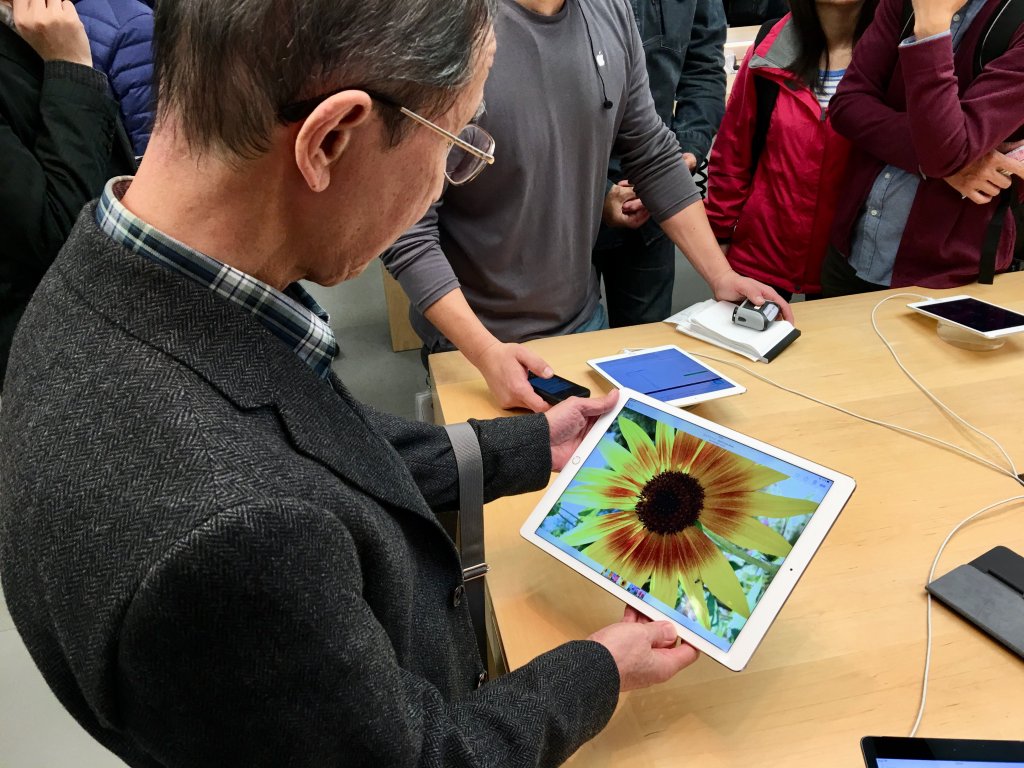
    I still remember the launch of this iPad Pro because I was in Tokyo on holiday at the time, and was suffering a bout of ankle pain for a day or two. On November 12, 2015, the morning of the iPad’s launch, I hobbled down to the Ginza Apple Store near where I was staying, and the excitement in the room was incredible. There was a calligraphy demonstration using the new Apple Pencil and a Japanese painting app. Nerds young and old jostled to pick it up. The sheer size of it seemed audacious and unreal compared to the 9.7” iPads we’d been used to.

    Seeing it held in the hands like a magazine, with an insane Retina resolution that surpassed any laptop of that time, the potential for it to be a replacement for printed materials struck me more than ever. This was back when everyone thought the iPad would be a great platform for publishing, and almost every large company spent millions trying to design the right UX and business model for digital versions of Wired, The Economist, Vogue, or what have you. But they were often bloated, difficult to navigate, and often a worse reading experience than paper. I have some ideas on why this didn’t work out, but anyway now we’re just back to good ol’ PDFs and websites.

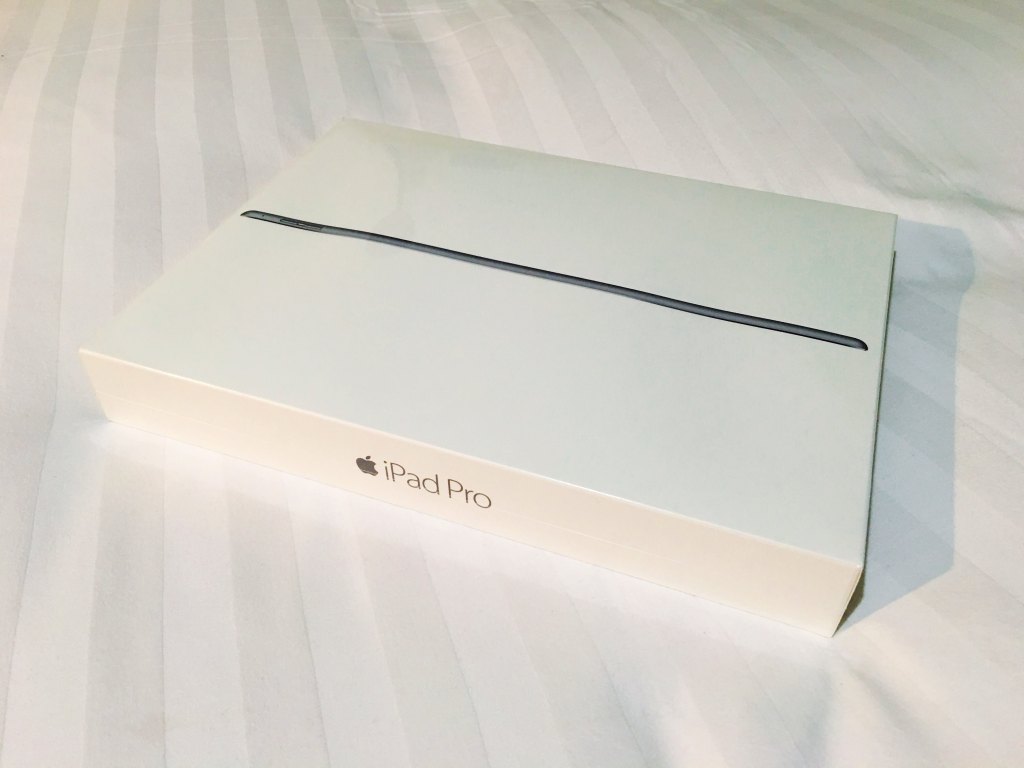
    I walked out in the cold air thinking, “Well, that was cool, but I’m not going to buy one.” I struggled down the road and sat down for a coffee in the now-closed Monocle Cafe in the Yurakucho Hankyu Men’s department store, followed by lunch at Sushizanmai, and I must have thought it over and changed my mind (surprise), because by 11 PM that night I was taking photos of my new iPad Pro back in the hotel room.

    Did I ever make full use of it? I remember the Apple-centric analyst Horace Dediu reviewing it as a new kind of ‘desktop computer’, owing to its power and reduced portability. I never really brought it to work and used it as a note-taking surface like I imagined. In fact, I never bought another 12.9″ iPad Pro again, always opting for the smaller version whenever I upgraded. For a number of years this one served as our bedroom TV (really a bed TV because that’s how we used it: propped up on some blankets), until it became prone to shutting down abruptly as the battery gave out. It gives me joy to see it finding a new purpose in the home as a hi-fi system.

    ===

    Media activity:

    • As mentioned, we’ve been watching the new True Detective and I agree with the internet that its tone and storyline are a very odd fit for the anthology series, and I’m not sure it really belongs. Supposedly it was pitched to HBO as a new original mystery show, but they asked for it to be changed so it could be a new season of TD. What a weird decision: it felt like supernatural survival horror at times. It was mostly good to see Jodie Foster at work.
    • Fiona Apple is back! Sort of. She features in a song with Iron & Wine called All in Good Time, from their upcoming album, Light Verse. You can listen to it now, though.

    • The new Bleachers is finally out too, and I’ve heard it through once on headphones but wasn’t super in love with it. Will have to give it more time.
    • Jack Antonoff (and Taylor Swift, who is performing her final shows here this weekend) appear in this wonderful portrait of Michael Stipe in the New York Times a few months ago that I only discovered now. R.E.M. was hands-down my favorite band as a teenager, and I loved learning about what he’s been up to, and how our idols in their old age can be such weird, vulnerable, out-of-touch, sincere human beings who are still discovering themselves, still figuring out how to live, struggling to do the work that matters. Here’s a gift link to the article.
    • The new TV adapation of Shogun has been getting so much buzz, and I have fond (if blurry) memories of the 1980 miniseries starring Richard Chamberlain, which must have aired as reruns when I was a kid, so I’ve been excited for it. Episode 1 did not disappoint; it looks like a big budget film and has non-histrionic performances from its Japanese cast. Do you think someone tells them to tone it down when they work on American productions? Because most Japanese dramas I watch are so over-the-top as to puncture the fourth wall like a gaijin’s arm through a shogi door.
    • We still haven’t seen Dune Part II, but decided to watch a 20-min recap on YouTube instead of sitting through the first movie again in preparation. I must be a terrible media reader because I swear I didn’t make sense of Paul’s visions the way I was meant to. I just recall it was the first time I’d been in a theater in nearly two years, just as Covid was unwinding, and being swept up in the sheer visual experience of seeing the world in motion. Because Dune was always more about Westwood Studios’ real-time strategy game on PC to me than the book, David Lynch film, or Syfy series, it’s Arrakis itself and the houses at war that I feel nostalgia for.

  • Week 52.23

    Week 52.23

    Greetings from beautiful Chiang Mai on this last day of the year. It’s my first time here, and I’m sure it won’t be my last. If anything, I’m kicking myself for not coming sooner — it’s currently a very cool and walkable 25°C at 11am, and temperatures go below 20°C in the evenings; Microsoft Copilot with Bing tells me it’s the safest city in SE Asia (wha?); and the food and coffee have been top notch so far.

    We’ve also been to a cool cocktail bar with live jazz in a basement speakeasy-like space, and another “live house” with a mix of bands playing each night. Coming from Singapore where jazz clubs are a rarity, and almost exclusively the domain of old people, it’s been surprising to see many young people in attendance, although I can’t be sure they enjoy the bands. They seem to pay more attention and clap louder for the pop cover bands.

    One amazing performer I heard was Joshua Lebofsky, originally from Canada, who sang and played a straight hour of jazz standards and pop interpretations on piano at The A Ter (theater). They were fantastically musical and soulful variations, and I was glad to be able to tell him so afterwards; sadly he hasn’t got a social media presence, but there’s an album from 2006 on Apple Music: Play A Little Prayer.

    If we lived here, I would be a regular patron at these places for sure (especially at prices roughly half those back home). The non-existence of a vibrant jazz scene is such a shame for Singapore, because we have quite a few talented jazz players who end up being session musicians for mandopop performers most of the time, probably due to the economics of the music scene. I guess these are the third-order consequences of necessarily narrow education policies in our early years.

    We also went on a walking street food tour and a cooking class at a small organic farm and school (where I was snapped in a farmer’s hat looking glum at having been dragged along, but ultimately it was a good time and the food was, like all of it, quite excellent). An intriguing culinary detail here is how Hainanese immigrants created their own localized chicken rice combining the steamed chicken with deep fried chicken cutlets and an entirely different chilli that’s dark and savory, with fermented soybeans and fish sauce?

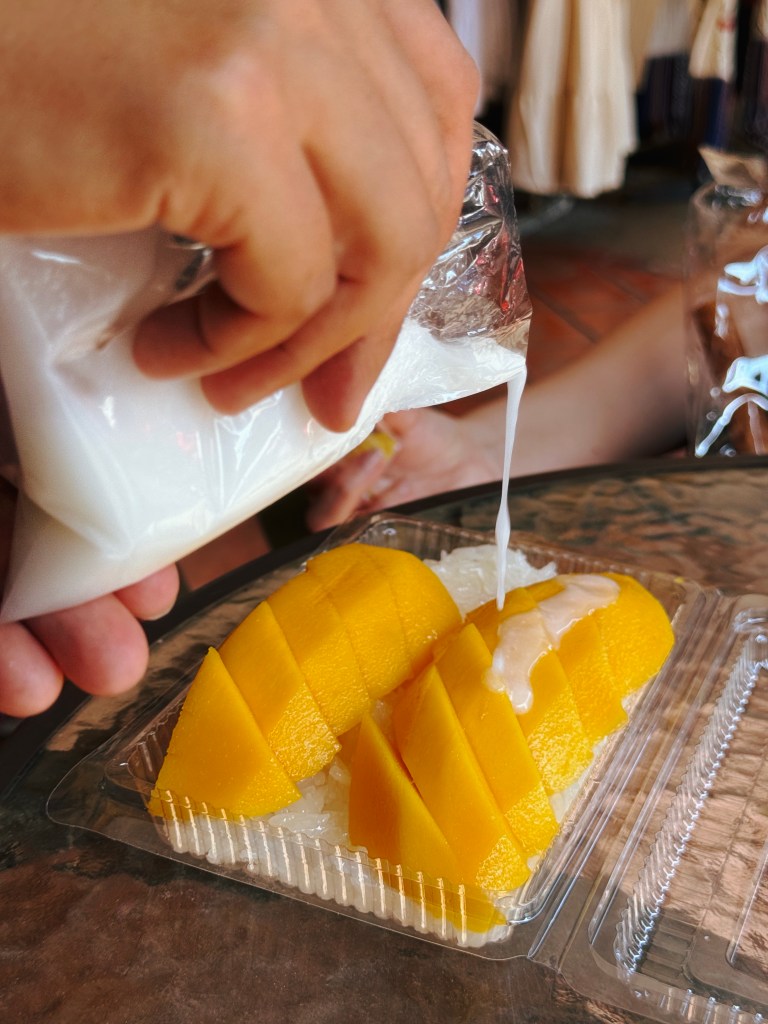
    Here are some photos, all from my iPhone 15 Pro Max. I made a new Darkroom preset to handle the light and scenery here, and I think it’s a versatile look I’ll probably be using for a long while. I’ll probably share it here next year after some fine tuning!

    Anyway, Chiang Mai. Come by, it’s lovely enough to consider buying an apartment in, but I’ve only been here a couple of days.

    ===

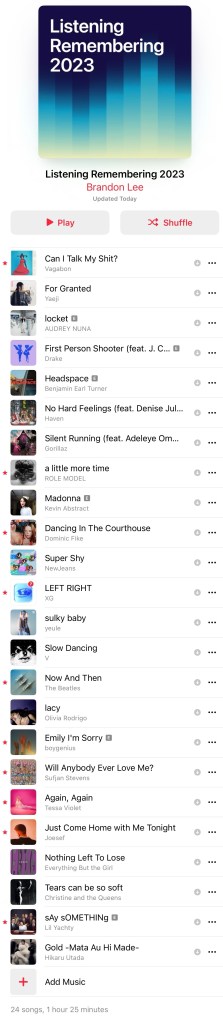
    On the 45-minute minibus ride back from the farm last night, I managed to throw together my end-of-year playlist with some not-too-shabby transitions (I recommend turning crossfading on; 3 seconds). This is partly a diary of associated memories and partly what I’ll remember as the year’s best songs. This process usually takes much longer but everything came together on a stomach full of coconut curries and fresh herbs and spices they had us pound in a mortar ourselves.

    Here’s Listening Remembering 2023 on Apple Music.

  • Week 50.23

    Week 50.23

    Christmas is creeping closer, but the Goodreads Challenge angel won’t be darkening my doorstep as I’ve redeemed myself with two weeks to go! James Hogan’s Thrice Upon A Time was the twelfth book of my year, and definitely one of the better ones. It’s a 1980s time travel story where no time travel takes place, but it grapples with ideas about how timelines are rewritten, plus some other global topics that seem quite prescient when read today. Stylistically, it’s aged, but in that classic sci-fi way I love, which takes me back to reading books in the library after school. I think those hours, that precious access back then to a ton of books I couldn’t wait to read, were the part of going to school I looked forward to most. Anyway I’ve started a dumb new book that I should be finishing this year for bonus credit: The Paris Apartment by Lucy Foley.

    If you’re looking for reading material, it may interest you to hear that I somehow managed to finish B’Fast, the AI-generated breakfast zine project I mentioned last week. The InstaZine GPT I made to create the content is also available through the same link (I updated the page with some additional usage tips today). Now that it’s done, I’m planning to make a companion breakfast-themed zine called “B’Fast (Brandon’s Version)” which will be made entirely by me, in a way that an AI presumably would not. But probably not straight away.

    ===

    Earlier this year, Hipstamatic redesigned and relaunched their Hipstamatic X app. The “X” was dropped, and they added a new social feed. It was the official replacement for their original app which became Hipstamatic Classic. Where the original was funded by in-app purchases for new filters (at a pace of roughly one new 99c release each month), the new Hipstamatic charges a $30/year subscription, doubling their income from faithful fans.

    I used the new app for some photos during my trip to Japan and mostly enjoyed the experience, but it was too buggy and the UI was still too cluttered and confusing (a longstanding problem with the original Hipstamatic app as well) for me to consider continuing with a paid subscription.

    Their main problem is that there are now over 300 filters in the forms of “films” and “lenses” and “flashes” that you can combine to make infinite looks, and no good way to make the attractive human-curated combinations they recommend accessible and discoverable. In the last version, they tried to give a few of these combinations the tangible metaphor of being unique “cameras”, each one with a different skeuomorphic body you picked off a shelf, but essentially they were presets you could call up. But you can keep, what, ten of these aside in a little drawer before you couldn’t tell them apart? And so many of the other combinations were left out of sight and out of mind.

    Now, after a week of teasing social media posts, wherein a “physical camera” was shown in videos — quite obviously a 3D model rendered in AR, but some people believed they were going to release a hardware product anyway — they’ve released a major update (v10) that tries to untangle the Gordian knot of their UX issues.

    In this new version, they’ve tried to marry what worked in the original app with a new info architecture and set of metaphors to manage the library of looks they’ve accumulated over the last 14 years. You get just ONE skeuomorphic camera to call your own and customize the look of, and this camera is capable of loading up many presets. You can either let the camera detect the scene and choose a suitable preset for it (Auto mode), or specify the preset yourself (Manual mode). There are 9 possible scenes, such as Travel, People, and Still Life, but in a puzzling and unfortunate move, when you start using the app, each of these scenes has just one or two associated presets. That means you’re going to see the same looks over and over, when there are over a hundred more hidden away in a long list. This was presumably done to allow you, the user, to customize your experience and assign your favorite presets to the scenes.

    There are two major problems at this point. One: leaving it up to the user to gain their own understanding of all the pre-existing “good combos” and assign them to 9 scene categories is insane. It’s a lot of work to hand off to a customer you hope will pay you money. The team should be doing the work of tagging each preset combo with a recommended use case, AND making it easy to assign them. It’s not currently easy. I had to move back and forth between two sections of the app looking at presets and memorizing their names to go assign to a scene, because these things aren’t placed together. Off the top of my head, it just needs an in-line list of suggested presets (from the aforementioned tagging exercise) on the same screen where you customize a scene’s presets. Perhaps this is coming. I’d argue it should have been in the MVP release of such a big redesign.

    Two: as I mentioned, there are infinite possible presets given the number of ingredients they’ve accumulated. You can make your own combos, but there’s no great way to experiment and do this — there should be a sandbox where you can explore each lens/film/flash’s characteristics and try them out in real time to find a good combo. There used to be a section of the app called the “Hipstamatic Supply Catalog” where you could browse all these effects (it was only like a static magazine, but they could have made it interactive), and this now seems to be gone or I can’t find it anymore in the maze of menus and buttons. Perhaps they’re okay with most users just using the curated “good presets” and never making their own, but it seems like a missed opportunity.

    I was feeling a mix of optimistic and bored, so I paid for an annual subscription anyway and will be trying to take lots of everyday silly snaps with this, and maybe even use it on my upcoming trip to Thailand. But if you know someone who works at Hipstamatic, please talk to them about taking on some external advice.

    ===

    • I finished watching Pluto on Netflix. It’s still a strong recommendation for me; a modern anime made with classic sensibilities and a story that really keeps you guessing. It’s also a very different Astro Boy story, suitable for people who hear “Astro Boy” and think it’s stuff for kids.
    • We started watching A Murder at the End of the World and I’m really liking it so far. Especially its star, Emma Corrin, who I’ve never seen in anything else before. They’ve got the most strikingly similar face to Jodie Foster, I was sure they were related.
    • New playlist! BLixTape #3 is done, made up of mostly new songs that I’ve been listening to since mid-October. Add it here on Apple Music.
  • Week 48.23

    Week 48.23

    Some things I asked the internet/AI this week:

    • Why do people never rinse their mouths out after brushing their teeth in the movies?
    • Isn’t it misleading and bad for oral hygiene education if directors leave it out for pacing reasons?
    • What’s the recipe for a Vesper martini?
    • How might a wealthy Indonesian put their billions of IDR to work beyond investing? (asking for a friend, I swear)

    Aside: ‘Asking the internet’ used to be our go-to phrase, but in an era where AI might be the one answering, does the term need revising? We used to be able to say ‘asking the internet’ but what about when you’re really asking an AI? They live on the internet and were certainly trained on internet content, but the old definition meant looking up content and new replies created by people; what do we call it when the answers AI generated? Keeping in mind that these answers may well be wrong, and in ways different from how a human might be wrong, it doesn’t feel like we should use the same terms. Or maybe we’ll keep referring to any hive mind as the internet?

    Can I go a week without talking about AI? I think those days may be behind us.

    Even iA Writer, the Markdown text editor I use for these updates, released a new update with an AI-related feature. No, it’s not automatically finishing your sentences or summarizing your essays. They’re all about the writing experience and process, and so they’re embracing how people use ChatGPT as a writing assistant, but helping them to preserve their own authentic voices. Text pasted from ChatGPT can be visually differentiated from text you wrote yourself, so you can see the Frankensteinian stitches on your monster. It also saves this info in the metadata for provenance.

    This suggests that many users send text back and forth to ChatGPT so often that they end up forgetting which bits they wrote themselves, which isn’t a problem I’ve had so far, but going forward, who knows? It’s a good idea and one I’m glad they’re testing, but iA Writer has always been a niche tool for a certain kind of user. I thnk word processors with integrated AI are going to be so widely used and loved by the end of 2024 that no one will care about who did what part.

    ===

    I made and released a new GPT, a game called Chrono Quest where you go back in time to improve humanity’s chances of beating an alien invasion. You can read more about it in my post here, but there are many ways to succeed, limited only by your imagination and problem solving inclinations. As a kid playing text adventure games, I never thought I’d see the day they could write themselves as you played. It even creates illustrations along the way, although those aren’t strictly necessary.

    I’ve got some other game ideas I’ll probably get on soon over the Christmas break. OpenAI announced yesterday that the GPT “App Store” meant to open in November was being delayed until early 2024. I guess that gives me more time to learn.

    ===

    It’s not accurate to say I didn’t get anything during the Black Friday/Cyber Monday sales. Pixelmator Pro for Mac was 50% off, and I thought it was time I upgraded to it from regular ol’ Pixelmator, which I must have bought over ten years ago for personal use as a substitute for Photoshop. Those were the days of per-once, use-forever software. To the developers’ credit, Pixelmator Pro is still offered through that model, although their newest app, Photomator, prefers a subscription pricing plan. The latter just won Apple’s Mac App of the Year award, by the way.

    Pixelmator Pro is more than just a Photoshop-type editor now, it’s also a video and vector image editor, and comes with lots of templates for creating posters, logos, and so on. And like Photomator, it has useful ML-based features for correcting color, removing noise, and increasingly resolution of photos. These are pretty old-school and conservative by the standards of generative AI — see the recent development of Magnific AI, a tool confusingly billed as “upscaling” when it’s really closer to hallucination. It can subjectively improve the quality of photos by generating plausible (but inaccurate) pixels.

    Check out this “upscaling” of Tomb Raider 1.

    ===

    Stumbling into the New York jazz scene by accident, I found two jazz artists I’d like to recommend: Brandee Younger and Samara Joy. Both already have a couple of albums out.

    Younger is a harpist who blends genres and leans modern. You’ll hear some hip-hop production, and it’s really not what you think when you hear the word “harp”. Her new album is Brand New Life, and is apparently based on and inspired the work of legendary harpist Dorothy Ashby, who I was also ignorant of. This is a weird observation, but hear me out. The opening track, the previously unrecorded, Ashby-written piece You’re A Girl For One Man Only, has a haunting melodic fragment that I think I recognize from… the soundtrack of the Japanese game/anime Steins;Gate of all things?!

    Samara Joy is a much more traditional vocalist, but what an incredible instrument her voice is. I’ll leave a video of her covering Lush Life below and you’ll see what I mean. I’m about to put her Christmas EP, A Joyful Holiday, on and get some lunch. See y’all later.

    (This week’s featured image was taken at a new mall that’s sprung up in Holland Village this weekend. It’s disconcerting; the massive development has been hidden behind hoardings for the past few years, and now revealed, it’s an unexpected contrast to the other old buildings and shopfronts, like a bionic arm of mediocre high street brands slapped onto an aging body.)

  • Week 46.23

    Week 46.23

    Album of the week: Daft Punk released a “drumless” edition of Random Access Memories and the simple act of removing elements adds an unexpected amount of value. The album strikes a delicate balance between novelty and nostalgia. By removing the drum tracks, it reveals intricate instrumental interplays once masked by robust beats, offering new perspective on familiar melodies. Within minutes, you’ll be surprised at how different this feels. I don’t know how many other albums have been rereleased like this, but it’s a great idea — one made less cynical by the streaming model, as Michael observed in a chat. In the old days, this would just look like trying to sell you a CD you already bought.

    Speaking of cynical purchases avoided, I saw and held the Leica Sofort 2 in person this weekend while attending a talk and exhibition at their annual Celebration of Photography event. The glossy front plastic was not as fingerprint prone as I’d feared, and overall build quality felt a touch better than on the Fujifilm Instax mini Evo: the rocker button on the back panel had more click resistance, the “film advance” lever that prints photos was sturdier and more satisfying to activate, and the flimsy USB port cover on the bottom was slightly firmer and seemed to stay in place. For me, those were the top 3 basic problems that needed to be addressed. The software menus were simply reskinned and not redesigned, as expected. All in all, Leica did the minimum they had to do to make the Fujifilm product a little more premium, but without improvements to image quality, it’s still a very odd product to bear a red dot. I did not feel the urge to replace my mini Evo on the spot.

    With Leica’s latest attempt at opening my wallet rejected, my week was free to absorb excesses of a different kind when I met up with Jianjia for a farewell lunch. She decided we would eat Mala at some place called YGF. It turns out that she schedules every meet-up she can there, because she’s addicted to their high sodium spice blend. When I pointed out how salty it was (after she had drunk all her soup, and for the record I couldn’t finish my massive bowl), she was like “huh, maybe that’s why I like it so much. I never had much salt in my food growing up”.

    We are all the products of our childhoods, each messed up in our own special ways, which is something I was discussing with a colleague in a work-related conversation one day when I thought, “ooh, I should make a GPT therapist!” Which I called Doctor Talkabout, and tried to bias it towards exploring barriers to happiness that originated in childhood. On the whole, the unlicensed doctor is now quite good at discussing all manner of problems, and I hope it gives better perspectives than vanilla ChatGPT. And just in case psychology and psychoanalysis are a little too… “real” for you? I also made a GPT therapist based on astrology, inspired by Co—Star. I honestly get a kick out of both, and discussing my problems with them has been more effective at managing my feelings than just going in circles on my own.

    The number of GPTs I’ve made this past week is now in the double digits (including one for work and a private one for editing text), and so I’ve had to make a category page to see them all on this site. Please check them out.

    And yes, some shit is afoot at OpenAI, after CEO Sam Altman was ousted early Saturday morning. Too early to say why, but ChatGPT has noticeably struggled to perform quickly of late, and they’ve both turned off new signups for ChatGPT Plus AND reduced the rate for paying members from 50 to 40 messages every three hours. I have a feeling they might renege on their commitment to open a GPT App Store and share revenue with creators. Time will tell. I wasn’t going to quit my day job for this anyway. And as of Sunday afternoon, he’s supposedly been asked to come back and the board of directors will resign? Pure insanity.

    I watched the first episode of Netflix’s acclaimed Blue Eye Samurai Western anime series, and it felt like something an AI wrote. I don’t get the rave reviews just yet; two people described it to me using Kill Bill as a reference point, and you’ll see why in the super derivative first episode. It even uses the same Tomoyasu Hotei song, Battle Without Honor or Humanity, in a cliche sword-forging and training montage sequence. I mean, Kill Bill itself was a pastiche of samurai movie tropes, but this warms them over without any shame. It also has a dash of Afro Samurai to it, however both of these are examples of how to do homage without feeling like copies. Netflix shows are like cloud kitchen-brand versions of fast food items that were inspired by restaurant dishes.

    Somehow the show has some talent signed up to it: George Takei, Ming Na-Wen, and Kenneth Branagh provide voices. Its writer and co-creator, Michael Green, was involved in Blade Runner 2049 (but also Branagh’s trilogy of Hercule Poirot films which I do not love). But I’ll give it a second chance anyway; there may be other themes at play here beyond the Othered protagonist seeking revenge. But having seen this, I feel like I have a pretty good idea of what AI-generated mass entertainment would look like, and I’m not down for it anymore. I’d like for AGI to come and take away all the other jobs in the world, leaving us humans free to come up with new and more creative ways to show sword fights.

    So imagine my surprise when I started up Pluto (also on Netflix) after two episodes of Blue Eye Samurai, and found it the total opposite in terms of quality. You don’t know where the story is going even if some ideas, like androids that grapple with unexplained dreams from a past life, are familiar and were explored before in other works. It takes its time with characterizations, and aims for a timeless beauty that goes beyond slow-motion action scenes. Polygon has a nice piece about it, but don’t read anything before you’ve seen the first episode, just trust me on that.

  • Co—Sign

    Co—Sign: An interactive astrologer and coach for personalized horoscopes and star-guided advice.

    Features:

    • Calculates your star signs when given birth date, time, and location.
    • A talking horoscope you can engage with — ask questions, articulate fears, deflect responsibility!
    • Get general advice with an astrological twist.
    • Type /help any time for an overview of how it works.

    I was never one for horoscopes until I found the Co—Star app in 2019. It’s not that I suddenly became a believer, but I liked how it gave me random prompts and lenses to consider life’s events through, like spinning a roulette wheel to determine what attitude you should meet the day with. And why not? Letting the stars set you secret objectives can be both a fun challenge and a reminder not to take anything too seriously.

    But the “problem” with horoscopes (excluding those delivered by a fortune teller) that Co—Star doesn’t solve is how their provocations can be quite cryptic and vague. Sometimes you just want to ask a follow-up question!

    Which brings us to the magic statement: “Now with AI”. I made Co—Sign to be a GPT astrologer and life coach you can have a conversation with, and not just ask for a more detailed reading, but talk through problems or situations you’re facing. Instead of generic advice, it’ll give you options that take your astrological traits and temperament into account.

    This was probably the hardest GPT to make yet. I must have spent hours trying to get it to reliably calculate your star signs based on birth date, time, and location. It’ll figure out your natal chart from those inputs, i.e. where all the planets were above you in that moment, and use those to guide its readings. There are astrology calculators online for that, but I wanted Co—Sign to be able to figure it out for itself.

    To begin, you can give it those data points and get an initial interpretation of who you are, or just say hi and let it guide you. From there, ask for a daily outlook, or weekly, or whatever. Ask it for advice, ask it who you’re compatible with, any of the standard things. I recommend keeping one chat open to come back and reengage with it, so you don’t have to calculate your star signs over each time (it can take awhile.)

    Here’s an example of me saying I’m afraid I’d impulse buy a Leica Sofort 2 while attending an exhibition this weekend:

  • Doctor Talkabout

    Doctor Talkabout: A thoughtful “psychologist” exploring happiness and paths to fulfillment.

    I find talking about problems a great way to start feeling better, even better if the listener has some insightful perspectives or solutions, even if it’s just a reframing of what you said. While talking to someone yesterday about actual therapists and how long it takes to bring them up to speed on your situation and get to know you, I wondered if an AI chatbot could accelerate the process and get to insights and solutions faster.

    So, I made Doctor Talkabout. It’s instructed to ask questions, consider the root causes of your problems/feelings, and apply a range of psychological schools of thought as you converse. You can start talking to it about a specific situation you’re in, or just say hi and let it get a sense of how happy or fulfilled you are, and figure out how to make improvements from there.

    I tried it out myself for something that I’ve spoken to therapists about, and was impressed by how it was able to succinctly articulate some helpful concepts, in some ways better than the humans did. I think it comes down to how a person thinking on the fly is never going to deliver their thoughts perfectly each time, but an AI (assuming it has the right idea at all) has a much higher chance of consistently phrasing it well.

    (I must stress that this is an AI chatbot, and you shouldn’t rely on it to solve real problems; see a trained professional if you need help. It’s partly for entertainment, partly a tool for thinking through your thoughts and situation productively when alone. If you have any reason to doubt OpenAI’s commitment to data privacy, then please do not use this to talk about personal matters or your mental health.)

  • DemystiFi GPT

    Explaining money, economics, and the financial world in simple terms. No question is too dumb!

    I must stress that DemystiFi is not a substitute for professional financial advice or your own research. But I started on my personal finance journey quite late by all accounts, only saving and not investing for the first decade of my working life, and missing out on much of the 2010s bull market. It was a different time: no robo-advisors, no apps for buying stocks, and not a whole lot of financial education in the system.

    One of the great things about ChatGPT and generative AI models is that you can learn by having a conversation, with a lot more flexibility than just searching and reading online articles that may or may not answer your questions directly. But without explicit intervention, a lot of the info you receive will still come phrased in the secret language of finance, which isn’t especially useful for people who know so little about money they’ve resorted to asking a chatbot for help!

    So I made DemystiFi to explain things in simple terms, using analogies and plain language. When it uses a financial term, it’ll stop to explain it. If you act like you know a little bit, it’ll gauge your level and ramp up to match you.

    You can ask it about current events (like the announcement of a new inflation figure) and it’ll search the web to find out what happened and explain the implications to you. You can also ask it to help with matters of personal finance, like calculating how much you should save each month in order to retire at 40. It’ll work out some formulas, generate code to calculate it, and give you the results.

    It’s basically the finance friend I wish I had when I was starting out, and still need many times a month these days. I hope it helps you too.