Tag: Nintendo

  • Week 46.26

    Week 46.26

    Since I mentioned the increase in cyberattacks and system failures last week, things have not exactly improved. Microsoft systems like Outlook and Teams went down in 70+ countries on Friday, and the US FAA grounded all flights for four hours on Saturday due to some sort of communications issue. I should mention for posterity that Jensen Huang has resigned from Nvidia, aka the company propping up the stock market via the AI industry (with no succession plan in place), just as Anthropic prepares to go public next week. It’s been nice knowing all of you.

    But let’s focus on happier things. The Apple HomeView has gone on sale, and having had a unit at home for a little while now, let me admit that I was wrong about this device. I was underwhelmed when it was first shown — partly because I don’t put much stock in the whole Smart Home idea, where every appliance and light has an internet connection and can be controlled remotely (see above); and also because the launch video showed an American family scene where people were inexplicably using a HomeView for tasks like messaging instead of their own phones. It wasn’t clear from that vision why this product needed to exist in my home.

    The answer: forget all the other stuff, it’s simply a better HomePod. We’ve had four HomePods around the house ever since they went on sale locally, and they’ve mostly been speakers. You can control them with voice commands in a limited fashion using old Siri, but unless you know exactly what you want, a secondary device like an iPhone or iPad is how you’ll be browsing and putting music on.

    The HomeView, with its touchscreen almost the exact size of a CD booklet, is a fantastic standalone music player. Maybe the easiest to use on the market. Its sound quality is midway between the HomePod mini and the full-sized HomePod — rich, and way better than you’d expect from its size. You can link it with another HomePod to fill larger spaces.

    But as a music player, it works so well because it replicates an old-school, Dumb Home experience: a dedicated hi-fi system you can walk up to and operate to play music. You browse albums visually, and tap buttons to start playing. The album art of what’s on can be seen across the room. I don’t think about my phone, or streaming, or anything like that. It’s just where my music collection lives, and the screen gives the content physical presence. So much so that putting it beside our record player doesn’t create any dissonance at all.

    Oh, I gave Olivia Dean’s album another spin after she was named Apple Music’s Artist of the Year. It’s better than I remembered, and she and her producers do the thing that’s very hard with a distinctive voice: make every song feel different enough that it never gets monotonous and same-y, the way the last three or four Taylor Swift albums do. It’s a shame about the song that allegedly interpolates Bill Withers without giving credit. To my ears, it absolutely sounds like infringement, and I don’t know how her record label didn’t flag it.

    It’s also worth mentioning the disparity in packaging quality between the HomeView device and the Fujifilm X half I just bought. The Apple product comes in a typical Apple box: sturdy, minimal, and so flawless you take it for granted until you encounter something like the Fujifilm camera’s flimsy cardboard shell, which looks like it protects a soap dish from IKEA.

    Consider the bill of materials for these two. The product from one of Japan’s most important camera manufacturers has a plastic and metal body, a 1-inch sensor, a tiny and sadly mediocre touchscreen, and a processor that can barely handle its own image processing. I got it for S$530 on sale (current RRP S$749). Meanwhile, the all-metal and glass HomeView packs a high-resolution 7-inch touchscreen, a 3nm A18 processor capable of powering a full computer, powerful speakers, AND a 12MP wide-angle camera of its own for video calls and face recognition. Yet it’s priced at S$399 and comes in a box befitting a Leica that costs 20x more.

    If not for this comparison, I would never have thought there was anything wrong with the Fujifilm camera at S$530. The camera is fine to use — better than a toy, worse than an iPhone — and I expect to take lots of everyday snapshots on it (below). This is more a comment on what Apple can accomplish with its scale and supply chain operations. HomeView is a steal.


    • Monday was a public holiday on account of Deepavali on Sunday, so we decided we’d go out for lunch and landed at Plaza Singapura. Which, semi-coincidentally, is where the National Library Board has set up a Snoopy pop-up library for children. I… I just wanted to see it, okay?! It was very busy, with a long line to go in, so hopefully reading is doing okay. The other day I met Peishan and she was wearing a t-shirt that said “Great Taste in Books”, which she found at Zara. If anything, reading may soon become too mainstream to be cool.
    • We ate at Café&Meal MUJI, where prices have inflated tremendously since my last visit over a year ago. It’s now about S$27 for what used to be S$17 when I ate there regularly in the pre-Covid years. After Covid, it crept up to S$20.90, but this is kinda crazy. I’d do it again, sure, but it’s no longer in the acceptable range for a workday lunch.
    • You know what else has changed in the last seven years? My non-completion of Luigi’s Mansion 3! That’s right, I finally finished the game that I started back in 2019. If I had to explain myself, it’s that the whole adventure is spiritually exhausting. Luigi’s no hero like Mario, and he’s in a spooky haunted house — the poor guy is trembling all the time, in absolute hell, and you’re the one pushing him to keep going. I couldn’t do it for more than a couple of hours each year. That said, it’s a brilliant game that looks as good as a Switch 2 title. I don’t know how they managed to get graphics this good out of the original Switch. Oh wait, I do. In the end credits, there’s a special thanks to the Nvidia Corporation. Look who it is:
    • I finished three more books. Ray Nayler’s The Mountain in the Sea was excellent, a 5-star speculative fiction novel about discovering other forms of intelligence on Earth. It has some stunning ideas about AI and the nature of consciousness (it’s also about octopuses) that are well worth any reader’s time. I’ve put it on my shelf as one of the best things this year.
    • Emily St. John Mandel’s Exit Party was not so good. I wasn’t impressed by Station Eleven either, but everybody seemed to love it a decade ago, and I thought maybe I was missing something. Well, fool me twice. This will be the last book of hers I give my time to. It’s just a hodgepodge of tropes and characters with unexplained advantages (like superhuman intuition), which felt tacked on to try and make the going more fun. It lacks interesting ideas, and the human drama didn’t land for me or make up for it.
    • After that, I thought I deserved something authentically, trashily bad, and settled on another cozy book set in a bookshop: Kazumasa Hayami’s How Can My Manager Be So Stupid? The funny thing is, it wasn’t that bad. Certainly not among the worst of these translated Japanese stories I’ve read — that honor might go to Atsuhiro Yoshida’s Goodnight Tokyo — and actually, it may be a better book than Exit Party because it achieves what little it sets out to do.

  • Week 42.26

    Week 42.26

    • Local haze levels continued to climb and reached a ‘Very Unhealthy’ state in the middle of the week. My haze app, SecondHand, continued to see active use and added about 10,000 visits. I’ve heard that some people at the National Environment Agency (NEA) are aware of it and like it, which warms the smoky, congested cockles of my heart. For the record, Sunday brought some relief, with PM2.5 falling to near normal in some parts of the country.
    • It’s frankly been like an echo of those COVID days — staying home with the windows shut; that feeling of hunkering down under attack. And just like with COVID, restaurants are experiencing difficulties, so says the Straits Times. I’ve taken to walking on the treadmill as often as I can, usually for an hour while watching some insubstantial drama program I normally wouldn’t sit still for. This week, that’s been NHK’s Eat, Sleep, then Wait for Happiness on Amazon Prime.
    • But the real time suck has been provided by a return to vibe coding after a three-month hiatus. This has been thanks to Hark, which fulfills the promise of OpenClaw but without requiring the nerdery and foolhardiness of letting an AI take over your own computer. Hark’s computer runs in the cloud, and it’s intelligent enough to manage its own files and applications and capabilities — dare I say it? — so much so that it’s like handling a remote employee over chat. It sends me updates and artifacts, I give it problem-solving suggestions and creative input, and it comes back with the work. I spent so much time earlier this year with the self-imposed challenge of trying to squeeze water out of the rocks that are low-cost Flash-style models, that I completely missed experiencing what the very best frontier models can do. In retrospect, that was a little dumb, but the upside is I’m filled with so much wonder right now.
    • I’ve mainly been working on the procedural art generator tool that I mentioned back in April. Then, I described it as a never-ending background project for me to dip in and out of, due to each ‘style’ being modular, which has made it easy to jump back in this week. Using modern technology, I overhauled the rendering engines and revisited every individual style, as well as the app’s own UI and foundations (images above). It’s hard to explain how much better it is now, how much closer it is to what I wanted. It even has freaking Apple-style Liquid Glass effects on the toolbar! In a web app! I don’t know if I’ll ever release it or just keep messing around forever making wallpapers for my own amusement.
    • But I do have something to release today, something that came out of building one of those styles. Similar to how making a maze artwork generator led to making a maze game (a maze, a maze, a maze)in the April post above, I was making a pixel art landscape engine for the wallpaper tool and realized it would make a very nice desktop toy — in the vein of my earlier Window Box project.
    • It’s called RetroVista! Leave it open in a spare window or second screen while you work, and its lush natural scenes and chiptune sounds might relax you, if you’re a millennial who grew up playing games that have somehow, seemingly overnight, become retro and vintage. You can read more about it in this separate post.
    • Speaking of old videogames, Street Fighter (2026) is out and we went to see it with Peishan and James. Watching every movie adaptation of games from my childhood, even if I know they’re going to be terrible, is a weak spot I probably share with many my age. One time, I went to see Street Fighter: The Legend of Chun-Li (2009) with Peishan, and followed that up with Snake Eyes: G.I. Joe Origins (2021), and now she thinks we have a bad movie watching tradition. But it’s not. It’s a specific ‘bad movies cashing in on nostalgia’ watching tradition.
    • To get in the mood for it, I fired up the Street Fighter 30th Anniversary Collection on Nintendo Switch the day before. I got my ass handed to me by the CPU in like, the second-round match of SF2 Turbo Edition. When did the game get so hard? When did a Dragon Uppercut become impossible to pull off when you need it?
    • The good news is that the new Street Fighter film understood the assignment. It’s aimed squarely at people who are now dealing with mortgages, perimenopause, reading glasses, and other mid-life crises. They’ve set it in the 90s, packed it with 90s chart-toppers like 4 Non Blondes’ What’s Up?, and exposition is handled with MTV-style video clips passed through faux-VHS filters. For two hours, it puts you in superposition between being a kid on Saturday morning and an adult watching their dream come true. The live action is broken up by anime sequences that are good enough they should be their own feature film. It’s flawed and stupid as hell, but I loved it. A very strong 3.5 stars.
  • Week 40.26

    Week 40.26

    • I went to Apple Orchard Road and tried the Beats 360 headphones. They’re not large enough for my head; case closed. Money saved.
    • My new Apple Watch likes to try cheering me up by telling me that my body is “Ready” to “Go For It” (I assume “It” is a marathon, a swim to the far side of Australia, or something equally implausible) and that I had excellent sleep the night before, but these science and sensor-backed statements simply don’t match my reality. I’m tired; I wish I could sleep more!
    • I just took a little break (after one paragraph, natch) and went on Instagram, where I saw a post that read “Anyone else turn 40 around the start of the pandemic and now blinked and you’re somehow 46 wondering what the hell just happened?” On one hand, that sentence perfectly captures the fatigue that you’d imagine comes with being abducted by aliens and losing six years of your life — at the very least, the weariness of having to catch up with a lot of missed information, which is what being alive in this time of AI feels like, always on the back foot with lots to learn — but on the other hand, it implies not knowing at all where the time went, which I can’t identify with. Oh I know where the time went. I remember it all perfectly well, but it plays in my mind like a timelapse — hundreds of days passing, the figure getting in and out of bed, the view outside the window gradually changing.
    • Armchair theory: maybe what’s caused this ‘blink and time passed’ effect for many is the combination of massive disruption followed by repetitive discomfort. This is different from repetitive boredom, where days are long and time moves slowly. With repetitive discomfort, you’re constantly insecure and stressed, so the mind protects itself by generating summaries and discarding the details. This sharp change, followed by pain you’d rather forget, dislodges you from whatever life you were living before, making it feel like a separate country.
    • I’m listening to Apple Music 1 and three Taylor Swift songs have played in a short period of time. Without checking, I’ve known it was her from the fact that all her recent music sounds the same. It’s hard to feel bad for a billionaire, but that’s an awful place for any creative person to be. It’s like she doesn’t listen to any other music, or won’t allow herself to appear influenced by anyone else. Lonely at the top, as they say, which is why you won’t find me there (among other obvious reasons)!
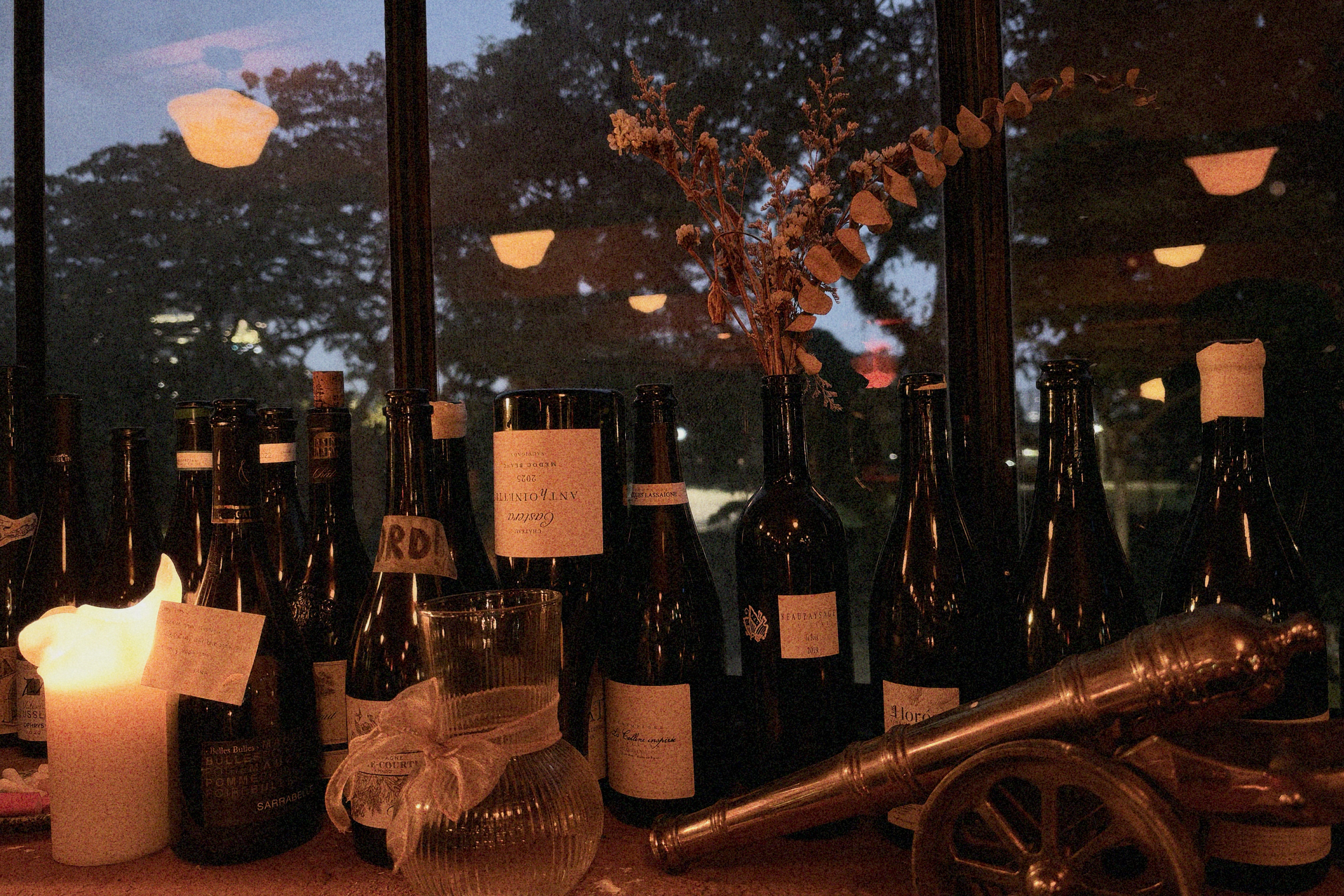
    • Kim and I met Mandy for dinner one night to mark her birthday, and we went to a wine-focused place called Fiasco which has taken over the spot where Kilo used to be, that weird little building out in the middle of nothing near Lavender. The food was all really good (I forgot to take pictures), and they’re doing some really interesting things with hanger steak and pork collar, the latter seasoned to resemble a very fancy charsiew.
    • In an example of culinary R&D jumping the shark, we ate at Surrey Hills over the weekend, where my mother-in-law’s corned beef hash came partially covered with a purple sweet potato foam. Needless to say, she did not appreciate the touch. The place purports to be Australian, and with her being Australian too, I tried to gaslight her into believing that it was an authentic Australian recipe that she’d somehow never heard about. Needless to say, I was not successful.
    • I finished PARANORMASIGHT: The Mermaid’s Curse, and found it a worthy sequel, arguably better than the first game in every way unless you want a spooky atmosphere. This one can’t be classified as horror at all. It’s a mystery adventure with supernatural elements so tame they’d elicit no more than a shrug from a timid baby. Like the first game, its story concerns Japanese history and legends that one might find a little boring, but you don’t have to read all the text in its menus.
    • Playing that game unwittingly prepared me for the film Inu-Oh (2021), which I’ve had in my library for years and suddenly decided to watch. From the opening scenes, it eerily echoed story points from PARANORMASIGHT, concerning the 12th-century Heike samurai clan, and their vengeful spirits said to linger across the land after they were wiped out. Inu-Oh is a wildly ambitious and stupendously well-animated musical that is let down by, well, its music. The concept is a fusion of traditional Japanese music with glam rock, and a main character starts playing his biwa one day like an electric guitar without any explanation. The visuals work, but the songs are poorly structured to modern ears, overly long, and basically repeat the same melodies while pages of historical narrative are sung over them. Imagine Billy Corgan’s worst material, stretched twice as long, and the lyrics are all about random days of Napoleon’s life, and you’ll begin to understand how it feels.
    • We finally saw Sentimental Value (2025) and wow it really deserves its Oscar and 95% Rotten Tomatoes score. The opening scene with the house, and the title card needle drop that follows it, was so good that my body felt compelled to stand up and applaud — I didn’t allow it, but that feeling went on for much of its running length. The train oner is a wonderful bit of technical showing off, and actually the whole film’s lush 35mm look just stunts on the pervasive digital signature of Netflix movies. Everyone is great in this, making art about how art both fucks you up and saves you — 4.5 stars.
    • Found time for a grab bag of other films too: Runner (2026) — not to be confused with Gal Gadot’s The Runner (2026), Good Boy (2025), Elle (2016), Grand Theft Hamlet (2024) — the one to watch out of all of these, a very human documentary about two out-of-work actors putting on a production of Hamlet inside the GTA Online videogame whilst stuck at home during the pandemic — Shelter (2026), and Tony (2026).
    • Singapore made headlines this week because of the launch of a new dating site by the government, currently in a pilot phase only open to civil servants. It’s called FirstDate, and matches people based on compatibility assumed from their responses to a questionnaire. The idea of a state-run service has amused observers, with some seeing it as a dystopian step towards arranged marriages by Big Brother, amongst other hot takes on this strategy to combat our falling Total Fertility Rate (TFR). History rhymes, of course, and older folks will remember the existence of the Social Development Unit (SDU) in the 1980s, a pre-digital precursor to this scheme, that was something of a government-run activities club to help rescue graduates from singlehood after being encouraged (by the same authorities) to optimize for good grades instead of dating during their teenage years.
    • But it’s hard for outsiders to decide if Singapore’s environment really does produce a special breed of hapless, rizzless forever-aloners, uniquely ill-equipped to find their own mates through empathy and communication, so Singapore’s own state-run media conglomerate is providing some data in the form of a new reality dating show called Wingman. The show’s format introduces an original element to the Love Island formula, namely that each contestant brings their own wingman/wingwoman to serve as hype men/women, espousing their good qualities so they don’t have to — a perfectly valid and brilliant tweak for Asian cultures where tooting your own horn unironically is a major ick. The contestants, in addition to a few Singaporeans, are a bunch of attractive 20-to-30-somethings from the Philippines and Thailand, all of whom resemble functioning young adults who can read social cues and body language, and interact normally with members of the opposite sex (there is no LGBTQ+ representation). There’s obviously a tilt towards extroversion, which you’d expect from people volunteering to be a dating show, but even correcting for that, there’s an intriguing, discernible difference between the Singaporeans and their SEAblings that’s best seen for yourself. Full episodes are available on YouTube. We binged all 10 so far in one night.
  • Week 35.26

    Week 35.26

    • The week started in a healthy fashion: Kim took a day off and we went out to play a game of not-tennis, aka padel. It is not a cheap pastime, and that’s taking the discounted rate we got from going at noon into account. It was not in the least bit overcast and I don’t think I’ll be risking heatstroke like that again. Indoors, maybe; the less strenuous variety (pickleball), maybe. Honestly, the more I think about padel, the more upset I get. It’s clearly a lazy attempt at making tennis slightly easier, and the added walls feel like an afterthought to create differentiation for the sake of it. If you want a more accessible tennis where your strategic game isn’t held up by your poor physique, go straight to pickleball; embrace the unsexiness. If you want to hit a tennis ball hard and run around, just play actual tennis.
    • Suitably sweaty already, we then went to the Botanic Gardens for an afternoon walk and lunch at the outdoor restaurant, Park Side. I had a gussied-up luncheon meat sandwich and liked the look of the menu fine — it is after all an affiliated brand of P.S. Cafe, which I frequent a lot — but Xin disliked her own experience there enough to reach out and tell me it was underwhelming. Well, I for one was whelmed. Lmk what you think.
    • A couple of days later, I fell sick with a mild flu. Was it the sun exposure, or the mall crowds we braved that evening on the way to see The End of Oak Street? I put the odds at 50-50. The movie was a lot of fun to see in the theater, and stylistically called to mind Spielberg’s best work of the 1980s.
    • Laid up at home the next few days, I got a lot of couch business done. Nintendo Switch visual novel Iwakura Aria? All endings completed. It boasts some unique artwork, and the writing isn’t too bad apart from some elements clearly contrived to add shock value. I’d rate it a cautious recommendation: if you’re into Mages’s work and are happy with a quasi-horror story, go ahead. I went in knowing nothing!
    • It was a big week in game teasers: I mean GTA VI, obvs, which I’ll probably have to buy when it comes out. It’s like being alive when the Beatles released Abbey Road and deciding you weren’t going to listen to it. This game is going to be the entire culture for at least a fortnight in November. I was also excited to see The Witcher 3 Remastered get announced, especially since I’ll be getting it as a free upgrade for the Switch 2. This is a game I bought with the highest of delusions — a massive 300-hour fantasy RPG is not my jam at all — and ended up quitting because of how ass it looked on the original Switch. Now that it’s receiving a lush graphical upgrade, I’ll finally get to be disappointed by the realization that I don’t actually want to ride around fighting monsters on horseback.
    • I also spent more time on Tiny Bookshop after hearing from Cien that she’d finished the game. For one thing, I didn’t even know it had an ending. I took it for an infinite business simulation with a fairly repetitive gameplay loop, made palatable by the fact that you were recommending real book titles for customers to buy out of your mobile caravan store. I thought I’d seen enough of what it had to offer after 10 hours, but I was wrong. (Spoiler warning) I’m now nearing the end, which ironically involves clearing a bunch of tasks so that you can… take over a not-so-tiny bookshop? What’s left for the sequel, sell out to Barnes & Noble and stock board games and blind boxes?
    • Playing that game always puts me in the mood to read more, and so I decided to start on a lengthy Neal Stephenson one, the kind that I don’t dare attempt until after I’ve completed my Goodreads annual challenge. I think Goodreads needs to make it about the number of pages you read, not books. Reamde, for instance, is about 1,600 pages on my Kobo, versus 300–400 for most other novels. So if someone committed to 12 books a year, then choosing Reamde effectively ups it to 15.
    • Anyway, I’m about 38% through it now and having some of the most fun I’ve had reading a book since… the last Neal Stephenson, maybe. I’m literally laughing out loud and shaking my head at his ability to imbue standard paragraphs with comic timing. Its globetrotting adventure core involves MMORPGs, ransomware, Chinese gold farming, and Russian mobs. Although the 2010-ish setting is quaintly anachronistic — with mentions of characters using WAP, Flickr, Facebook, and encountering problems that could be solved with cryptocurrencies and generative AI — it holds up perfectly and I never want it to end. In that regard, its length is a feature rather than a bug.
    • I’ve been listening to the new CZARFACE album featuring Tom Hardy aka Frankie Pulitzer and while he’s not a bad rapper at all (many people say he’s great but I don’t know how much is because it’s Tom Hardy doing something unexpected), I think he’s outclassed here next to the likes of Inspectah Deck; his flow is never as crisp and satisfying, and by flattening his accent to a neutral delivery, it lacks the character of, say, a Staten Island native. The beats are fire, though.
  • Week 30.26

    Week 30.26

    • Kim has fallen ill and is taking me down to Maybe-Covid town with her. Before it turns really bad, I figure I should bang out a short update. I eventually broke my Duolingo streak, my Finch streak, and some days I feel like ‘this might be the week I break my weeknote streak’, because it’s bound to happen someday. But when? Not today, at least. Let’s go:
    • On Thursday I managed to meet up with Brian for a couple of beers and a curry after running a minor errand in town. He’s finally moving on from our former employer, to an interesting insights role that should keep him both busy and amused, which is a minor miracle in this economy.
    • We also got out to dinner with a bunch of Kim’s friends on Friday before the illness took hold (who hired this dramatic tone and can we send him home?). The hosts had a Nintendo Switch with Overcooked loaded up for their kids. After watching her two children play with total focus, another mom who could really use some wine-alone-time said excitedly, “I think a Switch will be appearing in our home shortly!” I was perplexed that the child-distracting benefits of a videogame console had not previously occurred to her, and regretted not being more of a pain to my parents all those years I wanted a SNES or Mega Drive at home.
    • So here we are instead, spending adult money to chase a childhood feeling. I bought Assassin’s Creed: Shadows on the Switch 2 a couple of weeks ago because it was on sale, despite knowing that it would be technically more impressive and performant on the PS5. Well, I needn’t have bothered worrying about frame rates because the game itself is dogshit. It was during a mission where I was meant to kill a few people, and discovered a bug where one of them was loitering outside the challenge’s boundaries (literally beyond an invisible wall I could not cross), that I decided to write off the USD$35 I’d spent and delete this piece of Ubisoft garbage.
    • I finished reading Book 3 of Solvej Balle’s On The Calculation of Volume series, and I haven’t decided if I’ll continue — there is one more book out in English, and there are a total of seven planned. I thought the first book was fine, but these last two have leaned more boring and uninteresting. What kept me reading was an (unintended?) parallel with unemployment that I noticed: being stuck in a day that repeats endlessly is what a sabbatical or retirement feels like at first. Work is the engine that keeps your days moving whether you like it or not. Remove it, and you’re living outside the time everyone else shares. Tara, the protagonist, can’t rely on anyone to understand her experience or keep her company, so she fills her days with idle curiosity — studying history, watching the sky and her backyard, letting time slip by until she loses track of it.
    • [Spoilers follow] Perhaps I’ll read the next book just to confirm my suspicion that this story arc intentionally mirrors the different stages of a post-work journey. At the end of Book 2, Tara suddenly meets another trapped person, which kicks off a period of relief, elation, and connection in Book 3. And then they meet more trapped people, forming a sort of retiree community that tries to navigate their way through this. Some want to return to how things were before, which I suppose is a desire to reintegrate with society and regain relevance, while others don’t believe it’s possible anymore. Some want to simply find a way to live, and some feel a responsibility to use their unique position to improve the world. Given that Balle has lived as a sort of writer-recluse in her small Danish village while putting these books together over many years, I don’t think I’m far off the mark.
    • I want to recommend the app that I used to create this week’s featured image above: tone. I found it through the Japanese developer’s Twitter, which was legible because of how that platform now automatically translates tweets in other languages to English. It is actually a very useful feature that will nevertheless probably be proven at some point in the future to have caused even greater deterioration of society and mental health. Anyway, it changes photos in various ways to look like they were reproduced with vintage printing techniques, not through a simple filter, but a multi-stage process you can actually inspect. Not the first to attempt this, but a really nice implementation of the concept. It’s free, with an optional in-app purchase to unlock more colors.
    • A ton of new music dropped in the past couple of weeks but I’ve been listening to the Takehiro Honda Trio’s This Is Honda (Jazz), and Radiohead’s The King of Limbs, which I’ve somehow hitherto ignored. Oh Charli XCX’s new album Music, Fashion, Film has some great sounding moments (and some painfully shallow lyrics), and its second track, SS26, is a pop masterpiece. It also says something about the times we live in, and my general intelligence, that I wondered for a minute if the album’s cover featuring John Cale, Marc Jacobs, and Martin Scorsese was AI slop.

  • Week 20.26

    Week 20.26

    • On Tuesday and Wednesday I acted as a facilitator for an AI vibe coding class that YJ teaches. It’s been a minute since I’ve been in that sort of workshop environment helping participants through activities, but it was fun and I enjoyed meeting the rest of his team. I was happy to join for several reasons: I thought I might learn something new, I was curious to see how “real people” engage with these tools, and he said I could come in a t-shirt and jeans (this is my real non-negotiable).
    • Incredibly, Jose works in the same building (I did not know this) and spotted me through the closing doors of an elevator. So we met up for breakfast the next day and he told me about how he’s been using Zo Computer — a new-ish AI tool that I think struggles to define its value proposition to normies beyond “personal cloud computer”. For the most part, it’s doing what you can do with your own computer, an AI agent, and a web host. I signed up and have been playing around but it still feels like a bunch of features duct-taped together in search of a problem.
    • Coincidentally, the team behind it was in town for a series of AI conferences happening this week. I watched a recording of one of the Zo team’s presentations at one event, and basically, instead of subscribing to a bunch of services like Linktree or Squarespace or Buffer for personal or business needs, you can use Zo to vibe code your own versions which will run on their servers… or sorry, your computer in the cloud. I’ll admit the automation story is useful: paid users can keep services running continuously, so you can script triggers and schedule operations. It’s kinda sorta like having your own OpenClaw setup, they say. I wish I had a need for this, but like I said to someone, I actually like doing some stuff myself and don’t want to automate everything away.
    • While tuning into the livestream of Day 2 of the AI Engineer Singapore conference, I heard a talk by the designer Josh Newton that articulated things I’ve been upset about for the past couple of months. About how AI enables creative and curious people to make great things, but also impatient and lazy people to make soulless things at scale (not his exact words). We need more craft, more intent, more muscle for individual expression so we can have nicer things. The design community is very fond of saying ‘design matters now more than ever’ at moments of existential crisis, but for once I think it’s actually a critical imperative rather than a defensive posture. I’m tired of so many “builders” building for the sake of it. I want to see a piece of the creators in everything that gets pushed out.

    Aside: I’ve been talking to a couple of people about the need for more apps to be created under a “benevolent benefactor” model, i.e. delightful, useful, deeply personal software created by people with no profit incentive, no dreams of a big exit, and no need to surveil users or blast them with ads. Just made for the love of the game, and maybe to give back to society. Michael’s Listless and YJ’s JustNow are two examples. The newly revived Friendster might be another. I think AI can get more of this out into the world. I don’t want to hear about monetization — how boring! How déclassé!

    • My Gemini subscription was ending, and so I got pulled back in for one last job. I thought I would simply update Window Box with a new Tokyo location, but that wound up bringing on a bunch of significant changes. Snow, for one, which I’d intentionally avoided before by choosing Singapore and Hawaii as initial locations. I solved the aesthetic problem of dead plants by introducing the Japanese camellia, which blooms in winter, and the nandina (Heavenly Bamboo) which goes from green to red tones in the cold. But once I added snow and seasons, I started revising the way cloud cover and precipitation were determined, and ended up tuning the environmental sounds, and the animations of rain, leaves blowing in the wind…
    Window Box — Tokyo with a light dusting of snow
    • After seeing how the basic GPT-mini model in Zo Computer managed to code me a simple web app, I started to rethink what free models can do today. So after my Gemini subscription lapsed, I tried adding a transition animation when switching between cities in Window Box, and was absolutely stunned that Gemini Flash (the ‘dumb’ model you can use for free) managed to help me get it done. It certainly wasn’t one shot or perfect, but wow. Very soon we’ll be locally generating (streaming?) live app code on our mobile devices.
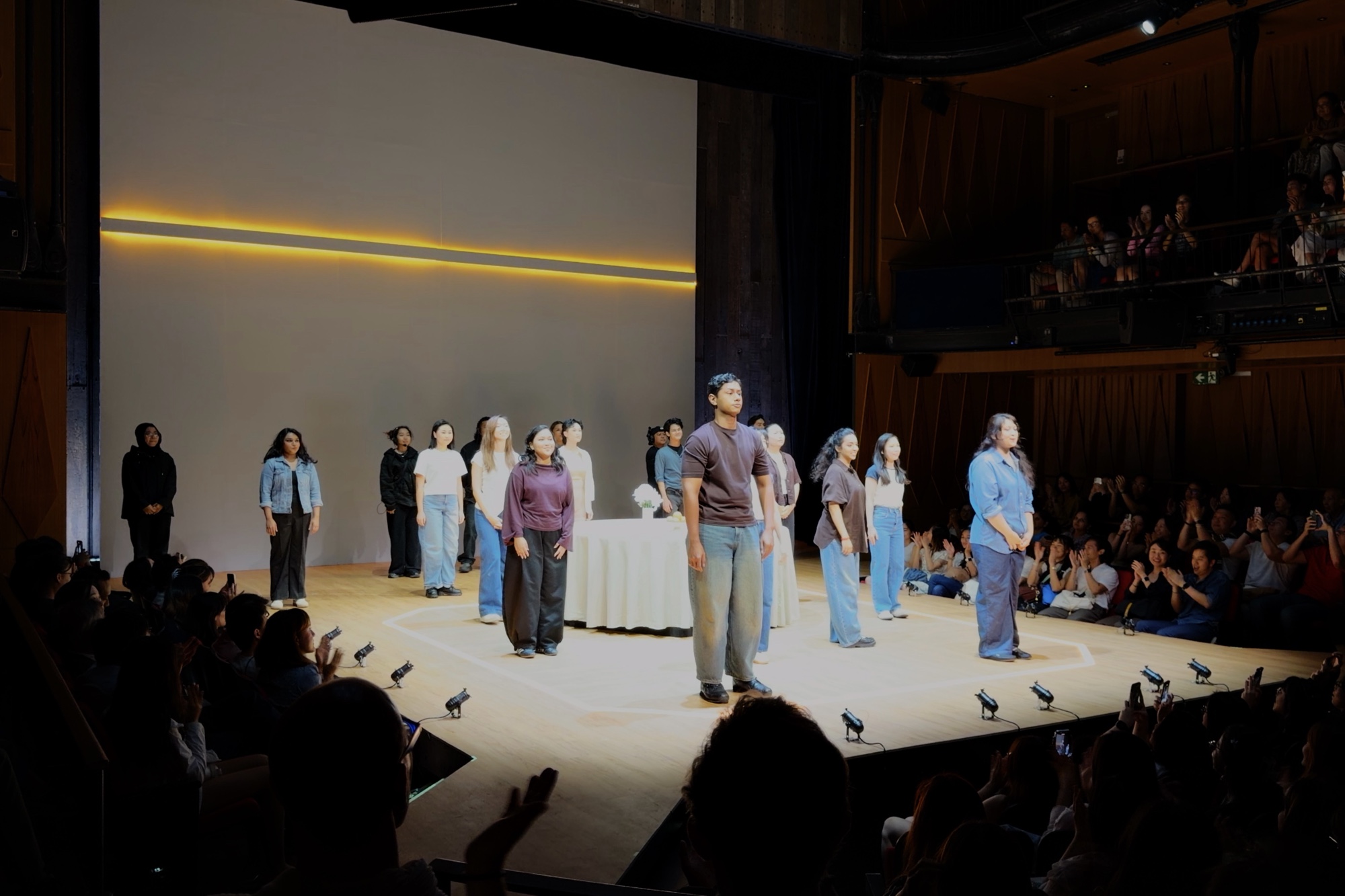
    • On Friday night, I met up with Jose (again) and Reg to attend a production of 8 short food-related plays at Wild Rice, chiefly to support our friend Munz who is one of the performers. It’s the culmination of a year-long theatrical incubator program she’s been in, and we came away very proud of her, impressed with all the actors, and some of the writers.
    • It became a bit of a slog near the end, but I’ve finally finished Donkey Kong Bananza on the Switch 2. For a game that’s partly about the power of music, I found the soundtrack pretty mediocre, and for a game that’s partly about a great singer, the vocals in the songs are sadly weak and buried in the mix. It’s not one I think I’ll ever revisit.
    • My book club is reading Speaker for the Dead, the second book in Orson Scott Card’s Ender series (as in, Ender’s Game). I’ve long heard that this book is like the Dune and Foundation sequels: not worth reading because they spin off into weird territory and lack the tight purpose that made the first books great. I’ve finished it and can say that while it does go in a very different direction, it’s undoubtedly worth reading. You don’t even need to remember very much from Ender’s Game, scanning a quick synopsis online will suffice. I’ve been very sleep deprived all week, and even then (!) easily stayed up wide awake past 2 AM in order to finish it.
    • I had to make this stupid House of the Dead image after I had the idea in the shower and couldn’t shake it. In the past, that would mean way too much time in Photoshop for not that great a payoff. Now it’s just a quick prompt to Nano Banana 2.
  • Week 7.26

    Week 7.26

    One of my irrational fears that hasn’t gone away with growing older is that of going to the dentist. I’ve put it off over and over, and was pretty sure I’d make it last year but didn’t. I’ve done my best to handle things at home, even flossing daily which they always say you should do but I’m convinced no one actually does. This week I finally made an appointment to go, and it wasn’t as bad as I feared. They did find a cavity that needs patching up, but the appointment for that is only in a couple of months.

    One thing that felt off was a recommendation that I get a certain procedure done — not only because I’d like to avoid pain wherever possible, but because it was prescribed before they’d even looked in my mouth. I’d only just said that it was my first visit in a while, and they said ‘okay you should get this done’.

    Because it’s 2026, I uploaded my x-rays to Gemini 3 Pro for a second opinion. It analyzed the scans confidently (but of course) and told me the same things, but in even greater detail. It did not think the procedure was necessary, and gave me clarifying questions to ask the dentist next time. When it comes to a nervous person like me, it provided a better experience than a human dentist could because it was available to answer my many more follow-up questions, at all hours. This longer “consultation” made me feel better, although I’m well aware that taking medical advice from a machine that just says things isn’t the smartest move. But I know people do and will because it’s really easy, and so once again I’m saying this is really dangerous territory.

    Why am I using Gemini so much, and what happened to Claude? Google decided to play dirty, I guess. They’re offering three months of their Pro AI plan (essentially Google One with 2TB of storage + access to Gemini Pro, Nano Banana Pro, and Veo) at a 90% discount. That’s about S$2.80 a month. These models are all so incredibly close in raw performance, that for someone like me who’s not using them for coding, the main differences are down to tone, character, and perhaps ethical alignment. I’m already sold on Claude for text-based work, but I thought I should spend some time getting a feel for how Gemini differs. Especially since it’s going to be at the heart of Apple’s AI features at some point this year.


    Friend and former colleague Rob is back in town for Chinese New Year. I thought I’d last seen him maybe two or three years ago, but it’s actually somehow been closer to four. The quickening pace of time’s slipping through the fingers at this age is alarming. The last time he was around, I’d just printed off some stickers of my Misery Men drawings and given him one. I had just gone back to work after my brief sabbatical. We were still wearing masks indoors (as seen in the linked post’s featured photo). Is there a German word for how relationships can pause and park themselves outside of regular time, so that four years feels like so much less?

    A few of us met up for craft beers and Thai food on Sunday, with the reminiscing and catching up going past midnight. Here’s a privacy-preserving photo-turned-courtroom sketch made with Gemini’s help.


    Media activity

    • I finished watching all 48 episodes of The Apothecary Diaries anime series on Netflix. It’s about an unusually educated girl, raised in a red light district, who gets kidnapped and sold to the imperial palace as an indentured maid where she gets to flex her skill with poisons and medicines. It’s set in a fictional country resembling China in the Tang Dynasty. Nothing about this should appeal to me, but it was one of the more enjoyable low-stakes shows I’ve seen recently.
    • I still haven’t finished reading Sleeping Dogs. But I did finish playing The Hokkaido Serial Murder Case a few weeks ago but forgot to say so. As a faithful remake of a retro game, it can’t be blamed for some of the dated gameplay. The art could definitely be better though — it would be a fine game for $20, but unfortunately is priced at $44.99.
    • It’s been a year since we were in Tokyo and I bought the Japanese supernatural murder mystery game Paranormasight, largely because it was set in the Ryogoku/Sumida district where our apartment was. In last week’s Nintendo Direct, a sequel was announced and so I decided it was finally time to get started on the original. It’s turned out to be quite good, with a dynamic visual presentation that goes beyond the usual VN style of talking figures in front of different backgrounds. The gameplay is constantly breaking the fourth wall as well: one challenge where you die after hearing a cursed sound is solved by going into settings and turning the volume down.
    • While feeling stressed out about the dentist, I played Jusant on the PS5. It’s a beautiful, dialogue-free game where you slowly climb a massive mountain and put together what happened to the people who used to live on it. It was fairly quick to finish and now I’m curious about Cairn, another game about scaling a mountain, albeit more realistic about the physical difficulties involved. Jusant’s nameless hero is practically superhuman and his arms are way too skinny for the insane amount of climbing he has to do.
  • Week 6.26

    Week 6.26

    • A quick follow-up on one of last week’s topics: it turns out that some posts on Moltbook may have been faked because there were security holes allowing people to get on there and post directly (instead of being a bot-only place as promised). Doesn’t change the main point that future agents will collaborate not just on one computer, but sync up across wide networks with effects most of us can’t fathom. Look at the crowd that gathered to discuss Clawd a couple of days ago, to see how much excitement there is for this box that says Pandora on it.
    • I’m too tired to dwell on this much more today! Keeping up with the AI space is still a full-time job, and I’m not going to try. But Claude Opus 4.6 was just released, along with demos of what it can do in Cowork mode, which is very impressive if true. Apparently these models are also able to tell when they’re being evaluated by safety/alignment teams, which makes it very hard to know how they’ll really behave in the wild. Look at this example where a model can infer the user’s cultural background with just a few words, owing to the words they choose. These are tools, except other tools don’t do things like this.
    • I read a fantastic sci-fi short story that sort of involves AI: Julia, by Fernando Borretti. If you also enjoy fiction that drops you into a context and makes you swim, and then shows you strange and beautiful ideas as you break above the surface, you’ll love this. Like how China Miéville uses ornate language in The Book of Elsewhere to suggest Keanu Reeves’s… I mean the protagonist’s immortal, mystical otherness, Borretti uses a dense, intellectually dominating host of references here to illustrate the POV of an artificial mind at the end of humanity’s time. I haven’t stopped thinking about it.
    • What will we do when all the jobs are gone? A young entrepreneur in our neighborhood has started a home-based business selling smashburgers, and we bought some for dinner midweek. They were good, and I’m slightly afraid of what this proximity will do to my waistline. For those unaware, this was a bit of a trend last year and local media outlets like ChannelNewsAsia ran stories (example) about how such businesses were springing up as a result of low employment opportunities and rising rents.
    • Retreating further into the virtual world is another option. A bunch of new experiences became available on the Apple Vision Pro recently, and I caught up with some of them. The cutest is an immersive documentary on Apple TV called Top Dogs (two 15-min episodes), which looks at the annual Cruft’s dog show in Birmingham, UK. You get really up close to some of these beautiful animals, and the urge I felt to reach out and pet them was extremely strong. It wouldn’t be the same seeing this on TV. Here you get a sense of their size and presence, see them in incredible detail — everything but smell them. Apparently there are 25,000 dogs at the convention center each year, but I imagine these are all shampooed and much more pleasant than your average wet dog.
    • There’s also Retrocade, a game on Apple Arcade that uh… simulates an arcade. The game is playable on other devices, but on Vision Pro you get life-sized arcade cabinets standing in front of you, playing licensed retro titles like Space Invaders and Bubble Bobble. The only thing that breaks the illusion is of course that you can’t reach out to grab the sticks and mash the buttons. Instead, you have to use a connected game controller.
    • Speaking of emulating old hardware, I played and finished a game on Switch (also available on PC) called The Operator. It’s one of those where the entire UI is a computer’s desktop and you have to chat, look into files, and do hackery stuff to experience the story. I think this can be filed along with the other murder mystery games I’ve played lately. It’s fairly short at under four hours, almost completely linear, and not something you’d play twice. Wait for a sale, I think.
    • You know who else is a hacker? The lead character in Apple TV’s Tehran, a show that came out in 2020 and has since been renewed for a fourth season. We watched Episode 1 back when it came out, liked it enough, but for some reason completely forgot to go back until this year. It’s been topping the charts lately, maybe because of the recent civil unrest in Iran. Having just finished Season 1, I can say it‘s a really good espionage thriller, and we’re keen to keep going.
    • Oh and check this out. Someone has managed to license Isaac Asimov’s Foundation series and made a free-to-play (i.e. shitty) mobile game: Foundation: Galactic Frontier. It even has an Apple TV logo appear on startup?! And the next day, I saw this insane animated ad for it pop up on Instagram and couldn’t believe my eyes — I took a screenshot to prove it. In all fairness the actual game isn’t anything like this, it’s just a heinous misrepresentation that probably has Asimov spinning in his grave.