Tag: Nintendo

  • Week 49.24

    Week 49.24

    I’ll try for a shorter bullet point update this week.

    • It’s hard to believe we’re already done with the first week of December. Every year, I say Christmas crept up on me and I don’t feel it coming at all. Now I accept that it’s just the nature of Christmas in the tropics (without winter), and if I don’t surround myself with visual signifiers of the season, the mind forgets what the body doesn’t feel.
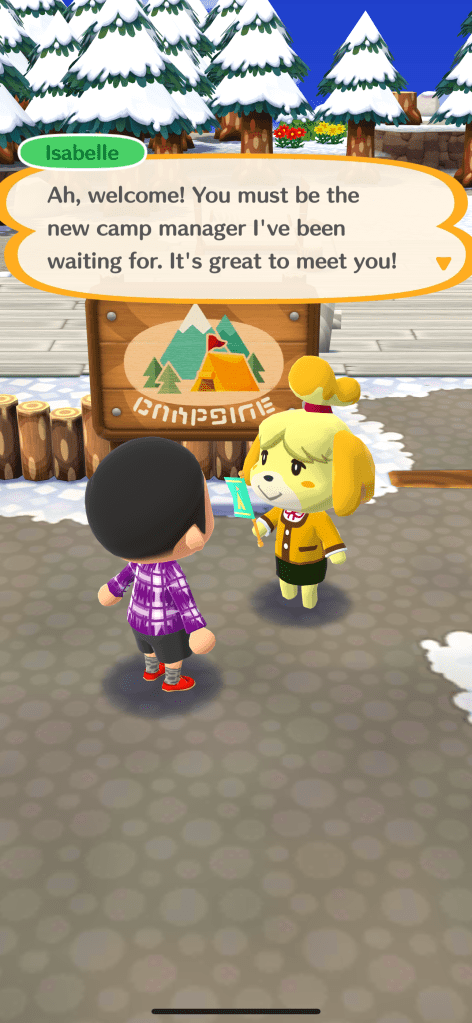
    • Nintendo released Animal Crossing Pocket Camp Complete, the offline, self-contained, definitive version of their mobile AC game, and I decided to buy it after all. I played the live service version briefly when it came out, but soon decided I didn’t like the in-app purchase model. This is much better. So much better, in fact, that I have spent several hours this weekend fishing and harvesting fruit.
    • The game was actually mentioned in my first-ever weekly post back in July 2020. After 7 years of iteration, it now feels like a massive game with tons of content (clothing and furniture to buy and craft) and new functionality bolted on. Currently, it’s snowing in the world and the seasonal events have got my campsite decorated with sleighs and piles of gifts and I’m wearing a reindeer hat… and dare I say? It kind of feels like Christmas is coming.
    • If you’re playing too, add me to your world with the Camper Card below! I believe it’s just a one-way thing, and we won’t get to interact for real since there are no servers involved. And don’t forget, the game is half price now and will go up to $20 at the end of January 2025.
    • We collected our Zeiss Optical Inserts for Vision Pro (prescription lenses that click in magnetically), and the setup experience was pretty cool. The device detects that they’re in, and makes you redo the eye setup process. Then it registers the new lenses on your profile by having you look at a QR code printed inside the box. Given that my contact lenses are “weaker” than my regular glasses, I’m now seeing everything in the Vision Pro with even more clarity than I was before.
    • Leica fixed a deal-breaking bug in Leica LUX where your preference of ProRAW or HEIF file format wasn’t remembered between sessions. They also fixed some other small things that bothered me but aren’t worth mentioning. This makes it a viable camera app for everyday use because it gets you HEIF files with the gentler/less sharpened look of shooting in ProRAW. Plus you can choose a “Leica Look” color profile to start from, and non-destructively try others or revert to the underlying original photo afterwards. I like it enough to put a shortcut on my Lock Screen.
    • Our home broadband plan was up for renewal, and I got a call from the company to that effect. They wanted me to give the last 4 digits of my national ID number over the phone for verification before they would even tell me anything. “How do I verify you’re really from the company?”, I asked. “Can you tell me something you know about me?”, I offered, to which they said “We can’t share any customer information”, and agreed when I asked if I was just supposed to trust them. I said that didn’t work for me, and so they could just send me whatever special offers they wanted via email instead.
    • The offer was fine, and I decided to stick with them for another two years because it’s the best price I’ve seen anywhere. And as a bonus, we’ll be getting an upgrade to a 10gbps line. We’ll only be utilizing a maximum of 2.5gbps though, because that’s the maximum supported wired input on the WiFi 6E router I just got a few months ago.
    • Renovation noises at home continued, and someone lodged a complaint with the housing board against our new neighbor’s contractors. It wasn’t us, but I can see how this might not be the warm welcome anyone would hope for. There are also reports from other residents that they’ve been seeing ceiling leaks during the recent storms, and mysteriously, these are people lower down in the building! Fingers crossed this doesn’t grow to affect us, because I can’t take any more drama.
    • One noisy afternoon, I decided to finally pay a visit to my local library branch after talking about it for the last six months, and… it’s not much to write home about. Lots of retirees sitting around playing Pokémon Go and reading magazines. Afterwards I decided to eat at Yakiniku Like, a place that seems well designed for solo diners. I got my own little personal grill, and ate 200g of beef short plate with 300g of rice (and a huge mound of shredded cabbage) for a little over $20 and went home very happy.
    • We went out for a much nicer dinner on Thursday, checking out Hayop on Jose’s recommendation. It’s affiliated with the Manam restaurant in Manila, a fact that only landed as I was looking at the menu — I ate there a couple of times back in 2019 when I was there for work. The prices here have been proportionately raised, but the food is nearly as good as I remembered, so that’s fair. I like Filipino food because it respects the power of pork fat.
    • It turns out that writing bullet points ≠ shorter updates when you’re a typer-yapper like me.
    • I wanted to binge an entire anime series in a week and decided to go with Summertime Rendering. It’s a time loop story that feels like a visual novel game adaptation, but actually started as a manga series. I was hoping more for sci-fi but it’s really a supernatural thing. At 25 episodes, it became a bit of a slog near the end as the multiple timelines became too convoluted to follow. Don’t really recommend.
    • Netflix released a new 6-part spy series called Black Doves, starring Keira Knightley and Ben Whislaw (aka Q in recent James Bond films, and the voice of Paddington). I was optimistic, but while it’s not as bad as most Netflix shows, it still suffers from the Marvel-ization of popular culture where any seriousness or suspense is immediately undercut by comic relief before it can mean anything. That’s not the only problem with it, but the result is a show that feels like background fodder for phone fiddling.
    • Months after the Katseye moment, we watched the Pop Star Academy show that shows their formation and training over two years. It was interesting to see non-Asian idols like Lexie chafe against unethical manipulation in light of HYBE’s recent troubles with NewJeans. I don’t think the industry’s current models will hold up well as talent starts to realize they hold the keys to their fandoms and can stream online on their own. It’s like K-Pop’s In Rainbows moment.
    • I also think HYBE made a strategic error in greenlighting this behind-the-scenes show with Netflix, and it’s translated into Katseye’s failure to take off with an international (beyond K-Pop) audience. Fans of J-Pop and K-Pop aren’t surprised to see the rough training and emotional abuse their idols go through, but people seeing that shit for the first time probably feel terrible about supporting the whole business, especially when adult music execs gleefully admit on camera that they fucked with the teenaged girls’ trust in each other to create more drama.
    • Yiwen shared her Spotify Wrapped on IG and I learnt about the artist known as Night Tempo, a self-proclaimed “retro culture curator” who puts out city pop-inflected music that sounds exactly like how the perfect night drive must feel. Check out his latest album, Connection on Apple Music.
    • For something less weeby and more eclectic, Jean Dawson’s new album Glimmer of God is worth a playthrough. I’m going to be putting the opening song Darlin’ on playlists for quite awhile, I’m sure.
    • ROSÉ’s debut album rosie dropped, and what I’ve heard so far sounds like competent pop with a teenaged guitar girl’s poetry notebook slant. That’s not a knock; it’s as satisfying a sub-genre as a sad man’s whiskey-soaked heartbreak blues. I’m still feeling good about my prediction that she’ll turn out to be the most musically interesting Blackpink alum.

  • Week 47.24

    Week 47.24

    People sometimes say that I’d make a good teacher if I ever tried it. I think good teachers are probably more patient than I am and love speaking in front of people a lot more than I do. But on reflection, those are both things I’ve gotten a little better at over the last decade, so maybe.

    I got a little taste of it this week when I was given the chance to hear a class of college students make their final presentations for a design thinking course, and provide assistance in the assessment of their assignments. They were asked to identify a group with needs, understand them, and then design games that could be of help. They had to prototype and test their ideas before finalizing a working version. They all did pretty well, creating solutions that were surprisingly polished.

    The general idea about deploying Generative AI tools in the workplace is that they don’t do much to enhance the work of already talented employees. But for the vast majority of average or below-average workers, LLMs elevate their productivity and quality of work to a consistently higher level, which is still a net positive for teams.

    Apple’s current ad campaign for Apple Intelligence seems to take that tack too, resulting in a message that’s so far from the Macintosh’s promise of a “bicycle for the mind” that these ads are rightfully catching some flak. But in the classroom, I saw AI tools give students (with limited time and a lack of traditional design skills) the ability to execute their ideas at high fidelity. Making card games that look and feel almost like professional products, fully illustrated without the help of artists, is not something we could have pulled off when I was their age. I’m partly envious, but also afraid that on a wider scale, execution will be confused with education.

    Earlier in the year, when I sat in on another class being taught by a friend, I was struck by how hard it is to control the chaos of a large room of modern students, and the same thing was true here. When you get over 40 laptop and iPad-equipped young adults in a room, having their attention is not a given. Side conversations are happening all the time, and listening to whoever’s speaking seems like a choice.

    Maybe it was just my experience as an English student, but our class sizes were smaller, and discussions almost always followed a single track, led by a professor pacing around the room rather than anchored to a screen at the front. There were hardly any screens, come to think of it, just books and notepads. Now everyone’s on Figma, Canva, Miro, and a host of other infinite sheets of AI-enabled SaaS paper. I’m not saying we had it better, but I worry that the option to take things slowly and still excel is disappearing. When kids today say they’re stressed, it’s hard not to believe them, having seen the performative polish that’s now standard. We’re getting awfully close to expecting students to pop out fully formed and ready for the mines.

    ===

    Over the weekend, we decided to get our eyes tested at a Zeiss-approved optician’s, to order the official prescription inserts for Apple Vision Pro. This will let me use the device on days when I’m not wearing contact lenses. The need to have them on first has admittedly been only a very minor inconvenience, but now nothing will get in the way of hopping into the uh… spatialverse.

    Of the three eye tests I’ve had this year, this was probably the most thorough one. The key seems to be patience (there’s that word again) on the part of the tester, in the sense that the testee should never feel hurried. They should be allowed to flip between options 1 and 2 as many times as they need to identify the sharpest and most comfortable images. As a result, I have a new prescription that shows my eyesight has slightly, but surely, deteriorated for the first time in over a decade.

    My last test was in 2019, when I got my last pair of glasses from Zoff. Those were so comfortable that I stopped wearing contacts regularly and became a spectacles guy again. Now I wonder if wearing contacts actually helped arrest the decline of my eyes.

    Anyway, armed with a new prescription and an appetite for vision correction, I went to the nearest Zoff outlet and ended up with a new pair of glasses. I learnt afterwards that the frames I chose were “trendy” and “perfectly suited for Gen Z styling”. Along with recent purchases of wide-leg pants and oversized tees, my fashion Bryan Johnsoning is complete.

    Side note on Japanese express optical brands: I stopped considering Owndays because all their frames are small and narrow — they literally don’t have large options. Zoff at least stocks a few, and in general they overindex on “Boston” and “Wellington” shapes, so on both occasions I’ve been able to find something I like with almost no effort.

    ===

    Media activity

    • After taking a break for several months, I returned to Like a Dragon Gaiden: The Man Who Erased His Name on the PS5 and finished it. And this was a short game by Yakuza standards. I expected to feel pretty over the series by this point, but the emotional ending to Kaz’s story has got me quite excited to get started on the next game, Like a Dragon: Infinity Wealth, sooner rather than later.
    • I also returned to Luigi’s Mansion 3 on the Switch, which I started (and stopped) playing when I first got the console back in 2017. This game has just sat there for 6 years waiting for me to get back in, and all credit to Nintendo’s designers, it was stunningly easy to pick up where I left off.
    • There’s a ton of movies on MUBI due to leave in the next two weeks, so I started with Toni Erdmann (2016), which was nominated that year for the Palme d’Or. On the surface, it’s about a jokey dad whose daughter has become a miserable management consultant, and he decides she/they are not doing so well and could use a little cheering up. And yet as a film it was like nothing I’ve ever seen before: I laughed, I cried, I was bewildered. It’s simply art. 4.5 stars.
    • Another film that is leaving is a 2011 documentary by the late Austrian filmmaker Michael Glawogger, Whore’s Glory, which examined the lives of sex workers in Thailand, Bangladesh, and Mexico. The film’s biggest problem is its inappropriately “cool” millennial-era Western music soundtrack featuring Cocorosie, Tricky, and PJ Harvey. My 3.5-star Letterboxd review: “If anyone asks why I look sad, from now on my answer is ‘I saw Whore’s Glory back in 2024’.
    • I haven’t held space to experience the new suddenly released Kendrick Lamar album, GNX, the way it deserves. Hopefully by next weekend.
    • Kim Deal of the Pixies has a new album out at the age of 63 and I quite like it. It’s called Nobody Loves You More.
    • I discovered a Japanese singer by the name of Kaneko Ayano while looking for artists with a similar sound to Happy End. She has an awesome ‘gimmick’ where every album is recorded and released in two different ways: acoustic and with a full band.
    • But for the song/video of the week, it’s Hanumankind’s Big Dawgs. I was listening to Apple Music 1 when it came on, and had to look it up immediately. He’s an Indian rapper from Kerala by way of Texas, and he’s just broken out now with this song after years of making music. His lyrical game is considerable, and as evidence I offer the existence of a YouTube comment calling him “Lendrick Kumar”.
    • I’m also embedding an older video I like, a freestyle performance, and a recent interview on Apple Music where it’s clear he’s an articulate and very driven young musician who’s going to be huge.
  • Week 44.24

    Week 44.24

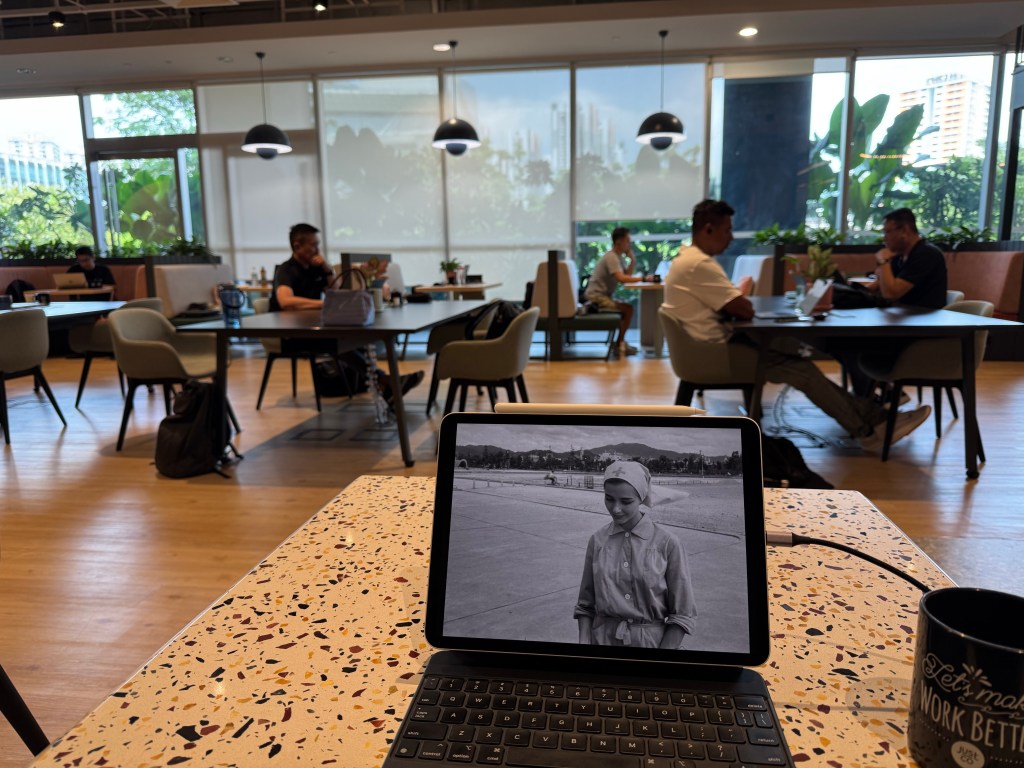
    Monday got off to a good start when I finally landed one of the coveted booth seats at the co-working space. Up to then, they were always occupied by the time I got in, and it was a feat not repeated at any other point in the week. Because I’d only signed up for the month of October, and with Thursday the 31st being a public holiday (Deepavali, not Halloween), this chapter of drinking too much coffee and watching movies while surrounded by busy people has come to an end — let’s be honest, though, most of their screen time looks like chatting on Slack/WhatsApp and browsing the web.

    I’m feeling a sense of loss about it, actually. For starters, the renovation noise is set to continue next week and might drive me out of the house still, now without a place to go. But more than that, I was just getting used to the routine and would jokingly say to Kim, “I’m going to the office”. It’s akin to the loss of a ‘third place’, a social setting distinct from home and work. However, I don’t even have a second place these days!

    One thing that sitting still in front of an iPad for hours on end has highlighted is how important yet increasingly difficult it is to single-task. While thinking about my/our deteriorating attention span — that constant feeling of being pulled towards other tasks while in the middle of doing things I chose to do — I identified a root cause in myself: I have less trust in my memory these days. So when something occurs to me, say looking up a fact or sending someone a message, it’s harder to file it away for later follow-up, because I think I might forget. Past experience has probably taught me that I’ll forget.

    On one hand, I could make peace with that. So I’ll forget a thing or two; big deal! I don’t have to optimize every detail. Things can be allowed to slip and it’ll probably be fine. Or I could use the time-honored second brain productivity hack of… jotting thoughts down and then getting back to what I was doing? I may give that a go with the Quick Note button in my phone’s Control Center and see if it makes the distracted feeling go away.

    The filmmaker Lav Diaz is known for making extremely long movies. At 10 hours, his Evolution of a Filipino Family (2004) is probably only consumable in several sittings and is the ultimate test of patience and focus. Like Richard Linklater’s Boyhood (2014), it was shot over more than a decade, and you see the actors age for real.

    One could criticize its poor production values, shot in grainy and low-res black-and-white film and video, often with inadequate microphone coverage, or its loose editing and lack of action (its 10-hour runtime probably says something about Diaz’s attitude towards concision). But the message is in his medium, and I’ve found watching it to be a great meditative exercise; letting the mind alternately empty and gather and empty again as you watch the family slowly lead cattle from one end of the screen to the other or hold sparse conversations over meals, spread over minutes of near inaction. The first 2.5 hours passed effortlessly in a state of detached attention.

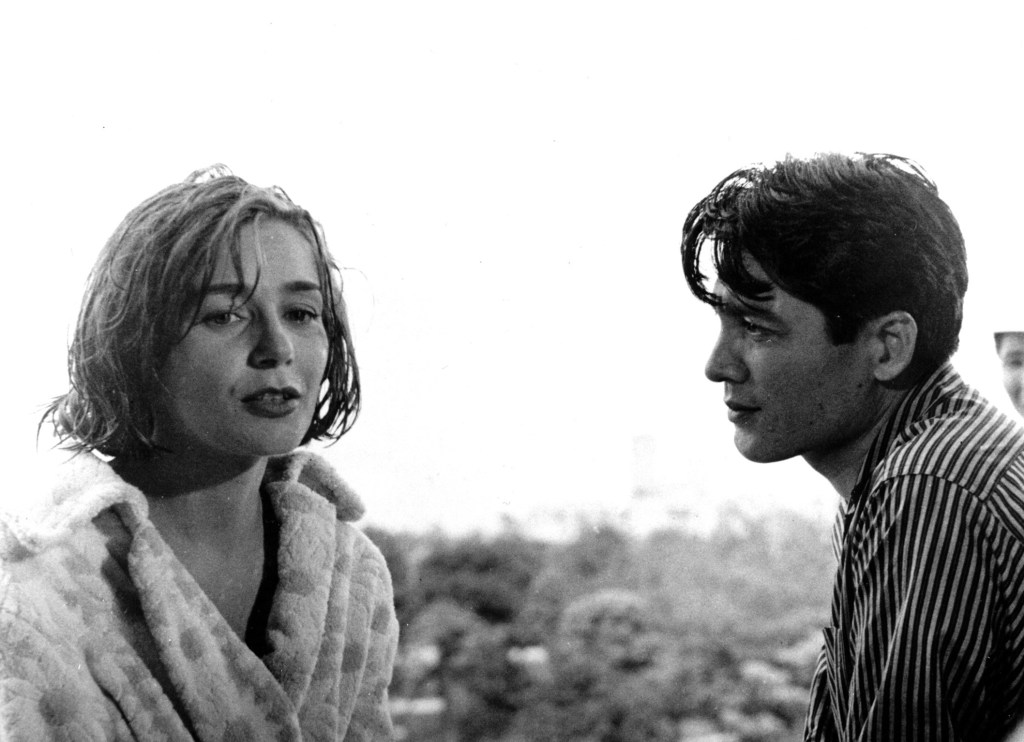
    I also managed to watch Alain Resnais’s Hiroshima Mon Amour (1959) on MUBI without much distraction. It’s a hell of a film, visually inventive and beautiful, with an opening sequence that you have to see to believe, going from sensual shots of skin to burned and scarred consequences of the atomic bomb. Which is the backdrop for this film about war, love, and memory.

    Having just visited Hiroshima for the first time last year, I was surprised to find so much of it familiar in this old work: the bombed-out dome, the peace museum, and its garden sculptures. It was also incredible to see its depiction of an interracial relationship between an Asian man and a white woman as equals. As far as I can tell, it was probably one of the first films to center such a couple.


    The first few Apple Intelligence features launched this week in iOS 18.1, and while many in the tech press seem unimpressed by these ‘basic’ capabilities, especially when compared to products from OpenAI, Google, and Meta, I’ve found them so impactful to the way I use my computing devices that I can’t imagine going back.

    • Apple also announced impressive M4 updates to the iMac, Mac mini, and MacBook Pro this week, but I don’t need to upgrade!

    For one, I can summarize long emails and webpages directly in Mail.app and Safari. My bank likes to send me long, jargon-filled market updates in its email newsletters, and now I can summon a quick paragraph that gets to the point.

    When I get back to my phone after some time away, I can see what would normally be stacks of messages and notifications summarized into a few lines. I’ll still read them anyway, but it’s great to get a preview so I can triage for urgency. This is also useful when getting Siri Announcements over AirPods. Say someone sends me a long string of messages, instead of having them all read out over my music, I can hear a summary and know whether it’s important enough to pull my phone out for.

    And coming back to the point about avoiding distractions, there’s a new focus mode called “Reduce Interruptions”, alongside others like “Work” and “Do Not Disturb”. This reads and assesses all your notifications with AI, and will only show you things that seem time-sensitive or important.

    There are also Writing Tools that I’ll be using to proofread this post before sending it out, and a Clean Up tool that can remove objects in photos using a generative model. It’s quite good, certainly enough for casual use, and I’ve seen online examples of it pitted against Adobe’s equivalent AI tools and actually coming out ahead in some situations. Plus, everything happens on device, which is great for data privacy reasons.

    A quick demo of the Clean Up feature in Photos.app

    One grumble I have, though, is that Apple appears to be reserving its upcoming Visual Intelligence feature (where you can point your camera at something and have the phone offer contextual information) for iPhone 16 models with the new Camera Control “button”. I hope they’ll make it work with the Action Button on iPhone 15 Pro models, but am preparing that I won’t have it until I upgrade to next year’s 17.

    In the meantime, I have found a new use for my Action Button: starting the Apple Music 1 radio station. This has proved super useful and convenient. If I’m anywhere with my AirPods in, getting some music going is now just a button press away, even without getting my iPhone out of my pocket.

    Take a minute to appreciate this ad that Apple made to celebrate the debut of this radio station back in 2015, back when it was called Beats 1 — a far better brand in my opinion. It was a simpler, more optimistic time. Watching this, I believed that a global internet radio station dedicated to great music, across all genres, could map differences in culture and unite us all.

    I must mention that Nintendo joined the music streaming app business this week. Nintendo Music is free for subscribers to the Nintendo Switch Online service (USD$19.99/yr), which I already am for purposes of playing games online and backing up saves from my Switch. However, the app is not available in Singapore as Nintendo’s online services are not officially available here — one has to create a US account instead. But complaining about Nintendo’s digital and worldwide strategy is a whole other post.

    So far, this music service is pure win. Classic first-party soundtracks from the best in the business, with curated playlists for different moods and activities, and the ability to “extend” some tracks to an hour’s length (it appears there’s more to this than just looping the songs) for use as background music? With more music continuously being added? It was enough to make me jump through the hoops of switching App Store accounts to get the app on my phone. And so I’ve been listening to the sounds of Animal Crossing: New Horizons again, feeling nostalgic for the early days of the pandemic when great music in a cozy game did unite the world during a very stressful time.

    • They should add Shortcuts support to the Nintendo Music app so I can start playing music via the Action Button.

    I may buy Nintendo’s upcoming Animal Crossing: Pocket Camp Complete smartphone app, which is their clever solution to keeping the live service mobile around after its servers shut down. You can buy a fully offline version for $10 (going up to $20 in January 2025), with all 7 years (!) of old in-app purchase content included. Current players with saves can resume their progress, but I will probably start over again. The new app launches on Dec 3, 2024.

    Remaining media activity

    • I’m halfway through reading Variable Star, a book by Spider Robinson based on an idea and notes left behind by Robert Heinlein. So, it’s a posthumous collaboration, and a very entertaining one at that.
    • We waited till all episodes were out and then binged Season 4 of Only Murders in the Building. This is not my preferred way of watching the show; I believe spacing them out lets the story breathe and be remembered better. But Kim is going away again for a couple of weeks, and neither of us wanted to wait that long to pick it back up.
    • I finished Season 2 of The Old Man and remain impressed. It’s one of the best ‘classic’ espionage shows in recent years, and if you have a better one to recommend I’d love to see it. I’m talking old-school, Tinker Tailor-type spy intrigue, which reminds me I should pick up a John le Carré book next, because I don’t think I’ve ever read one. Btw did you know Nick Harkaway is his son??
    • After six months, we caved and reactivated the Netflix subscription. Kim wanted to watch Culinary Class Wars on her flight, and I’m keen to check out some of the new anime series they’ve put out, like Ranma 1/2, Dan Da Dan, and Season 2 of Oshi no Ko. I watched 9 episodes of the latter on Sunday; it’s that addictive. It was always a great looking show but the artistry and animated flexing is on another level now: some of the kinetic montages and dramatic sequences jump through a dozen art styles in as many seconds, and feel inspired by the Spiderverse films and maybe even Satoshi Kon’s Millennium Actress (2001), which might be my favorite animated film of all time.
  • Week 36.24

    Week 36.24

    I was able to visit my parents for dinner for the first time in over a month. The long delay was on account of my dad developing a painful case of shingles, which, if you don’t know much about (like me), is a reemergence of a dormant chickenpox virus in one’s body, often after the age of 50. In other words, if you’ve had chickenpox before, you’re at risk of shingles — a nastier, localized version of the same virus.

    Unlike the regular childhood version, it doesn’t usually take over your entire body, just specific areas. In my dad’s case, it affected his back and one side of his torso, leaving the skin painfully sensitive for weeks — nerve pain that, for some, can linger for years. Thankfully, he’s making a quicker recovery.

    I had to stay away because I have never gotten chickenpox, and you can catch it from someone with shingles. I was urged to get the vaccine, because adult cpox is reportedly awful (like shingles, maybe worse), but my doctor suggested doing some blood work first to test for immunity — mostly because he didn’t believe I could make it this far in life without getting chickenpox. But it’s true! My mother swears it, and I have two traits: pretty good memory of my childhood years, and an outsized tendency to complain of ailments. There is no way that I could have gotten chickenpox as a child and everyone just forgot.

    The test results came back, and apparently I’m immune. The only theory I have traces back to this one time in kindergarten, when the boy sitting next to me in class developed cpox and had to leave school early. I recall living in fear that I would be next, and pus-filled bubbles would soon show. I remember checking myself fastidiously for a week or more, but it never came. Perhaps the glancing exposure was just enough to let my immune system prepare itself, but not enough to result in an infection? Or maybe, as my recent run-in with a car suggests, I’m actually Unbreakable like Bruce Willis in that M. Night Shyamalan movie.

    ===

    Kim is away again for work (13,600km away to be precise), and my having to deal with our pest situation alone has been a whole saga too boring to recount in detail. Tl;dr I’ve deployed a fleet of poison/bait traps, struggled with anxious insomnia, taped up a bunch of possible entry points, cleaned up a lot of lizard poop, sprayed insecticide down drains…

    More happily, the morning she left for the airport, I was up early and decided around 7:30 AM that I might go for a walk before it got too warm. This was inspired by Cien’s recent revelation that she’s been taking hour-long morning walks nearly every day. Just to get it out of the way: that’s a bit much for me, but I might go once a week. Spontaneously, this particular morning’s resolution ended in Peishan and me ‘virtually’ joining her for a walk at the same time, in our respective neighborhoods, sending photos along the way. This is actually a pretty fun thing to do!

    It was, however, warm despite the early hour. And it’s been hot and humid all week out here. I had to walk 10 minutes from an MRT station to a restaurant yesterday evening in very still air, and I could feel the sweat on my back not evaporating at all, merely pooling. Even my Sony Reon Pocket 5 brought little relief; I barely perceived that the metal contact point was cooler, or it can’t do much to dispel the mugginess of high humidity.

    ===

    I couldn’t take the wait any longer and upgraded to the visionOS 2 beta. I won’t upgrade any other devices, but I wanted any improvements in eye/hand tracking that I could get. So far, it’s been perfectly stable. I could talk about the new gestures and features, but the single most impressive thing has been the ability to view old 2D photos as 3D spatial scenes.

    What this looks like is simply layers of depth. You obviously can’t look around corners, and it’s not doing anything crazy like building 3D models you can move around in. But it’s like going from looking at a scene with one eye to two eyes. They suddenly have a liveliness to them because your brain can not only see that one object is in front of another, but perceive it too. Sadly, this is not something that can be demonstrated with a photo or video. The only way is to see it for yourself.

    The AI-powered segmentation of objects is somehow flawless, even better than on Portrait Mode (blurred background) photos taken with an iPhone. In one shot I had of a vineyard, every individual plant and leaf stretching to the horizon line was distinctly separated in space from the others. You can also blow them up to life-size with an “immersive” viewing mode, which puts you right in the space.

    Going through photos from the past two decades, of people who’ve passed on, and places I may never see again, has been profoundly moving. Documenting your experiences in photos has always been like building a time capsule, but this approaches time travel. It makes me so glad for every moment I thought to capture at the time, and the fact that the Vision Pro can do this retroactively for normal photos feels like the most unexpected gift I never knew I wanted. That’s what Apple does best, I suppose.


    Before the annual fall event tomorrow night, I’ll go on record again that I don’t think I’ll be upgrading my iPhone or anything else this year (but this time I really mean it!). So far I’ve had 16 iPhones and lost this bet with myself every year, but I can’t justify an incremental tech purchase in the same year as the AVP.

    Things that are unlikely to be announced but might make me reconsider my ‘no upgrade’ vow:

    For iPhone 16 Pro (Max):

    • No camera bump
    • New image processing pipeline that walks back the aggressive AI/HDR look and brings back natural looking photos à la Halide’s Process Zero (but with 24–48mp HEIC/JPEG XL files)
    • Bold, saturated colors like on the old iPod nanos
    • Untextured, grippy back glass
    • Significantly faster or exclusive Apple Intelligence features compared to iPhone 15 Pro
    • Completely new battery chemistry that means I won’t be sub-90% battery health in under a year

    For Apple Watch Series 10:

    • 2x battery life
    • Blood glucose monitoring
    • New body design that shames the old ones so bad you can’t wear them out in public anymore

    For AirPods Max:

    • Redesigned headband that either replaces the mesh or improves its comfort and durability
    • Significant weight reduction and/or new materials (comfort and durability)
    • A great protective case
    • Addition of a power button

    ===

    Media activity

    Recent reading momentum led me to finish reading Neal Stephenson’s Interface after two months. It’s a highly entertaining sci-fi story about contemporary American politics, media culture, and using brain implants to reverse a presidential candidate’s stroke damage. Nearly the entire time I was reading it, I visualized the main character as Robert F. Kennedy, and his VP pick as Kamala Harris.

    For my next book, I’m taking it easy with Jack Reacher #22, The Midnight Line.

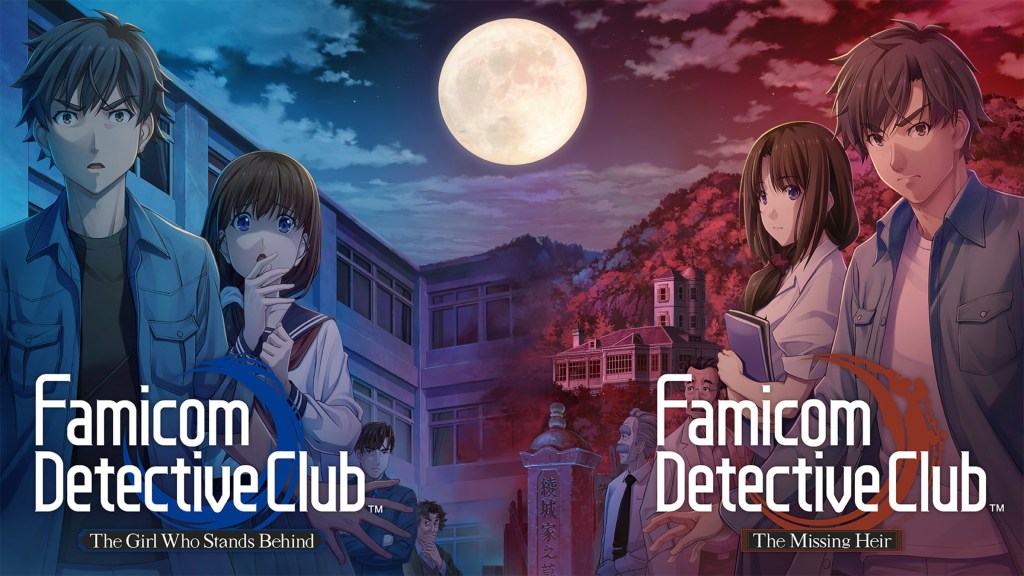
    A few years ago, Nintendo remade two classic ‘80s visual novel-style adventure games under the “Famicom Detective Club” banner. This week, they released a wholly new third entry in the series, Emio: The Smiling Man, which got greenlit because of the warm reception that the remakes received. The history of these games is pretty interesting, and I watched this whole video essay on them.

    I bought and played the first remake, The Missing Heir, back around 2022, and found its authentically ancient gameplay archaic and frustrating. For example, in most such games, when questioning someone about a topic, you will reach a point where their answer starts to repeat itself — a sign that you’ve heard all you’re going to hear. In the first two Famicom Detective Club games, this is not the case (pun unintended).

    You: [Ask about the car]
    Suspect: There was a car seen at the time, I heard.
    You: [Ask about the car]
    Suspect: Hmm, that’s about all I remember.
    You: [Ask about the car]
    Suspect: Hmm, that’s about all I remember.
    You: [Ask about the car]
    Suspect: Hmm, that’s about all I remember.
    You: [Ask about the car]
    Suspect: Oh! I just remembered something. It was a black sedan.

    This is such incredibly bad game design, because someone repeating themselves like that is unnatural in the real world, so it appears as a limitation of the game (not having AI to generate different versions of “I dunno”). So of course a player isn’t going to keep pressing, because the suspect’s response isn’t an invitation to keep trying. It’s the equivalent of a brick wall in the game’s interaction model. But no, you’re meant to kick every solid object multiple times in case it comes loose.

    I ended up finishing the game using a walkthrough, and declined to buy the second game, The Girl Who Stands Behind. I’m guessing that Emio, being a new game, will be an improvement in this regard and so I intend to play it someday. But it doesn’t feel right doing that unless I also play the second game (there is no real need, they are not connected).

    Rather than pay $30 USD to frustrate myself, I watched a 7-hour video of someone else playing through the entire game — at 1.5x speed, of course. The first video I found was actually 10 hours long because the player was blundering through some of the aforementioned game design quirks, so I gave up on him and found this better one instead.


    Oh, and there’s another kinda new game that concludes something that started in my childhood, and I finished it this week. That game is of course Return to Monkey Island, which I played on the Switch. If you subscribe to Apple Arcade, you can also play it there. I don’t know how I feel about it; the original two games were the pinnacle of LucasArts’ point-and-click adventures and I probably remember them most fondly of all. The new sequel brings the story to a close, but with a new art style and an acknowledgment that a long time has passed (both in story terms and the authors’ perspectives). There was no way the ending could have satisfied every question and loose end, so they just went for something that felt true enough to its roots, but kinda comes out of nowhere. I was honestly surprised when the credits rolled. But that’s life!

  • Week 29.24

    Week 29.24

    I managed to go a whole week without visiting the Apple Store.

    We did visit a new branch of Go! KBBQ at Bukit Timah Plaza; the original on Amoy Street is perpetually busy and comes recommended by the Korean community (so I’m told), and even has its own aging room in the back with a viewing window. The new one lacks the aging room but IS in an aging suburban mall, which increases your chances of getting a table. We overestimated as usual, and ordered a 690g set of pork belly, neck, and jowl. They do the cooking for you — there are illustrated STOP! signs telling you not to even attempt it yourself — and everything was perfect.

    ===

    I was saddened by the passing of another senior relative, aged 86, apparently from heart failure. The shock was compounded by the fact that I had just seen him a few weeks ago for the first time in years, at another uncle’s memorial, and he looked in great health. I remember him for hosting some of the more enjoyable Chinese New Year get-togethers of my childhood, where I learnt to play blackjack at the dinner table together with adults, spinning the lazy Susan around to draw cards off the pile, sweeping the pot (ashtray) of coins into my arms after winning a big hand, then experiencing the pain of losing everything — great preparation for the Terra Luna collapse decades later.

    Due to a contagious illness at my parents’ place, I attended the wake alone and discovered a massive 9-storey building in Woodlands with multi-faith halls and columbarium facilities. The majority of these that I’ve attended have been at Singapore Casket in the Lavender district, a much humbler affair. Woodlands Memorial feels modern, which is to say efficient, cookie-cutter, and almost soulless. That joke is nowhere as distasteful as the marketing position I found on one of their posters: “Singapore’s premier one-stop afterlife venue”.

    ===

    I spent almost all of Monday installing Windows XP on my iPad and MacBook using the newly approved UTM SE app from the App Store. The goal was to play an old Windows game that I have fond memories of: High Seas Solitaire. It’s really not much to look at, and the entire package weighs in at under 800kb. Published by ZapSpot, the game was part of a series of ad-supported titles that make Flappy Bird look like a big-budget production.

    But in the early 2000s, I was stuck in a dreary clerical job that involved juggling Microsoft Excel and Access, stacks of official papers, and a cabinet full of file binders. High Seas Solitaire was on my Win95-powered computer, and it might as well have contained an entire 3D metaverse. When I found the above gameplay video on YouTube, I was shocked at how much detail my nostalgic brain had invented: I remembered a calming nautical world with ocean sounds, a creaking wooden ship, and seagulls flying overhead. In reality, the game has like four SFX clips that it plays at various times and that’s it.

    I’ve forgotten the exact rules, but it wasn’t your standard solitaire game. You had to match cards that added up to 14, but pairs could also be matched, I think? It was just very satisfying to complete, and easy enough to do that a few times during each lunch break. I haven’t found any game based on the same mechanics since, but I dream about it.

    Alas, while I managed to get Windows up and running, the game itself would not run. This led me to install VMware and try other online emulators, repeatedly install Windows, and even create CD-ROM images containing the game file for the virtual machines to mount. But each time, the game wouldn’t get past the loading screen. Finally, I asked Ci’en if she would try running it on her PC, and when even that didn’t work, I threw the whole project out of the window. Small comfort: perhaps even if I had succeeded, the CrowdStrike BSoD debacle this week might have wiped out my VM.

    When I’m rich, I’ll bankroll the creation of a new, truly immersive version for visionOS.

    ===

    I watched two video essays from the Digging The Greats YouTube channel which usually focuses on music history and song breakdowns, but these were about an “experiment” where the host tries to only listen to music off an iPod for a month. He deletes streaming apps on his phone, commits to use aux cables for in-car listening, and eventually goes down a rabbit hole where he also quits social media and starts using a dedicated digital camera and prints photos in lieu of Instagram (why? It’s not as if he was using Instagram to take the photos).

    This sort of modern tech consequence confluence happens over and over throughout the videos. He says this experiment changed his life and his whole outlook on music, especially regarding the influence of algorithms. Because he has an iPod with finite storage and no internet connection, he has to make choices about what music to buy and load onto it; he can’t just rely on an omnifarious cloud library. Thus he makes it into a whole personality: he introduces the idea into his everyday conversations and asks musicians and DJs he meets for music recommendations. He thinks ahead about what music he’s going to listen to. And music takes up even more space in his mind (if that were even possible).

    None of these benefits actually required an iPod! He could have conducted the same experiment on his iPhone with some self-discipline, e.g. only listening to music downloaded offline, which can only be done at home near a laptop. But the iPod is a physical object that makes limitations tangible and the experiment is a construct that reminds you of a goal — these sorts of things are great for creativity and focus. It’s the intentionality and “mode setting” of what he’s doing that’s producing the results. And this is something we can and should all practice from time to time.

    A few years back, I committed to taking only black-and-white photos for an entire month. I can now identify that period very easily when scrolling through my photo library. It was an exciting, liberating, and frustrating exercise all at once that forced more conscious decisions and felt like I was working with new gear (sans the expense). When you keep a mission like that at the front of your mind, you look out for interesting photos everywhere, which is why so many people take their favorite photos on holiday.

    The same applies to writing (“I will blog every week”), music (“I will write an entire album in one key”), or anything that gives you joy (“Let’s do an Arnie movie marathon this weekend”).

    ===

    Media activity

    • 💿 Apropos of the above: I listened to that new Travis album during a long cab ride and it was okay but didn’t make a huge impression. I considered deleting it, but then thought, “if I’d bought this on CD years ago, I’d listen to it at least a few more times, and the songs would probably stick in my head and years later I might even be thrilled to hear one of them come on somewhere in public”. That’s how my relationships with many of my favorite albums began anyway. This endless queue of options and dopamine-driven consumption pattern is not good for culture.
    • 🎮 Ghostopia Season 1 continues to be an intriguing journey on the Nintendo Switch. It reminds me a little of Doki Doki Literature Club, not in content but in manner: layers of subversion and unexpected metaphorical depth under cuteness and comedy. I will be sad when it’s over (soon).
    • 🎬 The following were all watched on MUBI.
    • Saw a Tsai Ming Jiang short, The Night (2021), which is nothing more than a series of still camera takes of nocturnal Hong Kong street scenes. The bright, digital-looking aesthetic resists the traditional romantic notion of Hong Kong as a neon-soaked, tattered metropolis. It’s dirty, yet cold and empty. Perhaps that was the point, but it did nothing for me. 1 star.
    • Saw One More Time with Feeling (2016), the first of the two Nick Cave films by Andrew Dominik. The inconsistent use of black-and-white footage upsets me. I probably should have watched this before This Much I Know to be True, but coming off that one I’m feeling that Dominik has a limited approach to getting things out of Cave, and when you hear him in the background asking questions, he can barely articulate them, sometimes letting his fumbling interrupt Cave’s train of thought, and that to me is an awful shame. He and the film crew also seem to greatly irritate Cave, which sadly continues in the sequel. They’re also transparently making a film, not a documentary, directing naturalistic actions to be repeated so they can be shot on the 3D camera. 3.5 stars.
    • Saw 24 City (2008), another pseudo-documentary, this time about the closure of a long-running factory in China. As you may have heard, the scale of these operations makes them cities in themselves, with the children of workers attending school within their walls and identifying more as ‘of the factory’ than the communities around them. There are interviews with real people recounting their lifelong experiences at the factory, including some devastatingly emotional stories, interspersed with actors being interviewed as characters for reasons unexplained. This dilutes the effect and makes it hard to stay invested as you never know when you’re being ‘lied to’. One scene has the legendary Joan Chen playing a factory worker who grew up with the nickname “Little Flower” because of her resemblance to a character in a film played by Joan Chen. I mean, that’s some genius casting but also too much. 3 stars.
    • 🛣️ I also rewatched David Lynch’s Lost Highway (1997) and ended up writing a longer review, below:

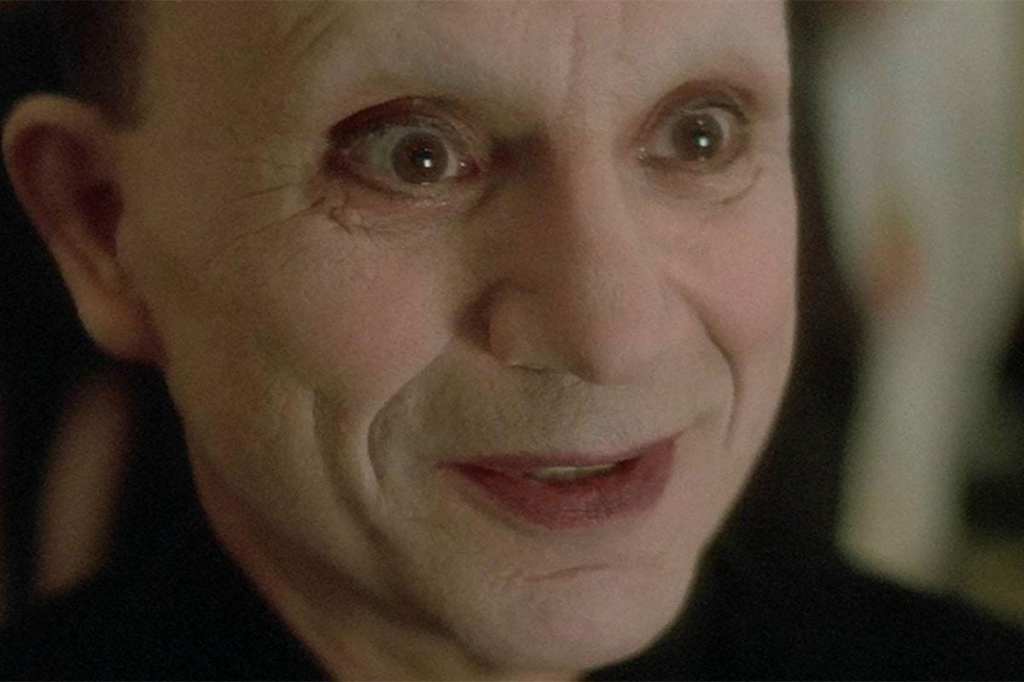
    This film made a huge impression on me as a teenager, the early scene with the Mystery Man’s wide-eyed mask of a face staring spookily at Bill Pullman like Ryuk the ‘shinigami’ in Death Note — so grotesque and caked in unearthly tones that I remember it as employing special effects, but no, it was just Robert Blake’s face — talking to him from both sides of a phone call, surreal and inexplicable just like much of this entire film, it scarred me deep.

    It seemed like a shockwave of audacity to have a main character morph into another person completely without any satisfying followup, just rolling into a new story completely. I remembered that, but mostly forgot the ending where the two halves converge. Making sense wasn’t the point anyway, it was a vibe. It’s jazz cinema.

    I don’t think I had much early exposure to challenging art and I was making up for it through a phase into which Lost Highway fit perfectly, like William Burrough’s cut-up texts and visual poems like the Qatsi series: peering into randomness for meaningful patterns, meditating on nonsense to glimpse truth. Maybe even more than the film itself, I was really into the soundtrack, which featured David Bowie right in the middle of his Outside/Earthling era (which is where I started with him), the Nine Inch Nails, Rammstein, The Smashing Pumpkins. Teenager catnip. Was it also the first time I heard Antonio Carlos Jobim? Maybe!

    Rewatching it now over two decades later, I expected to understand things at a deeper level, but maybe I’m just a boring old guy now or got stupider because all I can focus on is how ugly or sloppy things are from a craft perspective: Pullman’s tacky LA apartment with odd furniture, the awkward fight scene between Pete and Andy that ends with a forehead embedded in a glass table, the VHS look. Sure, I have theories about what it’s all about but come on, who casts Gary Busey as a caring dad? It’s all corny af. The cinematic vocabulary hasn’t aged well and the once-cool cyclical timeline where the end is the beginning is the end isn’t mind-blowing anymore, just lame. Marilyn Manson’s inclusion in a snuff porn excerpt isn’t edgy, it’s enabling a sex offender. The Mystery Man has lost all menace and looks pathetic in his white makeup; I bet I could take him. Yeah I’m boring now. 3 stars.

  • Week 22.24

    Week 22.24

    I used to drink 3–4 coffees a day, measured in espresso shots, usually from our home Nespresso machine or the office’s barista. At Starbucks prices, that would cost $10 a day or more, depending on the drink formulations. At home, about $3.20 in Nespresso pods.

    While looking at where I could trim unnecessary expenses (which has resulted in pausing Netflix for the past month, I’ve barely missed it; and canceling YouTube Premium, much more painful because of how frequent the bad ads are, so perhaps a necessary expense after all), I thought perhaps I could drink more tea. After all, I like tea! It’s just a bit more bother, waiting for the water to boil and then standing there for 4–5 minutes while it brews, or at least having to remember to come back in time — I usually don’t, and then it stands there on the counter for 20 minutes becoming cold and uncommonly strong.

    So I got some UK supermarket brand teabags in, because local supermarkets don’t do tea much cheaper and can’t do it much better, I assume. And boy are they ridiculously cheap. A box of 80 Sainsbury’s gold label teabags runs about S$5–6 (and less than S$2 in the UK), making each hit of caffeine about 10x cheaper than Nespresso. If you do the math, simply switching to tea will save me enough to buy a new iPhone Pro every two years.

    Starbucks revenue is down, coincidence?

    ===

    I finally got the third and final dose of my hepatitis vaccine after recovering enough from Covid — that cough is still around though. For reasons too hard to explain here, I ran into YJ immediately after, and we managed to chat for about half an hour. It was my first time seeing him in years; I think the last time was a noisy fast-food lunch just before Covid happened.

    He runs a bunch of coding classes for kids and I got to sit in for a little bit of one. What I want to mention here is how astounding it is to actually watch young teens use their computers in a classroom in 2024. They swipe between desktop spaces on macOS: they’ve got windows for Discord, Telegram, YouTube, Figma, oh and some multiplayer FPS they’re killing their classmates in, casually multitasking between all of it while still participating in the lesson.

    I said to YJ either we’re really old and slow, or this generation’s brains are cooked. I assume the former. We were premature in calling millennials “digital natives” because the world they and Gen Zs grew up in were not sufficiently digital. I think these kids are there now.


    Media activity

    • I know I said I was committed to finishing Astral Chain on the Switch, but I lied. The graphics are good for the aging platform, but the story is not engaging, the levels waste my time, and the combat is over complicated for no reason. Cutting my losses.
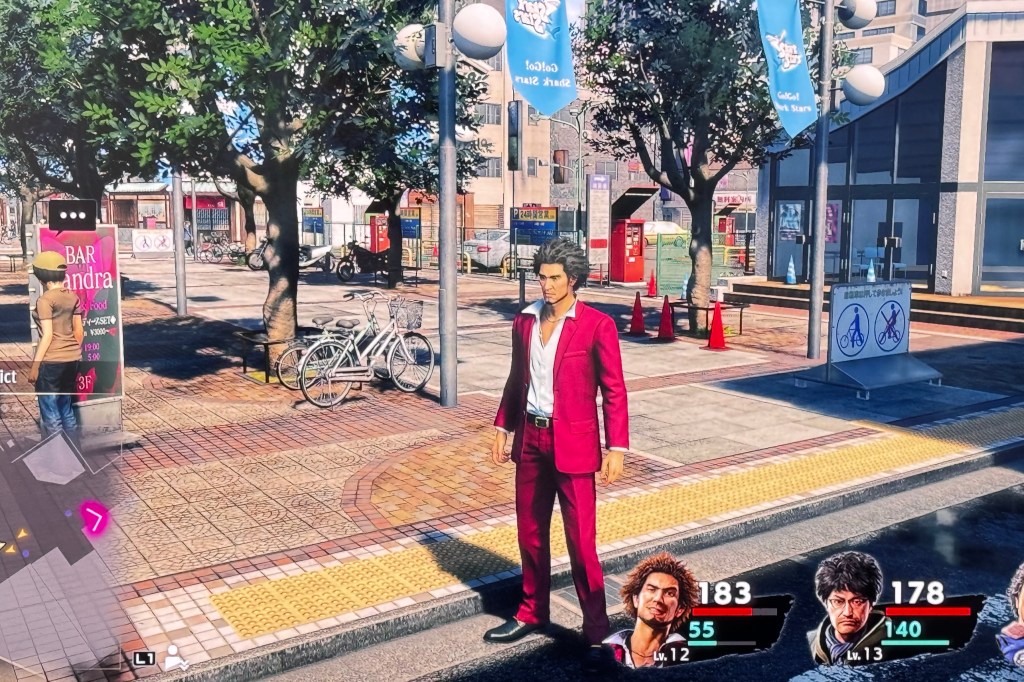
    • Likewise, after 24 hours invested, I’m ready to call Yakuza: Like A Dragon the worst installment I’ve played in an otherwise brilliant series. Perhaps it’s the decision to make it more of a JRPG, with all the tedious combat and level grinding that comes with it. The city of Yokohama where you spend most of your time is so much blander than it is in Lost Judgment — just compare the maps and you’ll see Yakuza’s version is a barren wasteland where Judgment’s pops with shops and activities on every block. I’m at a stage where the game is telling me to level up before the next chapter begins, and I’m saying no to hours more of pointless street fights.
    • I went back to Lost Judgment to finish the add-on DLC adventure, The Kaito Files, which took about four hours. And then I deleted it along with the two games above. Clean slate and it feels good.
    • I decided to see more films each week, and to cut down on the decision paralysis, they don’t have to be great.
    • Firestarter (2022) was terrible. I was actually excited for it because I saw the original 80s film several times as a kid; it had horror vibes and terrified me. It was based on a Stephen King story and starred a child Drew Barrymore as a girl with the power to set things on fire with her mind. This new one has Zac Efron playing her dad, and there are nearly no redeeming qualities. 1/5.
    • I rewatched David Fincher’s The Girl with the Dragon Tattoo over two days and loved it more than I probably did when it came out. Although it wasn’t as successful, it made me want to rewatch The Girl in the Spider’s Web too, but had to confirm my vague recollection that it was a new standalone story written after Stieg Larsson’s death ended the trilogy. Turns out there are now SEVEN books in the Lisbeth Salander series, and Spider’s Web is book #4. I’ll probably read the new books first to see if they’re any good.
    • In the Heights was a fun musical with Lin Manuel-Miranda’s fingerprints all over it. The songs were satisfying, with the occasional clever bars that make you go ‘ooooh!’, and Jon Chu (of the Step Up films) is obviously the guy you call to direct big dance sequences. Perfect Sunday afternoon viewing. 4/5.
    • Completely without meaning to, I saw an Anya Taylor-Joy triple feature this week: The Northman: I was prepared for a mid-budget Viking tale, but had no idea it would be a star-studded, intensely violent, artistic triumph (4/5); The Menu: I was prepared for cannibalism and risked watching it before dinner anyway, but instead it was an absurd black comedy wrapped in layers of detestfulness — it attacks pretension with a blunt weapon forged from pretentiousness itself (3/5); and Furiosa: Jesus Christ, George Miller has action cinema running in his veins, you can’t take your eyes off the screen for a minute. Anya is incredible in all three, a victim with hidden strength. I’d like to see her do some lighter comedic material. Maybe I’ll watch Emma next week.
    • YouTube recommended me a music video by Kenshi Yonezu and I want to know why no one told me about this guy. I’ve seen three of his recent videos now and they’re brilliant! They make use of practical effects, clever editing, and great art direction to keep you engaged throughout the songs. Take a look:
  • Week 21.24

    Week 21.24

    Kim’s post-trip illness last Sunday turned out to be Covid, so we shuttered ourselves home all week and tried to sleep it off. Since it was our last test kit, I didn’t get a chance to test myself, but I assumed that the lingering illness I’ve had since returning from Hong Kong was probably it, or else I’d just get reinfected (which didn’t happen). We received new tests on Thursday and, thankfully, both tested negative.

    Games

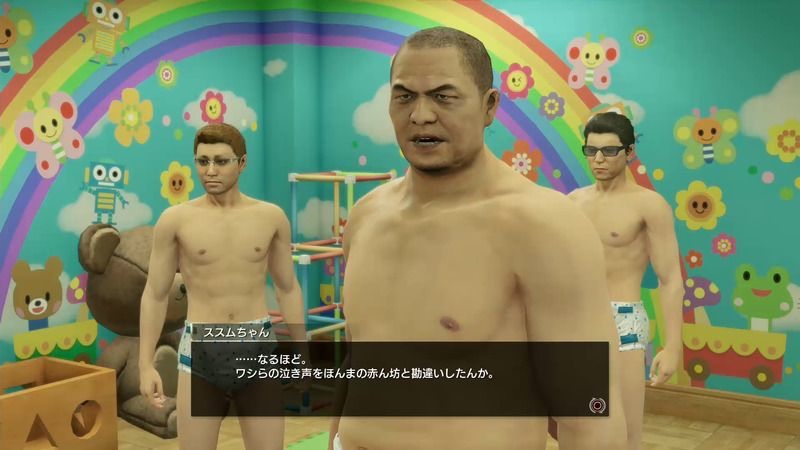
    Being stuck at home allowed me to clock over 10 hours in Yakuza: Like A Dragon (#7 in the series) which, unlike its predecessors, is a turn-based RPG. Since Kiryu Kazuma rode off into the sunset in Yakuza 6: The Song of Life, this installment has a whole new cast, from ex-Yakuza henchmen to ex-detectives, ex-nurses, and ex-hostesses. It’s more ridiculous than any of the other entries: one side quest has your party fighting adult Yakuza men wearing diapers after you crash their bizarre infant roleplaying session. After beating them, you make up by sharing a milk toast from baby bottles. You get the idea.

    According to HowLongToBeat.com I’ve probably got another 40 hours to go, which puts my massive backlog even further back on the calendar and makes me a little impatient tbh. I should take on shorter games, like the slew of great-looking new indie titles that just dropped this month. Luke Plunkett at Aftermath asks how the hell we’re supposed to find the time for this embarrassment of riches. For my part, I’ve already bought 1000xRESIST and Little Kitty, Big City. Backlogs are a neverending to-do list, even for the unemployed.

    Film and TV

    There’s a new 6-part drama series on the UK’s Channel 4 called The Gathering, and some people involved in the excellent show Line of Duty are supposedly involved in it. It looks at the effects of ‘toxic ambition’, class lines, and online behaviors on the lives of some teens and their families in Merseyside. It was good enough for us to see the whole thing over the weekend.

    We also binged all available episodes of Dark Matter on Apple TV+, a show I’ve been looking forward to since it was announced. I’ve enjoyed Blake Crouch’s novels for awhile, and they are always conspicuously written as if selling their film rights is his real goal. That’s fine! They are fast-moving sci-fi action movies in book form. Unfortunately, the series gets off to a slower start than I’d like. I find it frustrating when characters in films behave as though sci-fi tropes don’t exist in their universe. Mild spoiler alert, but if I come home and find my house looks completely different and my wife is a different person, it wouldn’t take me days to deduce I’m in a parallel universe, especially if I’m a scientist who’s worked on the bloody idea before. Things do pick up after episode 2, though. It’s made me resolve to read more sci-fi in the next few weeks.

    I mentioned starting on Sugar last Sunday, the new Colin Farrell show that is best enjoyed with zero knowledge going in. It was so good we finished all episodes the next day. I am proud to say that I called the events of the final episodes very early on. But I want you to enjoy it, so I won’t say anything more. Except… its love for classic Hollywood cinema made me resolve to spend more time watching films in the next few weeks.

    Did you know that Singapore’s National Library Board (and I suspect many others globally) has a deal with a streaming video service called Kanopy that gives you unlimited access to their catalog? It even has an Apple TV app! See if your library card lets you in; they’ve got a ton of classics and indie films.

    We saw Woody Allen’s Wonder Wheel (2017), which was more remarkable for its cinematography by Vittorio Storaro (Apocalypse Now, The Last Emperor) — light and color saturation/tonality are constantly changing in the middle of scenes, making full use of this “channel” for communicating the story — than for the fact that Kate Winslet, Jim Belushi, and Justin Timberlake?! are in it. 3 stars.

    But wow was I wrecked by She Came to Me, a weird little film that I held at arms length but found myself fully embracing by its absurd and perfect operatic ending. I don’t know how to judge acting, if I’m honest, but Peter Dinklage, Marisa Tomei, and Anne Hathaway inhabit their characters effortlessly and subtly. I had to look up writer and director Rebecca Miller afterwards, and oh, she’s only Arthur Miller’s daughter and Daniel Day-Lewis’s partner and the author of several books that I will now read. 4 stars.

    I also resumed watching Blue Giant, the anime film about a trio of young men striving to make it as jazz musicians, and it perfectly captures the intensity and ecstasy of a great performance in a few superb animated sequences (at one point during a solo, the protagonist’s body soars through space past a black hole depicted in the style of Interstellar). It’s like the performance scenes from Whiplash rendered in the style of Into the Spider-Verse. It made me resolve to spend more time listening to great jazz albums on my headphones in the next few weeks. 4.5 stars.

    ===

    Channel News Asia, the Singapore-based er… news channel, puts out some good documentaries from time to time, but they’ve outdone themselves with the scope of their latest three-part series, Walk the Line.

    It follows a group of Chinese citizens eager to escape poor financial prospects and/or persecution in their country, as they make a dangerous journey through South America to become illegal immigrants in the US. It’s heartbreaking and insane how they persevere through the difficult journey, and how naively they think America will somehow be worth it.

    After arriving in Monterey Park, California, they join thousands of others vying for dishwashing jobs and so on. It’s a story that’s been told in other media before, but CNA’s team really did the field work and it’s worth a watch.

    ===

    Books

    I finished Jack Reacher #21, Night School (Jack goes to Europe and gets involved in something big that still feels as intimate as the usual conspiracies he deals with, 3 stars), and decided to try something different. Boy did I regret it.

    The chosen detour was Anxious People, by Swedish author Fredrik Backman, who I saw giving a jokey ‘I don’t normally give talks about being a writer but here goes’ kinda talk on social media that someone shared with me. I should have known from that video he would have a dad joke sense of humor, and it was excruciating in the novel. Covered in a layer of schmaltzy philosophizing about life that came off like a motivational quote poster in a school counselor’s office, the thing somehow has a Goodreads review average over 4 stars. I made it through about 37% before returning the ebook to the library and giving it a 1-star rating. Just reading it filled me with pure hatred.

    Now desperately in need of a palate cleanser, I decided to embark on R.F. Kuang’s Babel which Munz has been recommending to me for a year, and oh god it’s exactly what I needed. I never had the young adult experience of reading a Harry Potter book, but I imagine this is what that must have felt like, with ample magic and intrigue, but a more literary and historical take with colonial criticism and racial identity crises to round it out.

  • Week 15.24

    Week 15.24

    It was Hari Raya Puasa here on Wednesday, which, along with the city’s oppressively hot and humid weather, left those of us who don’t celebrate the holiday feeling somewhat unsatisfied upon returning to work on Thursday. More than one person slipped and called it a Monday, or asked how the weekend was. So instead of a four-day workweek, it felt like two weeks in one.

    Perhaps the depressed mood was justified. Earlier in the week, tragedy struck a colleague who lost their father to a heart attack — a feeling all too familiar within our team as the same thing happened to another young designer just over a year ago. And you may recall just 9 weeks ago, another friend lost their dad too. At the same time, my thoughts have been occupied by a family friend, virtually family, currently recovering from surgery with an as-yet-unquantified cancer running loose in her body.

    I’m tired, but feeling better about the recent decision to make room for more important things than my current work. I came across this poem about mortality that captures the suddenness of loss and how we take everything for granted: If You Knew, by Ellen Bass. I was also reminded of this Zen concept that a glass always exists in two states, whole and broken, while reading responses to a tweet asking for “sentences that will change your life immediately upon reading”.

    Hitting the books

    Speaking of reading, I picked up Isle McElroy’s People Collide again after months of sipping its beautiful phrases through a tiny time straw, finishing it quickly. It’s the best thing I’ve read in many months; a profound questioning of what it means to be a particular person in a specific body, and how much of you makes up who you are to everyone else. At its core it’s a Freaky Friday body swap story. I don’t know if it’s because McElroy is trans that these perspectives and insights are so tangible, but I felt them. Even though the story didn’t go where I wanted at all, I gave it five stars on Goodreads because the final page is a triumph. I had to fight back tears of admiration while reading it on the bus.

    Right after that, the book train was rolling again and I read After Steve: How Apple Became a Trillion-Dollar Company and Lost Its Soul by Tripp Mickle, which had some inside stories and gossip I’d not heard before, and an interest in how Jony Ive “neglected” his design leadership role in the later years, a story I’ve been interested in hearing. Still, it’s one of those non-fiction narratives that dramatizes and assumes a lot about what its subjects did and felt at key moments, things nobody can know for certain.

    Here it comes, the AI part

    Meanwhile, the Apple Design Team alums who decamped to Humane launched their first product, the “Ai Pin”, to largely middling reviews from tech outlets like The Verge. Quick recap: this is a camera-equipped, voice-enabled wearable you attach to your clothing, letting you access a generative AI assistant so you can ask general questions and take various actions without getting your phone out. In theory.

    Most of its faults seem to stem from issues intrinsic to OpenAI’s GPT models and online services, on which the Pin is completely dependent. It’s a bit tragic for Humane’s clearly talented startup team. I’m inclined to see the hardware as beautiful and an engineering accomplishment, and what parts of the user experience they could customize with the laser projector and prompt design are probably pretty good, but it doesn’t change the fact that the Pin’s brains are borrowed. A company with financial independence and the ability to make its own hardware, software, and AI services would have a better chance. Hmm… is there anyone like that?

    Meanwhile, a new AI music generation tool called Udio launched in public beta this week and I spent some time with it. I’ve only played with AI models that do text, images, and video, but never audio. It’s currently free while in beta and lets you make a generous amount of samples, so there’s no reason not to take a look.

    Basically you describe the song you want with a text prompt, and it spits out a 33-second clip. From there, you can remix or extend the clip by adding more 33-second chunks. It generates everything from the melodies to the lyrics (you can provide some if you want), including all instruments and voices you hear. Is it any good? It’s very impressive, although not every song is a banger yet. Listening to hip-hop instrumentals featured on the home page, I thought to ask for a couple of conscious rap songs and they came out well, with convincing sounding vocals. I then asked it to write a jazzy number about blogging on a weekly basis and you can judge for yourself if the future is here.

    At present, I see this as a fun toy for the not-so-musically inclined like myself, and as an inspiration faucet for amateur songwriters who work faster with a starting point. So, pretty much like what ChatGPT is for everything else. And like ChatGPT, I can see a future where this threatens human livelihoods by being good enough, at the very least disrupting the background music industry.

    Comfort sounds

    One musical suite that stands as a symbol of human ingenuity’s irreplaceability, though, is what I’ve been playing in the background on my HomePods all week while reading and writing: the soundtrack to Animal Crossing New Horizons. Because Nintendo hasn’t made the official tracks available for streaming, I’ve been playing this fantastic album of jazz piano covers by Shin Giwon Piano on Apple Music. It takes me right back to those quiet, cozy house-bound days of the pandemic. Could an AI ever take the place of composers like Kazumi Totaka? I remain hopeful that they won’t.

    Maggie Rogers released her third album, Don’t Forget Me. I put it on for a walk around the neighborhood on Saturday evening and found it’s the kind of country-inflected folk rock album I tend to love. One song in particular, If Now Was Then, triggered my musical pattern recognition and I realized a significant bit sounds very much like the part in Counting Crows’ Sullivan Street where Adam Duritz goes “I’m almost drowning in her sea”. It’s a lovely bit of borrowing that I enjoyed; putting copyright aside, experiencing a nostalgic callback to another song inside a new song is always cool. It’s one of the best things about hip-hop! But why is it okay when a human does it but not when it’s generative AI? I guess we’re back to Buddhism: Everything hangs on intention.

    ===

    Miscellanea

    • I watched more Jujutsu Kaisen despite not being really blown away by it. Mostly I’ve been keen to see the full scene of a clip I saw posted on Twitter, where the fight animation looked more kinetic and inventive than you’d normally expect. I decided that it must have come from Jujutsu Kaisen 0: The Movie, because movies have bigger budgets and the animation in season 1 looked nothing like it. And I had to finish season 1 in order to watch and understand the movie.
    • Well, I saw the movie and it was alright, but it didn’t have that fight scene. So where is it?? That got me watching more episodes of the TV anime, and I don’t think I’ve ever seen a jump in quality like this between two seasons of a show. It seems a new director came on board (maybe more money too), and suddenly the art is cleaner, the camera angles are more striking and unconventional, and everything else went up a notch. I guess I’m watching another 20+ episodes of this then.
    • I finished Netflix’s eight-episode adaptation of Three Body Problem. I’m not invested enough to say I’d definitely watch a second season, assuming they pick it up at all.
    • On that topic, Utada Hikaru released a greatest hits compilation called Science Fiction, with three “new” songs, and 23 other classics either re-recorded, remixed, and/or remastered in Dolby Atmos. I don’t really know these songs in that I have no idea what many are actually about, but I’ve heard them so much over the last 25 years, I probably know them more deeply than most.