A simple tool for making collages, specifically with album cover art.
Most collage tools are either bloated with unnecessary social features or too restrictive to be useful. Collagen is a single-purpose utility designed to solve a specific friction: the tedious process of manually sourcing high-resolution album art, aligning it in a grid, and then realizing you want to swap the top-left for the bottom-right. It turns a multi-step design chore into a fluid, drag-and-drop experiment.
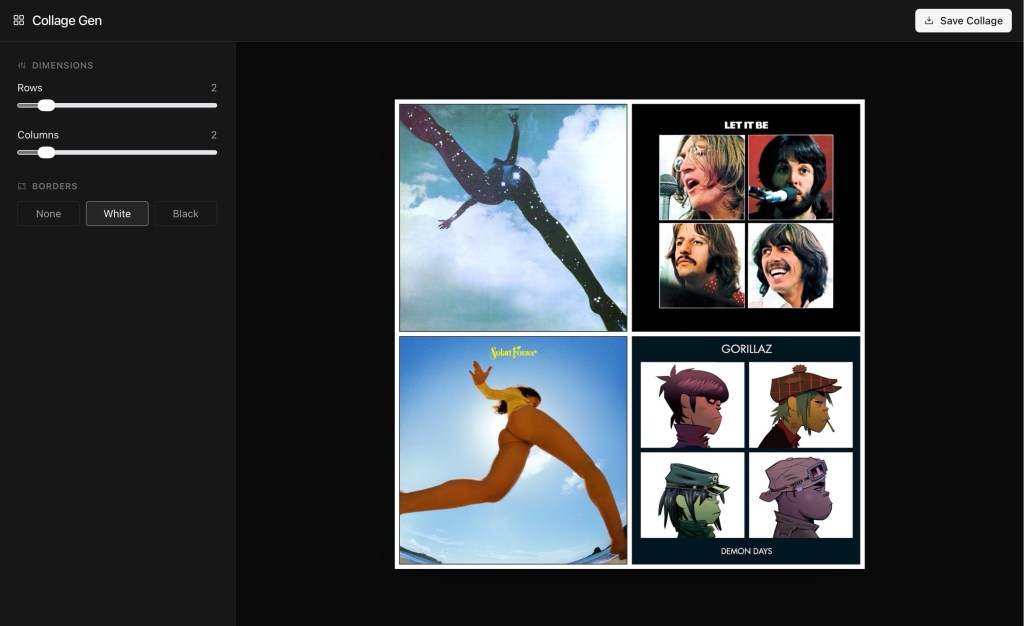
Screenshot
Features
Integrated Sourcing: Queries the iTunes database for official, high-resolution artwork (600×600) so you don’t have to hunt for covers or deal with low-res thumbnails.
Tactile Reordering: Drag and drop tiles to swap positions instantly. The layout logic handles the movement so you can focus on the visual flow.
Flexible Dimensions: Define your grid up to 10×10. The preview and export scale dynamically to match your rows and columns.
Hybrid Content:
Search: Instant API pulls for mainstream releases.
Upload: Support for local files (obscure imports, demos, or personal photos).
Text Tiles: Add context or labels with custom text tiles. Features automatic contrast (white/black) and a choice between a clean sans-serif or a classic serif typeface.
Borders: Toggle between borderless, white, or black frames. The logic includes outer edge padding for a symmetrical, finished look.
PWA Architecture: Built to be “Added to Home Screen.” It caches assets locally on your iPhone for faster subsequent loads and works as a standalone app.
Export: One-click generation of a high-resolution stitched PNG. It uses a dedicated image-proxy pipeline to ensure every tile renders correctly without the “blank square” errors common in browser-based canvas exports.
Disclaimer: I made Collagen with the help of Google’s Gemini 3/3.1 Pro LLM and take no responsibility whatsoever for any damage you do with it.
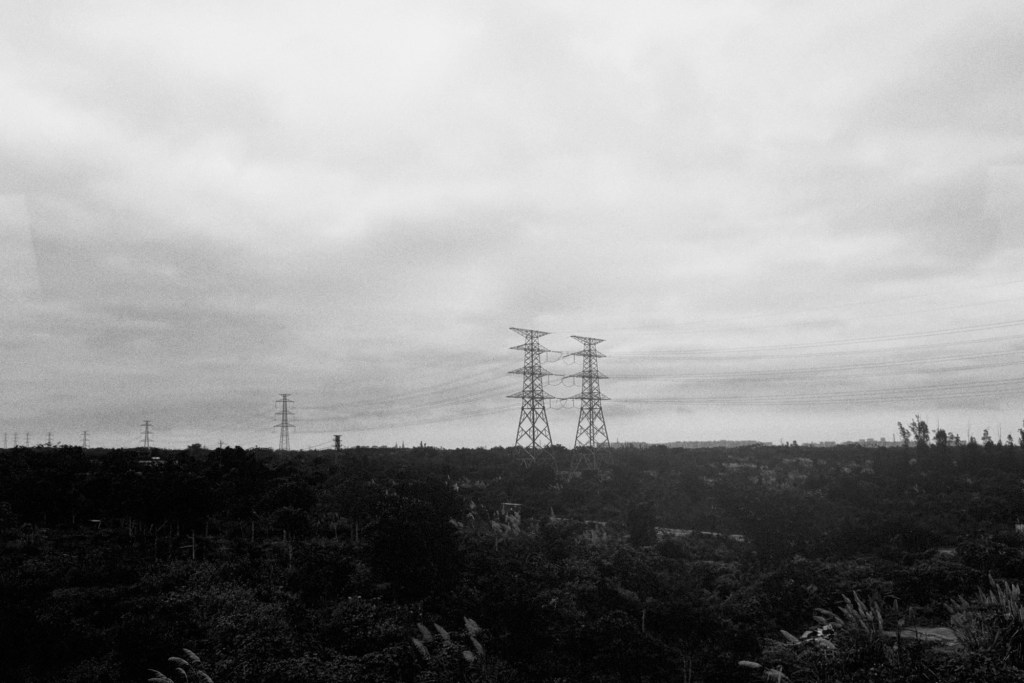
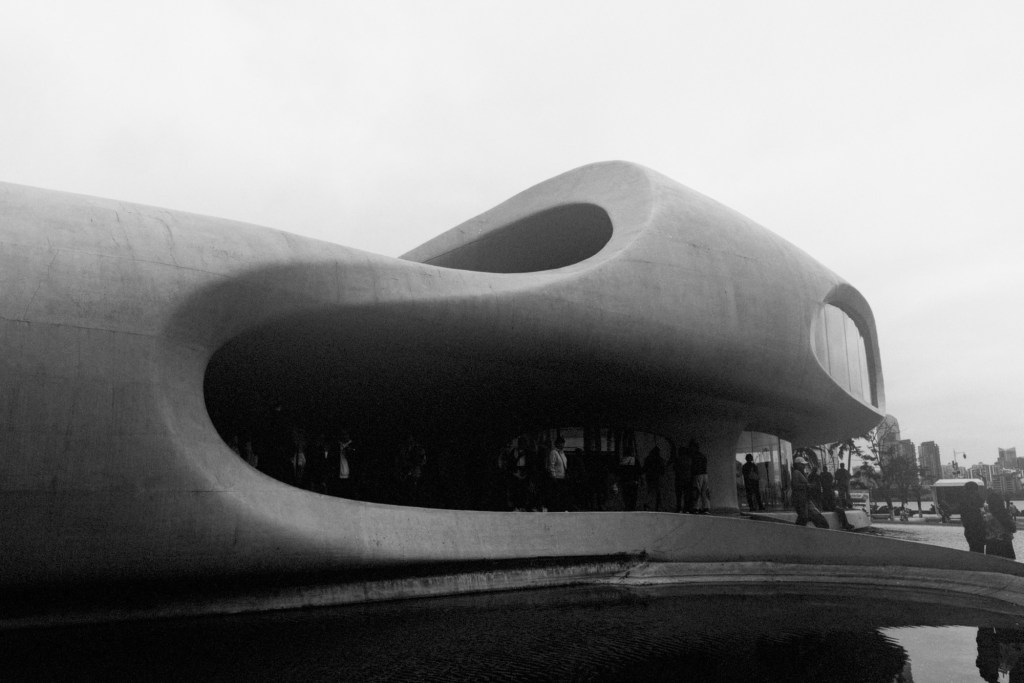
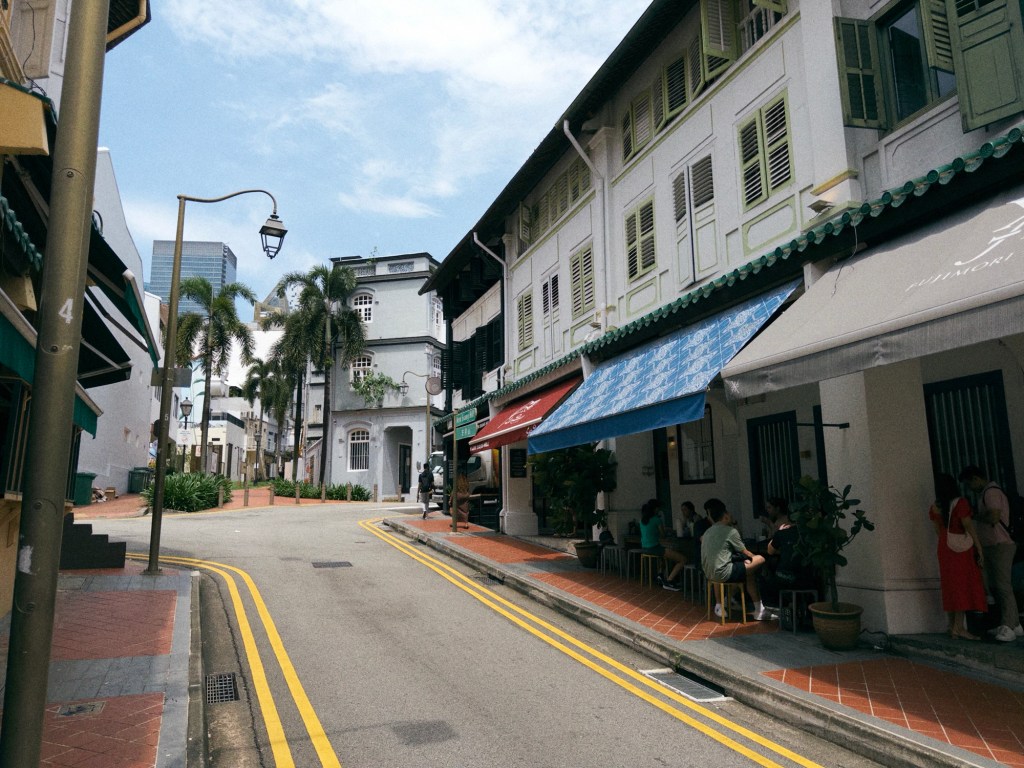
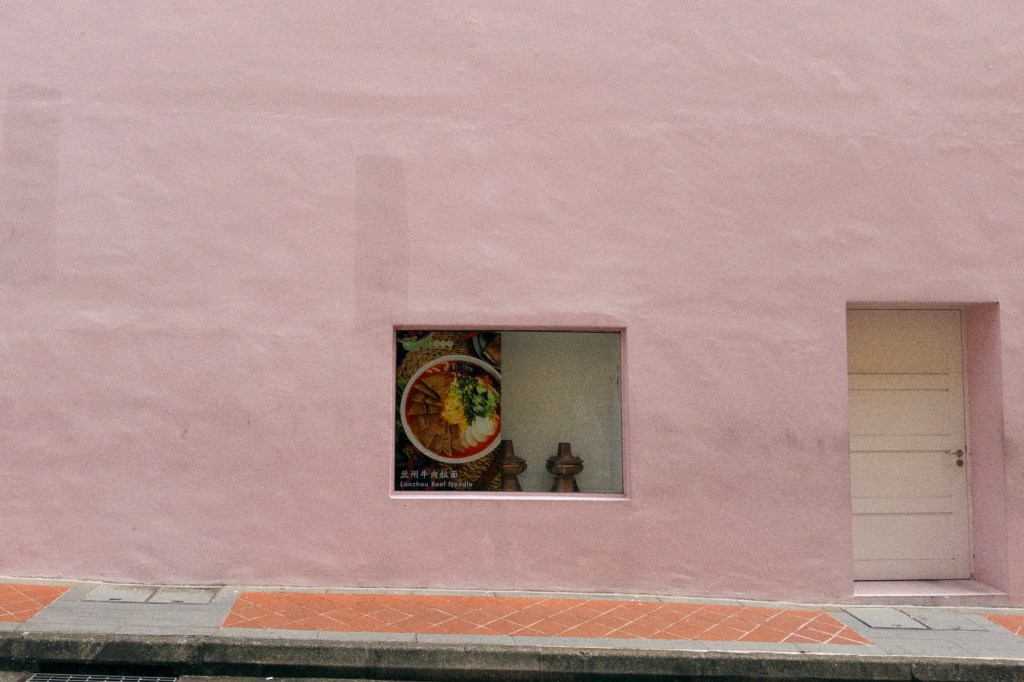
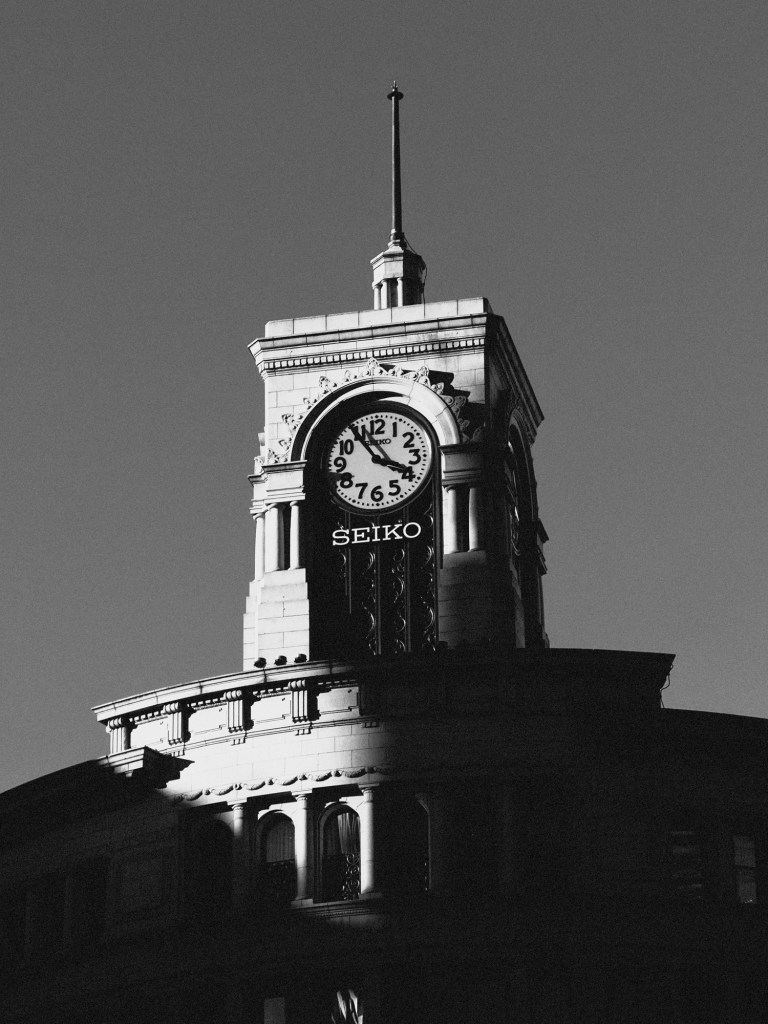
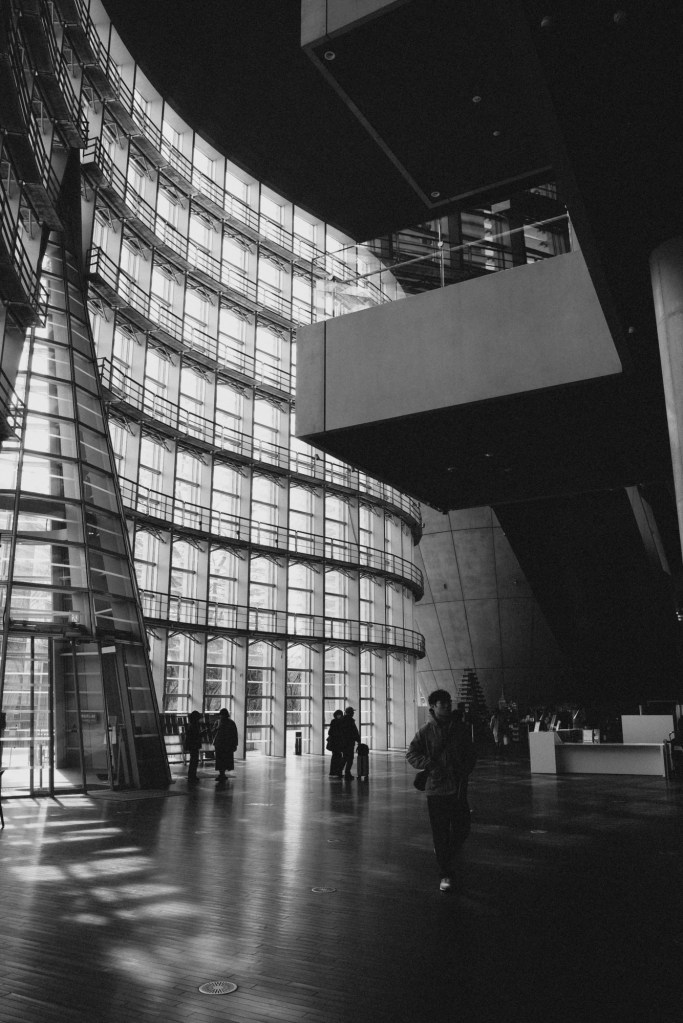
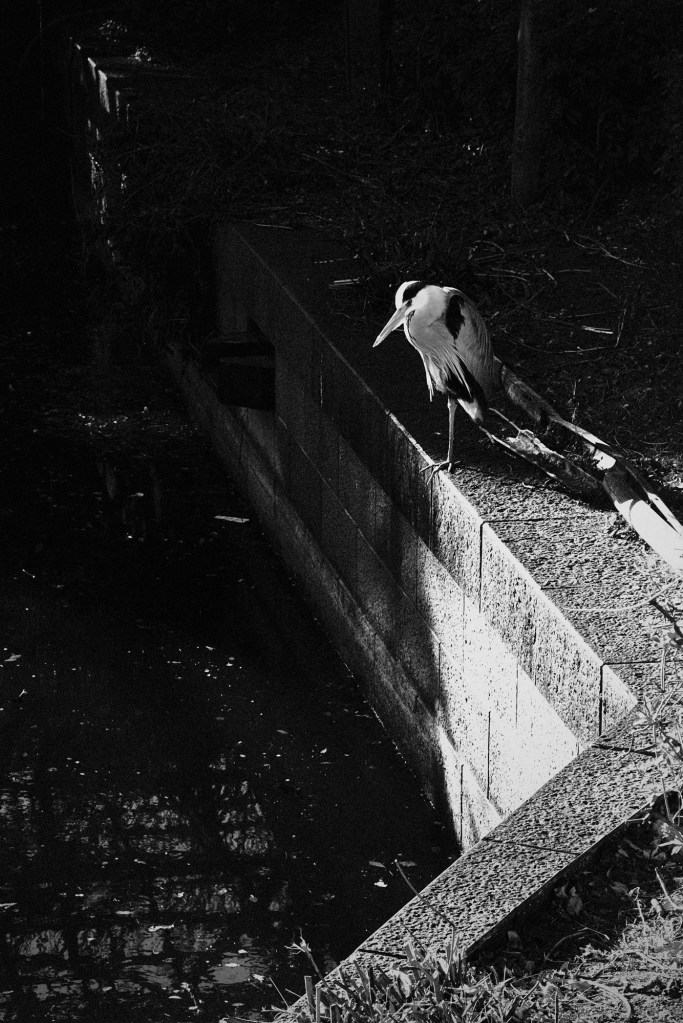
I shot these photos on an iPhone 17 Pro Max and emulated three classic Chinese B&W film stocks with AgBr: Lucky SHD 100, Friendship 100 Pan Film, and Shanghai GP3 100. The idea was to get the look of road trip snapshots from the 1990s that a traveler then might have taken.
11 greatly biased observations from a first trip to China
The Great Firewall does indeed block the majority of household internet names in the west. Imagine testing if you’re online, what would you type in the address bar of your browser? Google? Nope. Any Facebook property? All social networks and chat platforms don’t work, with the exception of iMessage. However, this only applies to hotel WiFi networks and those provided by local ISPs. If you’re roaming on a cell network while using a foreign provider’s SIM, things work as expected (albeit routed through Chinese servers). I decided not to bother with VPNs and just trusted in HTTPS 😬
Powerbank rental machines are ubiquitous, even in places where you should never leave a box full of lithium-ion batteries, like out on the street in direct sunlight. You pay a few cents per hour (via QR code), and because they’ve landed on a common battery design between the many operating brands, it seems you can return one anywhere else after you’re done charging your devices. It’s great not having to carry your own around, but even given a high degree of civic integrity, I think getting adoption in a country where everyone already has their own (like Singapore today) would be tough.
My personal MUBI Shaolin film fest went on as planned, and I managed to watch a few more before they left the service. Gordon Liu had a role in just about all of them, which shows what a popular and influential figure he was in the industry. Who even comes close in Hollywood? Pedro Pascal??
If I had to recommend one Shaw Brothers film, it would still be Dirty Ho (1979) which I’ve mentioned here before. It’s essentially the same winning template that Jackie Chan’s career was built on — lots of brilliant, intentional fighting moves masked as accidents and incompetence.
The most uneven one I saw was Legendary Weapons of China (1982), which has about five different plot lines running through it, all to provide flimsy justification for the spectacular finale in which 18 (!) different Chinese weapons are brandished, and as many fighting styles showcased. It’s like Don Draper pitched that idea on a whiteboard and then they had to come up with another 70 minutes. There is an extended action sequence in a straw toilet hut floating over a river, where people literally end up in the muck. This absurd scene involves both kungfu and possession with voodoo dolls.
In another realm of absurdism lives Dogtooth (2009), the debut film of Yorgos Lanthimos which made a splash at Cannes that year. I saw it on MUBI this week because I liked Bugonia (2025) and wanted to start at the source. Jesus, this film is an exercise in creating the wrongest setup and then having its characters do things that follow on logically but are still nevertheless very wrong. You get the sense of perversity for the sake of it, or to give life to the director’s own kinks, sort of like Tarantino putting his foot fetish in everything — but still actually much worse.
However, do something terrible with craft and conviction, and it will gain lasting historical value. That’s how this world works; I don’t make the rules! But what if you don’t actually make the thing and just have the idea. In the form of a prompt, let’s say?
Images that never happened
Google released their Nano Banana Pro image generation model recently, and I’m sure we’ve all seen examples online by now. Things have progressed to the point where I’m constantly questioning the veracity of things I see online, and I think at some point the mental filtering will become so tedious that we’ll simply stop wondering and accept things that are true and untrue equally. If the short-form video that ruins your brain’s ability to focus and feel joy on normal terms makes you laugh, who cares if those things really happened? And then it will extend into other parts of life, and then… who knows?
I decided to see if Nano Banana could place me in ROSALÍA’s LUX album cover and, of course, the answer was yes. Too easily, in fact. I only supplied it with a single forward-facing photo of me at a dinner table, and it was able to extrapolate what I’d look like from a different angle. We are, ladies and gentlemen, so cooked.
It was also Black Friday sales week, and I decided to give VSCO Pro’s annual subscription a try at 50% off (hard to justify at full price). In addition to their Pro set of filters, which are actually really good, it also comes with access to AI tools, of course. Their object removal is state-of-the-art, to the point that it can invent very believable portions of an image that you wouldn’t notice unless really scrutinizing the scene. After a few experiments, sculpting messy scenes in old photos into what I wished they actually looked like, I had to step back and ask myself what the hell I was doing. Apple’s refusal to let the iPhone create “images that never happened” is absolutely the right stance.
VSCO AI Remove tool, before and after
What becomes of designers?
AI’s obviously going to change the way we work, and I’ve been worrying for a while now about the future of the design profession. About the people who do this work, whether they will continue to be attracted to it, who will pay for their services, and what those services will actually look like. It’s been hard to imagine timelines that are positive by the standards I care about.
As with many sectors that have experimented with AI tooling, I often hear that senior practitioners using generative AI models can get more done “on their own” — the highlighted phrase implying 1) without the assistance of those pesky junior people, and 2) more cheaply for the business. But just because the tasks once performed by junior people can now be done by AI doesn’t mean juniors can’t find something else to do, or don’t need to be trained anymore. Nevertheless, some business leaders are acting as if that were true.
A friend told me how it’s now possible to run a small agency powered by seniors + AI only, without any junior hires. They were surprised that I pushed back — but the idea sounded irresponsible to me. It’s one thing if you can’t find employment and have to embrace AI to put food on the table. It’s another to be in a position of strength late in your career and choose this. If you can’t afford to leave the ladder down behind you, I said, it would be better not to do it at all.
But because bean counters can always be counted on for short-term thinking and a reluctance to spend on design, some companies will go further and not hire AI-augmented senior people at all. They’ll either use inexperienced juniors or ask someone like a product manager to handle “design stuff” on the side using AI. Depending on how much the tools improve, the visible outcomes of this may seem acceptable for quite a while! Design won’t go away as a function, it’ll merely be handled by a different group of people.
My main concern has been that doing a good-enough job in this way will scale so well, and become the dominant approach so quickly, that we’ll lose the diversity and depth of craft that comes from having human practitioners out in the real world, doing things like interviewing users to understand outlier behaviors, reading contextual cues and hearing what they don’t say as much as what they do. Then using these unique stories to make the larger design solution more resilient. It’s a job that humans are well equipped to do. A business that relies on AI to create an average of best practices may happily miss all of it.
Why do I think this matters? Because while a bunch of LLMs trained on world knowledge (including artifacts from past design exercises) will generate pretty good insights and workable interfaces from a wide field of generic possibilities, it’s still a path to a monoculture of experience. And if we break the chain of passing down the skills to do the work, then some future post-AI generation will have to learn them all over again.
I wondered if there might be a market for artisanal human-led design work. After all, centering the role of human craft has kept the luxury goods market alive in the face of mass manufacturing. But that would mean it becomes something performative, and necessarily restricted to higher paying customers. I actually believe that AI augmentation can produce better work; I just don’t trust our economic systems to nurture it over cheaper work.
Teach an LLM to fish…
Then this week, I saw something on TV that seemed like an apt analogy and put me into a more zen state of acceptance. It was an episode of Japanology Plus on NHK, with long-suffering host Peter Barakan forced to go out on a small fishing boat in challenging waters. I was honestly surprised the producers/insurers allowed a man of his age to do it.
Anyhow, as they were heading back from being thrown around by the waves, he asked the captain how fishermen in the old days would have survived that ordeal without GPS, walkie-talkies, and engines. The captain’s reply was that it was more dangerous back then, and they had to use their experience and intuition, navigating by looking at the mountains and stars, reading the winds and currents. You can imagine many lives were lost on the job.
Would any of those old fishermen trade places with their descendants today, giving up those seafaring skills for the ability to catch many times more fish and live twice as long, comfortably? Very likely! Modern fishermen are still out there on the ocean but their technology distances them from intuiting the waters in the same way. We also know now that the scale at which they fish those waters is unsustainable.
Likewise, there will be more designers in the future, less skilled by today’s standards but able to oversee projects too complex for us to fathom. Maybe with worse overall outcomes for the world than if we’d never opened the mystery box of AI. But I realize now that this pattern of losing one thing to gain “something more, but worse” is simply an inevitable law of the universe. Two steps forward, one step back.
I type this while listening to Sam Fender’s last album, People Watching. I’ve been meaning to hear this through for awhile, but it got buried in my ever-growing library of new music. Thankfully, with the latest update to Apple Music in the OS26 series, you can now pin up to six albums or playlists to the top of your screen. I’ve wanted this sort of ‘Now Playing’ or ‘Heavy Rotation’ virtual shelf for the longest time — it’s the first feature I’d add if designing a music player app. So this album and five other neglected ones are now sitting up there, and I can give them the attention I want.
I’ve been listening on both my new AirPods Pro 3 and an original pair of AirPods Pro, and dare I say the difference is quite obvious. Louanne asked me what I do with old pairs of headphones when I get new ones, and the answer was “put them in different rooms!”, of course. I’m fast running out of rooms. The new model sounds much more Beats-like than ever (modern Beats, not OG Monster Beats). That is to say, a bass-forward sound with a very clear, almost sparkling high end. It’s a fun sound, and I think they’ll be very popular for all kinds of music, if not audiophile-grade neutral. They appear to fit better than before too, and the difference in body shape will strike longtime AirPods users as soon as they pick them up.
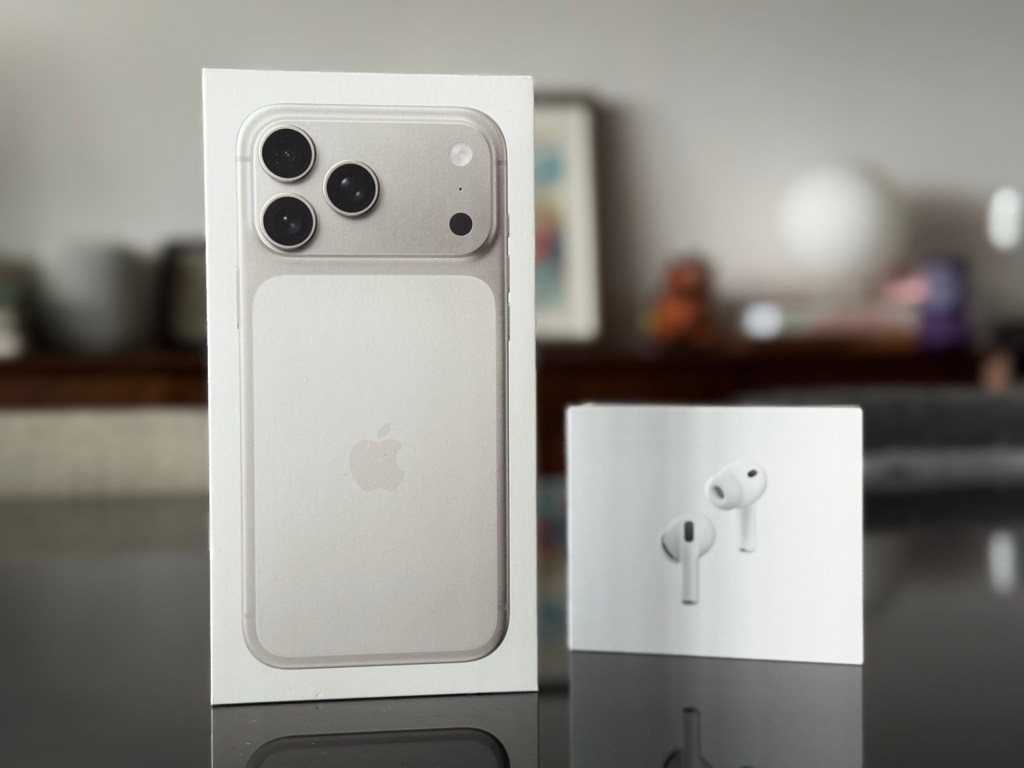
Then my new iPhone arrived, and before you judge, the old one is being returned to Apple’s Trade In partner in a few days, where it will hopefully be responsibly refurbished or at worst recycled. They’ve suggested that I’m likely to get nearly half the original cost back, which is an astounding deal for a two-year-old model! I’ll believe it when the deposit lands in my bank account.
I’m very happy I decided to stick with the Pro Max size instead of switching to a Pro. The slight increases in height and width are visible if you put them together, but isn’t really noticeable in the hand. The increase in thickness IS, but combined with the new gentler corners on the seamless aluminum body, I think thicker is actually better? This might be the best feeling iPhone ever.
I’ve yet to put the new camera system through its paces, but I’m excited and very pleased after a couple of days with it. Images look cleaner, and the redesigned front-facing camera is a revelation. I took a test selfie and could scarcely believe how presentable I looked. Coming from the iPhone 15 series, I’m also new to the new Photographic Styles that were introduced last year, and am getting a lot out of them. I compared photos shot in RAW with Halide and in HEIC with the default camera using a tweaked “Natural” style, and they’re extremely close in both SDR and HDR. This is a big deal! Along with the revised Photonic Engine this year, the dark days of overprocessed iPhone photos may be behind us.
When reviews get creative
One thing I’ve noticed this year is how bland and predictable the video reviews from the usual tech YouTubers and influencers have been. They go through the spec sheets while speaking to the camera, do a few test shots, and end without any thoughts you couldn’t have pulled out of ChatGPT. But then I saw a couple of videos from the Chinese-speaking side of the internet, and that’s when I realized Western civilization is well and truly finished.
Take a look at these and tell me you’re not duly impressed by the storytelling creativity, production skill, points of view, and passion on display — even if you can’t understand a word (but most of them have English subtitles you can enable). They could just shoot the phones on a stand while swinging a light overhead, but they instead they go hard with CGI, costumes, sets, comedic sketches, and cinematic editing. And they do these in the WEEK they’ve given between the phones being revealed and launching.
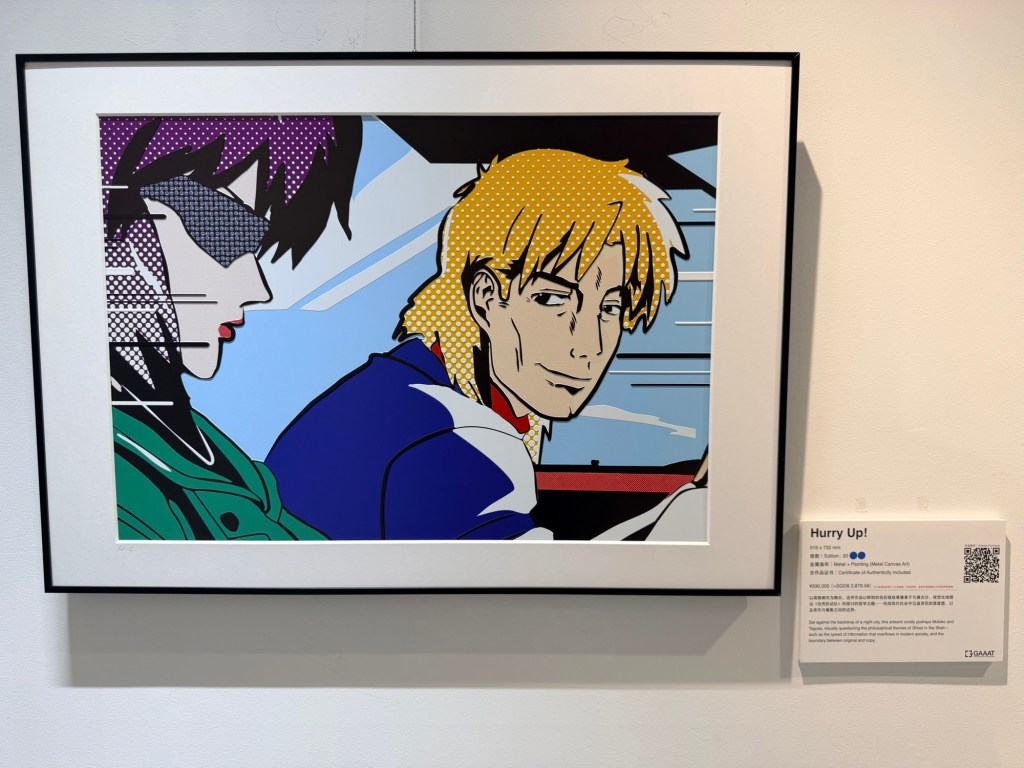
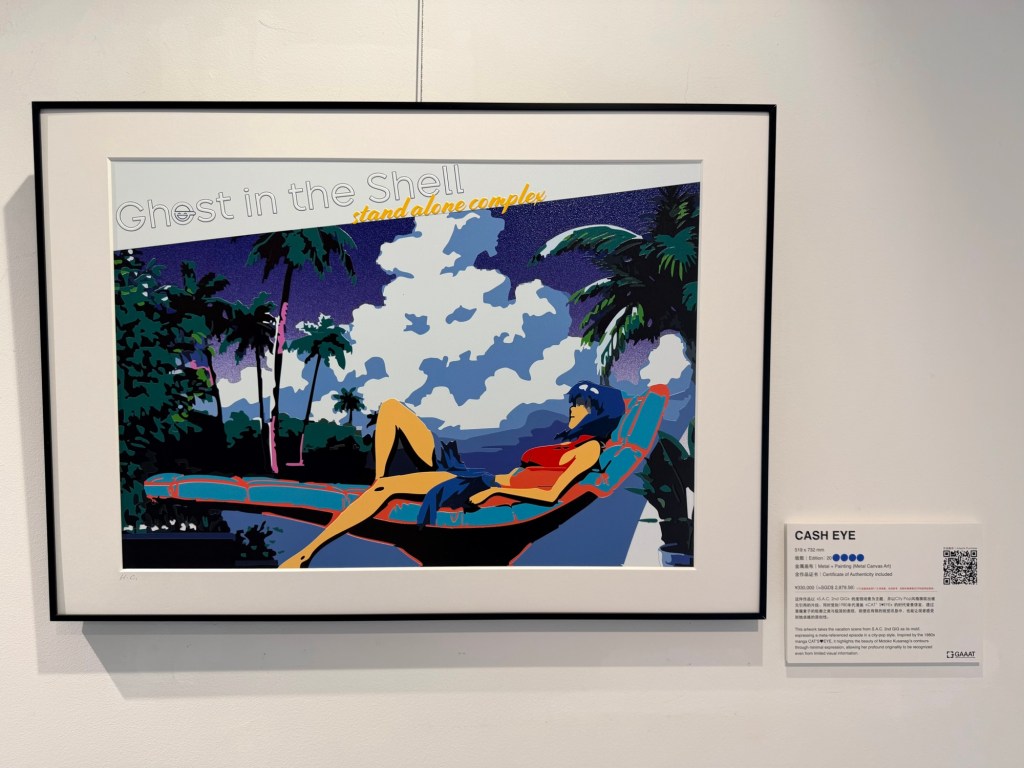
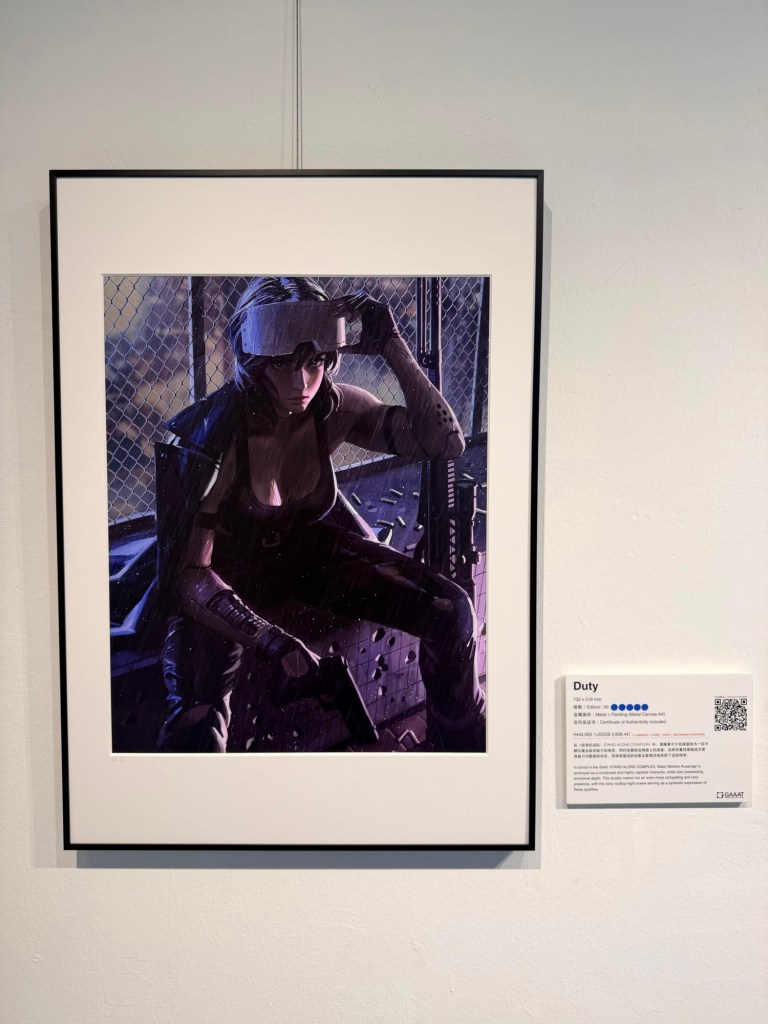
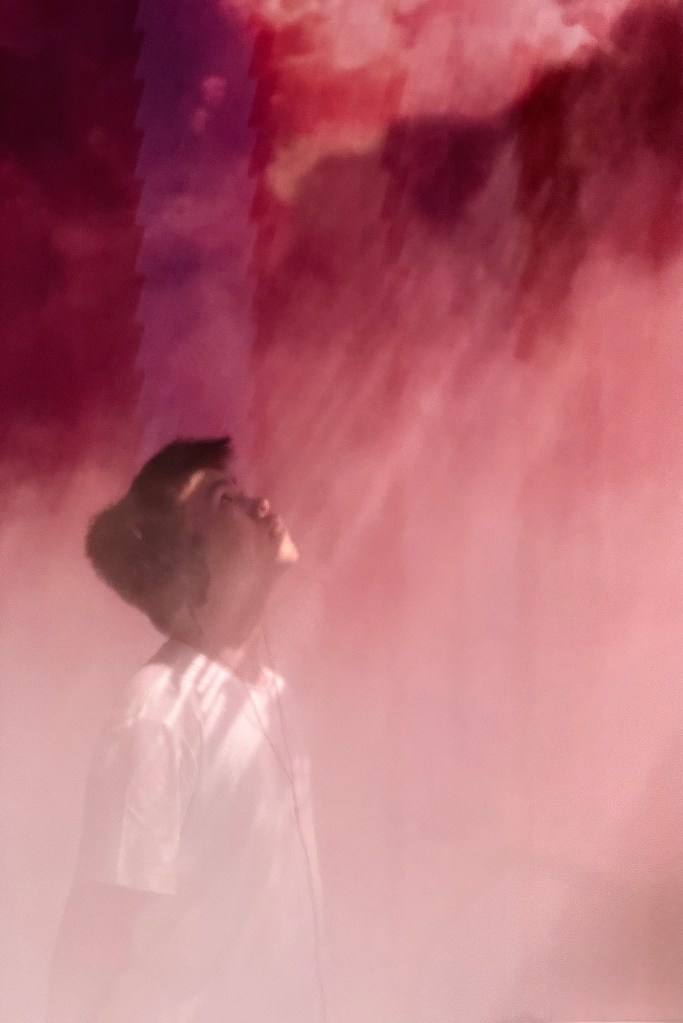
We visited a local art sales event for works based on the Ghost in the Shell: Stand Alone Complex franchise, just to have a look. The metal-printed pieces were going for upwards of S$4,000, so there was never any chance we’d buy one — but I got a little acrylic plate standee for my desk (S$25). Above are some snaps straight from the iPhone 17 Pro Max, using only Photographic Styles.
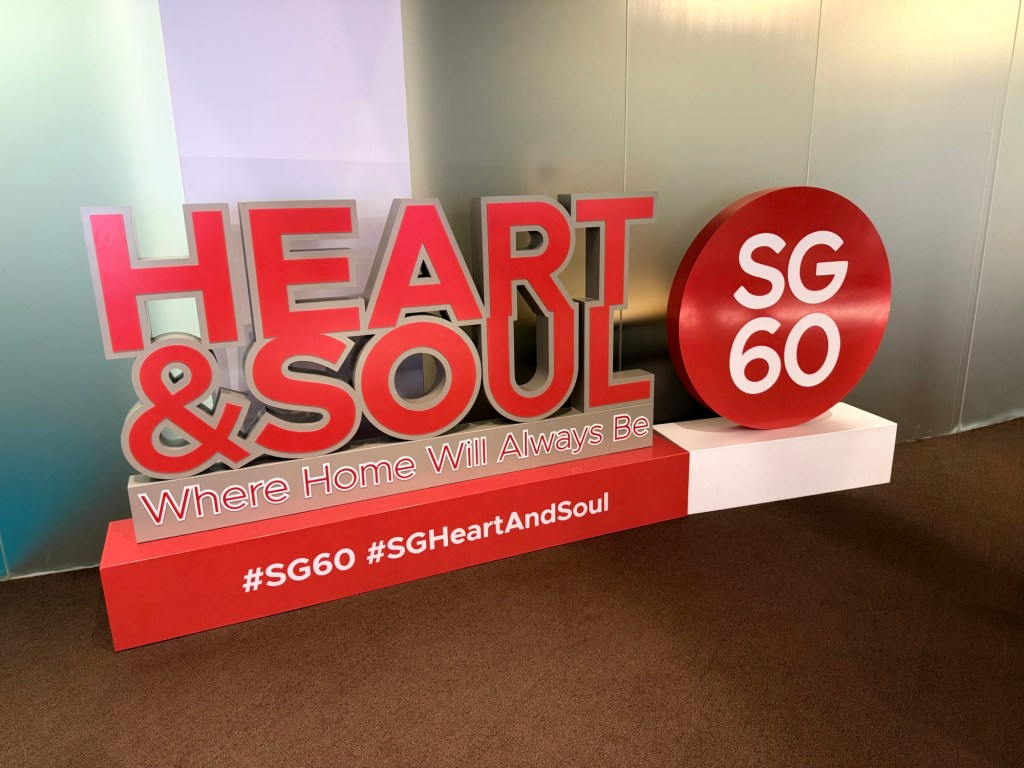
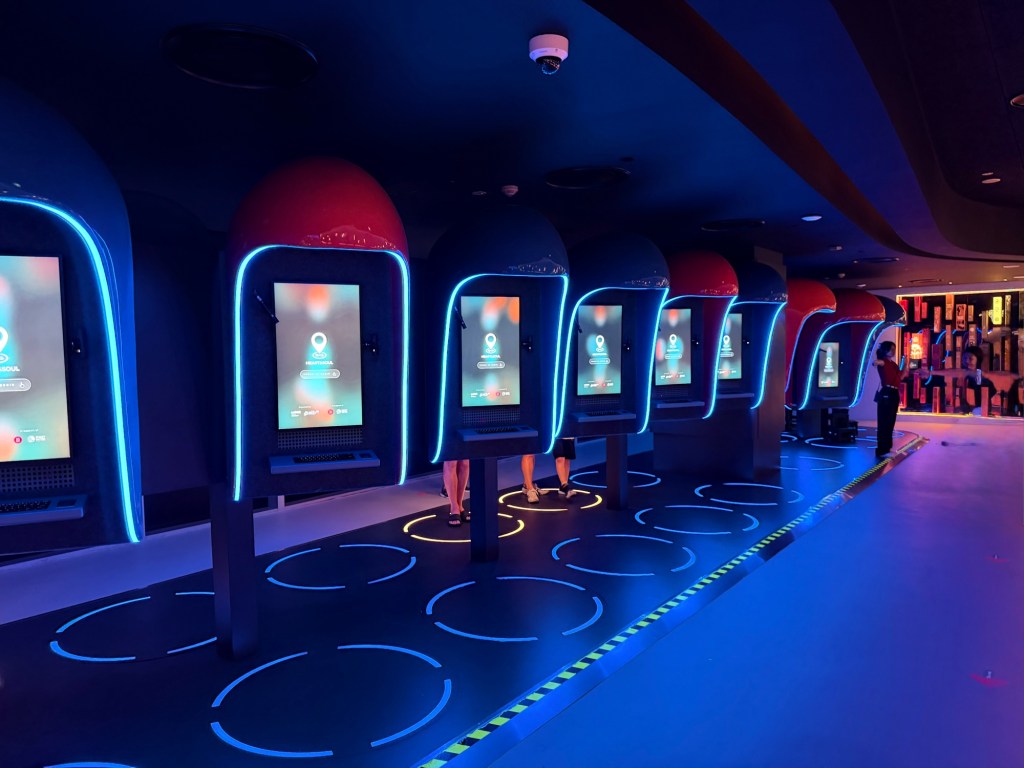
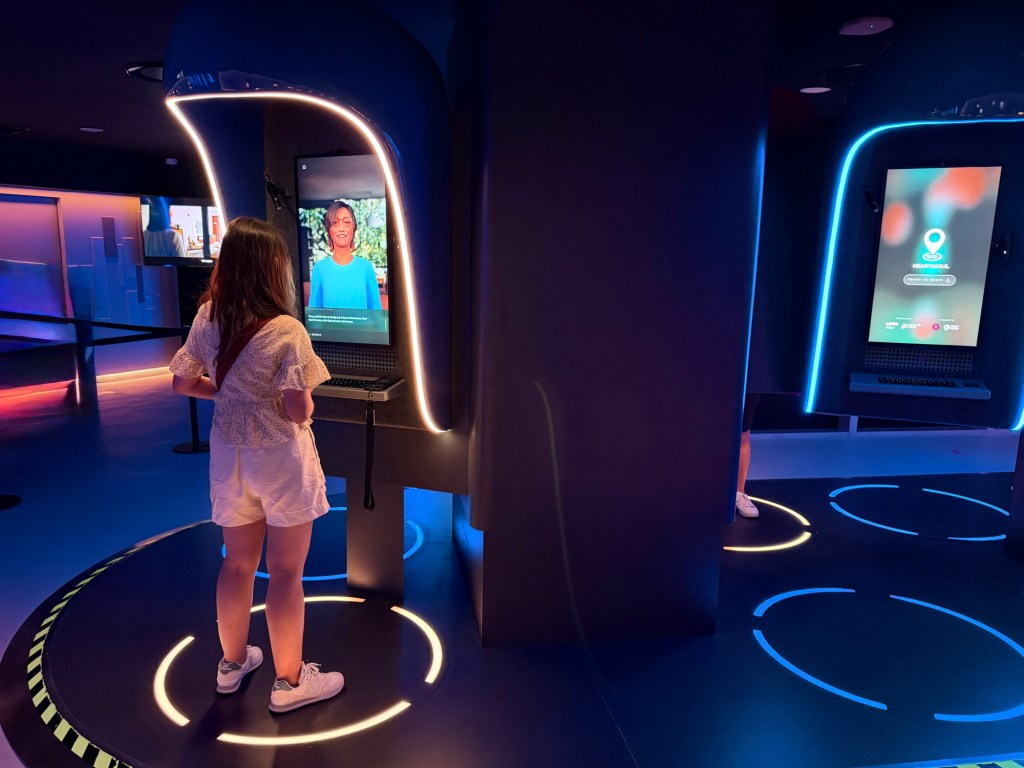
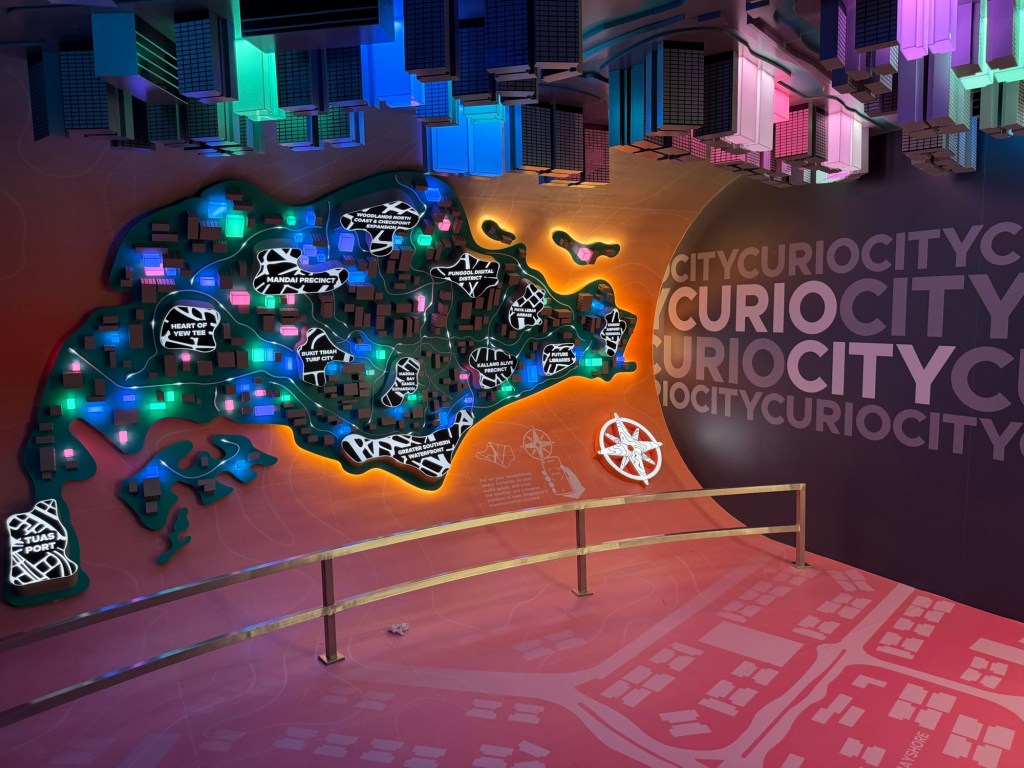
Afterwards, we visited the SG60 Heart&Soul Experience which is being housed at the site of the old library@orchard. Supposedly it will be renovated and return as a downtown library next year, which is great news. From what I can gather, it’s meant to inspire people about what Singapore’s future might look like, and what place they’d have in it (employing lots of tech to personalize the journey). Criticisms I’ve heard are that it doesn’t go far enough, and the future shown looks kinda like the present: delivery drones, working in VR headsets, greenery everywhere. Visit and see for yourself. Bookings are required, but the tickets are free. It’s quite an involved production with each visitor being given a guide device (an encased Xiaomi smartphone) to wear around their necks, and human facilitators bringing them through the stations.
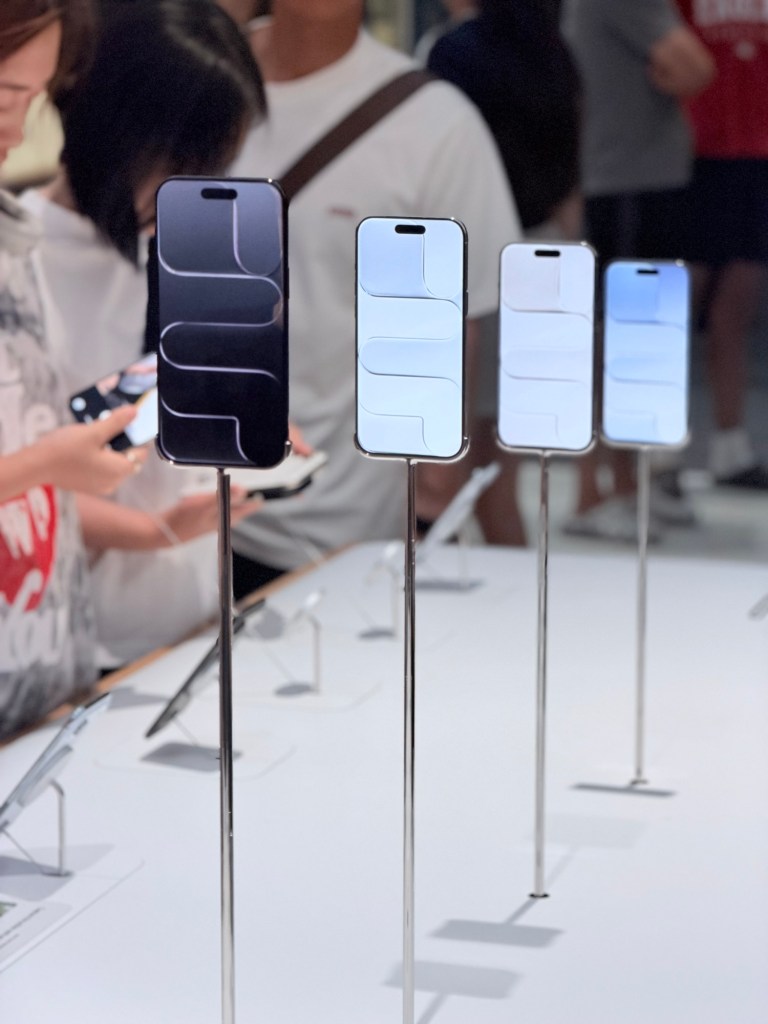
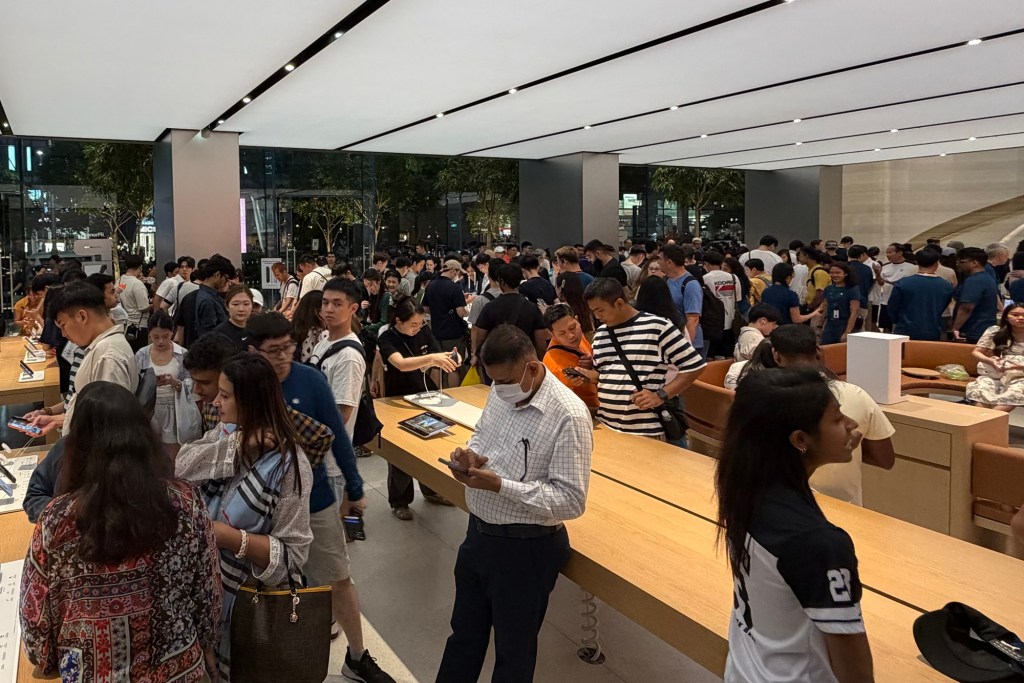
Oh, speaking of cases, we went by Apple Orchard Road after the show to have a look at the iPhone Air, and I haven’t seen that store so packed in years. I picked up a rather loud Beats case in “Pebble Pink”, mostly because I really wanted a Beats case last year but they only made them for the iPhone 16 series. It’s hard plastic with a matte finish that’s slippery when your hands are dry but tacky enough if there’s a bit of moisture.
Check out my reel with the Pink Panther theme:
And while we’re on the subject of great directors, I finally sat down with Bernardo Bertolucci’s The Dreamers (2003) on MUBI. More explicit than I expected, it’s easy to see why people call it pretentious with its heavy callbacks to classic cinema, but it’s never boring and it sure knows how to use mirrors. I gave it 3.5 stars on Letterboxd, mostly because there’s “altogether too much time spent lying on floors for my liking”. There’s also one truly revolting moment where, out of money, they raid the apartment building’s trash for scraps of food and assemble the world’s grossest bento.
Spike Lee’s Highest 2 Lowest (2025), now on Apple TV+, is a remake of Kurosawa’s High and Low (1963), which I’ll embarrassingly only get around to watching after this homage. But this is a fine film that stands on its own: a sharp, sometimes experimental exploration of class and morality, constantly playing on the gulf between generations — Motown vs. modern rap, film vs. digital, Kurosawa vs. Lee.
This week’s installment is update #256! That’s a big deal for fans of computationally significant numbers.
Oddly, just as Michael blogged that his family was down with gastroenteritis last week, a similar bug hit our household. Kim got a bad case of what we thought was food poisoning, and then, of course, I came down with it two days later. It’s a weird one: the stomach trouble comes with headaches and fatigue. Fearing that it was contagious, plus being all tired out, I had to skip one meetup and a wedding dinner over the weekend.
So not that much happened with me this week, but I suppose we can talk about the mess out there?
Google held their annual I/O event and showed off their latest AI achievements. Tl;dr, some of this stuff is just gross. From a technical standpoint, yes it’s remarkable that pretty realistic video (with sound) can be generated from text, and Google can now use your personal context from documents and emails to help with tasks — similar to what Apple promised (but has yet to deliver), with the important distinction that one centers privacy and on-device computation while the other will do it on their servers. I don’t know if I trust Google to let an AI crawl all my documents, and for that reason, minimized my exposure to Google years ago.
I remember when Gmail first came out and pioneered showing contextual ads next to your emails. There was an uproar, and the company had to calm people by saying ‘no one is reading your emails, it’s just automated keyword matching’. Well, with LLMs, it’s much, much worse. No human would be able to go through all your messages, photos, location data, and search history to piece together an invasive psychological profile about your vulnerabilities, and make it actionable for advertisers. Trust that an AI will. Just look at how a version of Claude 4 Opus in testing tried to blackmail an Anthropic engineer over an affair it believed they were having.
Beyond the business model of Google’s AI products, it’s their designed intent that feels particularly bleak. One example they proudly demoed: a friend emails asking for holiday recommendations at a place you’ve visited. Instead of writing them a thoughtful reply, you let Google AI scour your photos, emails, documents, and receipts to auto-generate a message, using words chosen to sound like you. Sundar Pichai even had the nerve to say, “With personal smart replies, I can be a better friend”. With friends like these, don’t even bother writing. Just ask Google directly and it can snoop the inboxes of a billion other customers to give you the statistically “best” itinerary.
And this is where a company’s lack of imagination and care makes itself plainly apparent. Instead of designing an AI system that writes replies in your place, they could have made one that recaps your holiday with a little presentation showing you where you went, what you did, and what you enjoyed most. Then, memory suitably refreshed, you could sit down and write your friend a reply that shows you actually give a shit about them, and both of your lives would be richer for it. I’m beginning to think that Apple, by failing to ship their AI features on time, might be saving us from a future I don’t want to live in. Maybe they’ll never ship. Maybe that was the plan all along.
Then a man who many would expect to know better — who sits on stages and professes the importance of values in technology, and is arguably the most famous designer of this century — announced a new venture (also called io) with Sam Altman and OpenAI. And the vibes, my friends, were off. The 9-minute launch video came across as a thin PR exercise to polish Altman’s spotty public image and reassure OpenAI’s investors. It struck an uncharacteristically self-congratulatory tone for the usually humble Ive while announcing, essentially, nothing. Sterling Crispin tweeted a biting Marxist read of the video in the style of Slavoj Zizek. Many saw it as Altman angling for a Steve Jobs comparison, with critics pointing out that he’s not enough of a product person to be a true partner (and necessary editor) to Ive. In any case, I have no doubt that the io team will deliver some beautifully designed hardware. But I fear even they can’t summon enough thoughtfulness or optimism to divert AI from its current trajectory, or prevent the cultural and societal wreckage it’s likely to create.
Speaking of nice devices, one of my fondest gaming memories involves my last year at university, when I switched from my PC to a Mac that was relatively useless for playing games. I couldn’t imagine not having any games (this was before smartphones, mind you), so I bought myself a Game Boy Advance SP — the pinnacle of the series, in my opinion. It’s hard to imagine a more perfect form factor for a handheld console. The clamshell design protects the screen; the vertical layout keeps your arms and hands close together, even when squeezed into an economy flight seat; the screen was sharp and self-lit, which was not a given in those days. I would lie in bed in the dark on cold nights and play Final Fantasy I until I was bored to sleep. To this day, I still fall asleep during boring turn-based battles — one of the reasons why I want to try Clair Obscur Expedition 33, since it blends turns with real-time actions. Pretty sure I traded in my GBA SP for store credit to buy the Nintendo DS (DS Phat) when it came out later that year, and I regret it.
Anbernic, the China-based maker of retro emulation handhelds, released a clone of the GBA SP last year, the wonderfully named RG35XXSP. It runs a Linux-based operating system and may or may not come preloaded with thousands of classic gaming ROMs from the NES to the PS1 — you should only play the ones you actually own, of course. I didn’t get one because Anbernic doesn’t have the best rep when it comes to build quality, and I wasn’t sure they’d get it right the first time. Fast forward to today, and the new RG34XXSP (yes, it went back a model number) looks to be the one to get, even over the competing Miyoo Flip V2. DYOR (do your own research) though! They made it slightly smaller, dampened the button clicks, added two analog thumbsticks for wider compatibility, and came up with some better colorways. Now that it finally sounds more like a product than a prototype, mine’s on its way in the mail, and I can’t wait to relive some old games while waiting for the Switch 2 to arrive.
Meanwhile in Japan, Fujifilm decided to get in on the nostalgia cash grab game with a new camera release, the long-teased “X half”. Many expected this to be based on the X100 or GFX series, that is to say, employing an APS-C or medium format sensor. But no, it’s a 1-inch sensor, vertically oriented to resemble 35mm half-frame photos. A major selling point is the ability to shoot “in-camera” diptychs (a two-photo collage). The overall camera concept is fantastic: it has a 32mm lens, is very small, and features a “film camera mode” that is basically a physical version of those iPhone apps that try to simulate the fun limitations of analog photography. When activated, you are locked into a chosen film simulation look until you’ve used up a virtual roll of film, ranging from 36–72 half-frame shots. You can’t see any photos until you finish, and you can’t even use the digital screen to compose shots, only the optical viewfinder.
I would be down for this, except that early reviews show many corners were cut between concept on paper and the final product. Firstly, it’s made of plastic painted to look like metal. There are no words for how much I hate this when done badly. There’s also a visible seam on the front face that ruins the look. Then the processor seems to be slow, and it ruins the illusion of the film advance lever which you need to crank before taking the next shot; it’s reportedly unresponsive until the last photo has saved. If you’re going to fake analog mechanisms then it has to be perfect! The flash unit, a big part of the analog film camera look, is a weak LED rather than a xenon bulb. Then there are the cheesy overlay effects, like light leaks and “expired film” color casts, which seem borrowed from the company’s Instax evo cameras rather than its premium X series. The camera costs S$999, which many are calling too high, but honestly if they had to charge S$200 more to actually do the concept justice, I’d be on board. If some random startup made this for half the price, the flaws would be forgivable. But this is Fujifilm, and if you’re going to carry this faux film camera around and look like an old douchebag with more money than sense, it had better be good.
Until they do a better job, I’ll get by with the Diptic app I bought in 2010 which makes similar collages with just my iPhone (see featured image above), which also shoots vertical orientation photos by default!
When I discovered a fix for an annoying iOS photo date/time saving bug last month, it required a reset of all my phone’s settings. Which means that many of my apps still can’t send notifications or use my location — these are being restored ad hoc, as the apps only get to ask for permission whenever I reopen them.
As a consequence of this, it wasn’t until recently that I suddenly noticed I wasn’t getting the twice-daily ‘State of Mind’ check in reminders from Apple Health anymore, and went to turn them back on. These are quite useful for being able to look back and see how happy/depressed I was at any point in time, and it sucks that I now have a big hole in this dataset.
I’m taking this opportunity to change the way I approach this exercise: literally being more positive. For those unfamiliar with it, you’re meant to rate how you’re feeling from Very Unpleasant, Slightly Unpleasant, Neutral, and so on. I never used to go up all the way to “Very Pleasant”. Like, I could win a million dollars and wonder if even that warranted using such strong language. But now I’m giving myself permission to be more generous with my feelings. I can feel “Very Pleasant” more often and nothing will get broken.
In other recalibration news, I spent half a day in Numbers (Apple’s spreadsheet software) and did a personal annual report of sorts to inspect how I’ve been managing my money in the last year. Now that I have enough data, I was able to build some graphs and breakdowns of what a realistic budget looks like. I’ve always recorded my expenses on a daily basis with an app, but never crunched the numbers before; I was happy just knowing that I could. Naturally, now that I have, I wish I’d done it years ago.
At several points during the above activity, I wanted to upload my file into ChatGPT and have it analyze my spending patterns and offer up some money-saving strategies for me to consider. But of course, giving OpenAI that data would be a terrible idea. I wondered if Apple Intelligence in Numbers could do anything with it, but nope. It’s just the same old Writing Tools that make more sense in a word processor document than a spreadsheet.
I spent most of my time reading this week, although the temptation to jump on the Clair Obscur: Expedition 33 bandwagon is very strong — at this point in time, it’s the highest-rated game of 2025 and the 13th best game of all time on the PS5. Maybe next week?
On top of finishing Broken Money as scheduled, I read Meditations by Marcus Aurelius and rated it just three stars on Goodreads. It’s absurd that one can even humble the great emperor with a thumbs down on the internet, but his journals are in dire need of an editor! Yes I know these were never meant to be published, but he repeats the same handful of principles over and over (which I largely agree with), and this could have been cut down to be a podcast or self-help PDF on Etsy?
I also read the second book in the Murderbot series, Artificial Condition, and found it even more fun than the first. At this point, I’m kinda desperate to watch the Apple TV+ show and not sure I can wait for weekly drops over the next few months.
While looking for a manga with some colored pages to try out on my Kobo Clara Color, I started reading the oddly titled I Want to Eat Your Pancreas (trust me, there’s a mostly acceptable explanation for this), and enjoyed it enough to finish everything in a day. Unfortunately, while experiencing color on an ereader is real nice, the Clara’s screen is too small and I read most of it in black & white on my old Kobo Libra. Irony!
I’m now close to finishing Erik Olin Wright’s How to Be an Anticapitalist in the Twenty-First Century, not because I dare dream that this world could ever abandon capitalism, but it wouldn’t hurt to have some alternatives. I’ve now begun to think of capitalism and its systems as a spectrum rather than as absolutes.
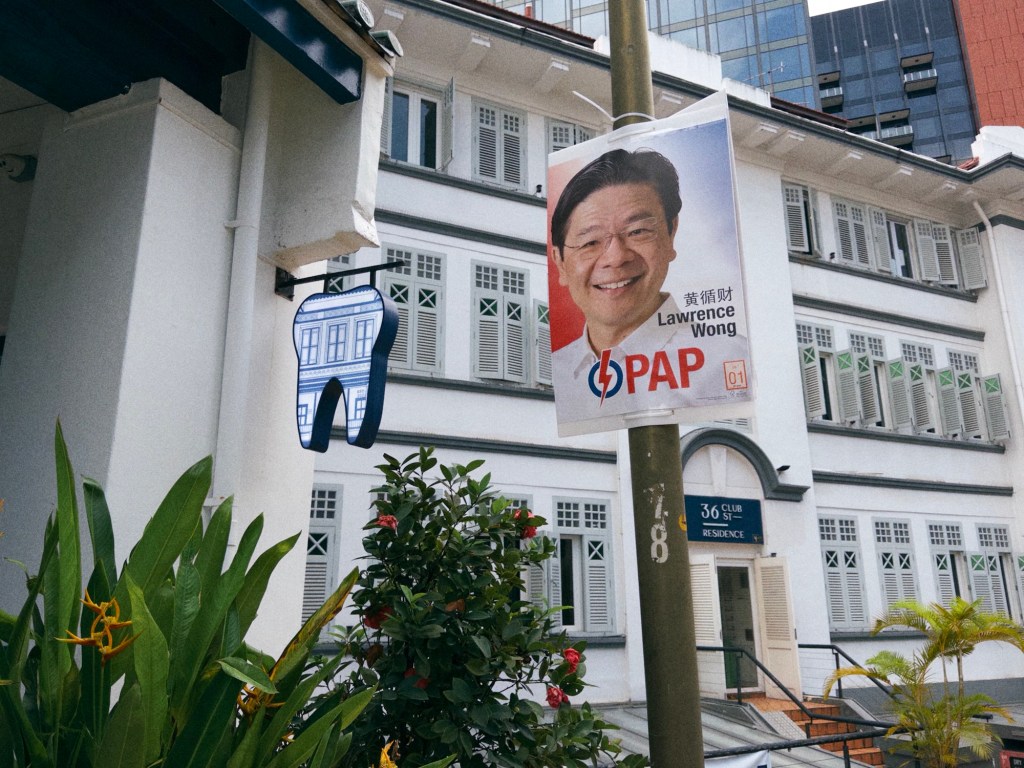
Coincidentally, it’s election season here in Singapore and we go to the polls next Saturday. I’ve been watching the political rallies live-streamed on YouTube over the last few evenings, and have mostly been annoyed at the complaints and vague promises to do better (to say nothing of the insanity that sometimes shows through in racist, antivax, and xenophobic ad libs). Singapore already enjoys some of the best quality-of-life outcomes possible under a hybrid capitalist/social democracy, but it seems people want more. They want a hands-off government, but also want it to protect them from job-stealing AIs and foreigners. They want everyone to be paid more, but don’t want to spend more on services in return. It’s so exhausting.
I was looking to spend some money on a birthday present for myself since I’ve been such a good little budgeter, but the best thing I could find were these new Yashica Peanuts cameras featuring Snoopy, who I’m still kinda obsessed with. The idea was quickly abandoned because I do not need another digital camera, especially not an intentionally mediocre one.
Still in the mood for a photo-related splurge, I went back to the Lampa camera app (first mentioned last September), which got three new ‘film-inspired’ color profiles in a major update this week. That brings the number of available looks up to six, which better justifies the high asking price (S$40/yr or S$90/forever) which was previously out of the question. I’ve been using the free trial while looking for cheaper alternatives, but Lampa just does what it does so well.
In terms of UX design, it’s super focused and perfectly walks the line between too simple (Zerocam) and too complicated (almost every competitor I’ve looked at). There’s just enough control, and few enough options that you can actually make decisions. In that way, it out-Leicas the official Leica app, which does not have a great UI and asks for S$100/yr. Technically, it uses a bayer RAW image pipeline for more natural captures, keeps those RAW files so you can “redevelop” photos if you didn’t get the right filter or exposure the first time, AND deletes those RAWs automatically after 30 days to save space. Hats off to great work, but man, the cost is uncomfortably close to buying an actual Snoopy camera.
How to solve an iOS/iPhone bug that prevents third-party editing apps (e.g. Lightroom, VSCO, AgBr) from retaining the date/time metadata from the original photos when saving new edited files
I’ve tried to pack the right terms in the title and heading above in the hopes that you’ll find this page if you have the same problem that I did.
For several years, edited photos saved from apps like VSCO wound up with the “current” date and time as the “capture time” on my iPhone, meaning that they don’t sort chronologically alongside the original photos when viewing the Photo Library. I noticed with one app that when I made edits on my iPad, it worked as expected, i.e. the original capture time was retained, but mistakenly believed it was a bug in that specific app that only surfaced in their iPhone version.
Last week I discovered this behavior in the new AgBr app, and got to emailing with the developers. In that process, I realized it was a problem with my iPhone, and most likely down to a bug in iOS rather than the photo editing apps.
Without further ado, the solution is to “Reset All Settings” in your iPhone’s Settings app (under General → Transfer or Reset iPhone). This will undo many of your longstanding settings, such as known WiFi networks and cards in your Apple Wallet. It’s a pain in the ass, but much better than wiping the entire phone and starting over from scratch, which is what I thought I would have to do.
I have no idea when I picked up this problem, but it’s a deep-seated one that has followed me across several iPhones, resurfacing with each migration and “restore from iCloud backup”.
Funnily enough, I chanced upon the solution while whining about this problem to Michael, and while I was celebrating with way too much joy than fixing a computer problem should give someone, he pointed out that just a few weeks earlier he had also solved a longstanding problem with Safari on his Mac while telling me about it. I think we’ve figured out a winning formula.
Summary
Issue Description: Edited photos saved from third-party editing apps on iOS/iPhone lose the original date/time metadata, resulting in incorrect chronological order in the Photo Library.
Cause: Likely a bug in iOS.
Solution: Reset All Settings in the iPhone’s Settings app (under General → Transfer or Reset iPhone), though it will reset some settings.
On Saturday morning there was a circular rainbow across the sky, it’s a circle rainbow all the way, yeah, oh my god. Well officially it was a “sun halo”, and it seems everyone got a photo of it too.
It happened right as we were walking out of a new-ish brunch cafe, where I waited what must have been close to an hour for an expensive plate of scrambled eggs, some kale that was actually edible, plus sausage, mushrooms, tomatoes, and pork belly. I’ll take the heat; going for brunch was my idea, but I don’t know why everyone still does this on weekends. The place was packed and a line was still forming at 1pm.
I went out and met people several times this week, and on Thursday I managed to drop in on the new Maji Curry outlet at the Funan mall with Brian. I’ve mentioned them several times in the past, and they are probably the most authentic and interesting Japanese curry spot in all of Singapore, although (not to take anything away from Maji) there’s practically no competition. I hope they do so well that other brands have no choice but to enter the market or stop slouching (I’m looking at you, Coco Ichibanya).
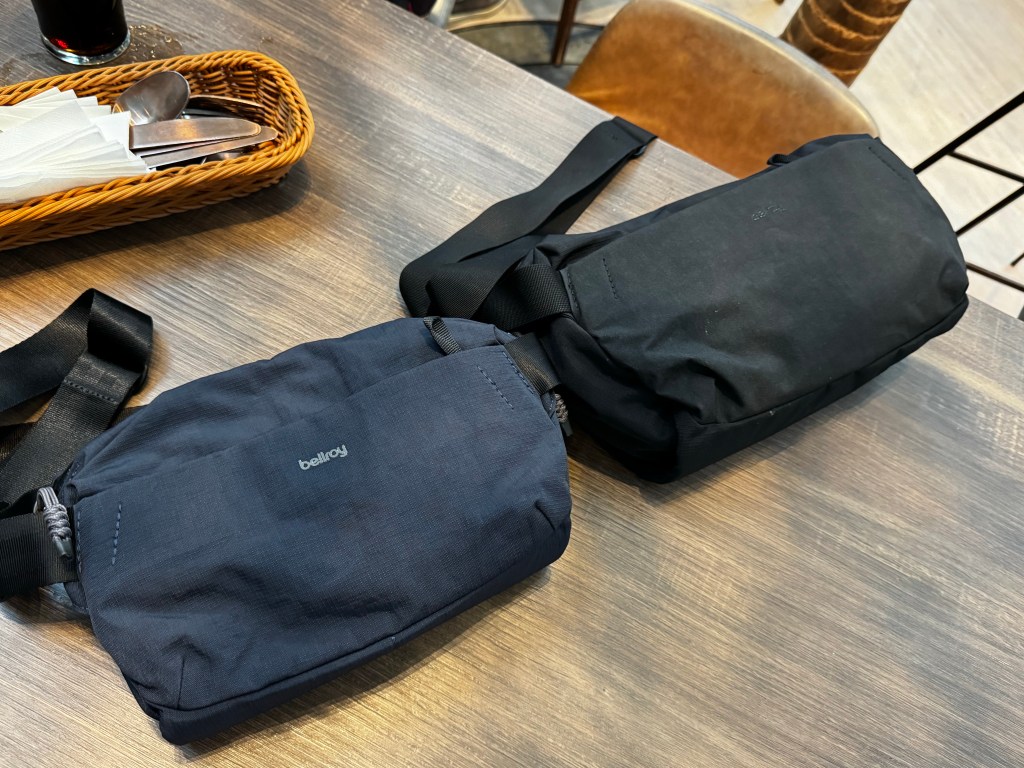
As a group, I think us millennials have been brainwashed to perfection by advertising algorithms because the first thing Brian pointed out when we met was that we were both carrying the same Bellroy sling bag, albeit in different sizes and colors. I said I’d bought mine on a whim very recently because my mother-in-law was after some sort of small pouch, and for reasons I couldn’t explain, I’d recommended we take a look at Bellroy’s offerings. I couldn’t believe it when he said his in-laws were also in town and he’d bought his under the same circumstances. What the hell, man?
Studio Nuevo.Tokyo & Héliographe launched their long-awaited black & white film simulator app, AgBr, which stands for Silver Bromide, of course. It’s currently 50% off as a launch special (S$14.98, one-time purchase, no subscriptions), and I’d recommend it to any fan of black and white photography. The purchase gets you the app across iPhone, iPad, and Mac, and they’re promising a new film preset every month for the rest of the year. Funnily enough, I think the best way to use AgBr is to pair it with the similarly named Halide app, shooting RAW files in “Process Zero” mode. Sure, you can process a normal iPhone photo with a Fujifilm NEOPAN 400 preset, but the HDR exposure won’t look quite right.
I watched the new Metallica concert video that Apple TV+ put out for the Vision Pro. At 25 minutes, it’s the longest show they’ve put out so far, and I’m ready for more. Don’t make the same mistake as I did: watch it with AirPods. I used only the built-in audio pods, and while they sounded fine, I think the immersion will be even better if you turn things all the way up. They perform three songs, captured from 14 cameras, and it’s a truly new experience in this world to be right up next to each musician doing their thing on stage, in your own home. My main criticism: the crowd is quite low in the audio mix, so you don’t truly get the feeling of being there with all that energy (they could have offered two audio tracks to choose from, maybe).
With this, Apple has tried four immersive presentations of music on the Vision Pro: A traditional music video (The Weeknd), an intimate band rehearsal in the studio (Alicia Keys), a Concert For One where the artist is right there with you (Raye), and now a full-blown, live arena show. Next up is Bono’s full-length documentary on May 30, Stories of Surrender. I personally can’t stand the guy, but if this changes my mind, then that’s really saying something about this new format.
I spotted this familiar Mario statue (?) at the Courts/Nojima/Nittori electronics and homeware frankenstore on Orchard Road, in the old Heeren building. He pops up in the gaming sections of Japanese stores like Yodobashi Camera, and I saw him at least twice last month in Tokyo, so it was a surprise to see him here. It was mostly a sad reminder that our electronics retailers sell junkier crap and aren’t anywhere as fun to browse.
For the past couple of months, I’ve been writing these posts in Apple Notes, solely because of its integration with Apple Intelligence, which does a quick QA check at the end. However, rich text formatting in Apple Notes is quite laborious (having to select text and choose styles from a menu), and often I lose some of it anyway when pasting the text over into WordPress. It became more trouble than it was worth.
I’m now back to using iA Writer, my tried-and-trusted Markdown text editor of choice, where text formatting is simply done with in-line symbols so you can focus on writing. It makes much more sense on mobile devices. This is an excuse to mention Apple Intelligence, which has recently been in the news for falling behind schedule and possibly the rest of the industry. I’m not super reliant on AI to correct my writing, but it has definitely helped catch the odd typo and missing word. By right, I should be able to use it systemwide, in iA Writer and any other app on my iPhone, but the implementation is inconsistent and so the “Proofread” feature can’t walk me through the changes it makes; it just makes them and I can accept ALL the new text or not at all. This is what I would prefer we get in iOS 19: a rigorous cleaning up of bugs and rounding of corners so that what we already have works better than what’s on any other OS. If we have to wait a couple more years for truly agentic edge AI from Apple, that kinda sucks, but we’ve been here before. I remember the days of wanting a bigger screen and having to put up with the iPhone 5 and 5s for two years. 🤷♂️
TV: We finally started on the new season of Reacher now that enough episodes have come out. We also decided to pick up House on Amazon Prime Video from the beginning of season 5, since I’m pretty sure we finished four seasons back when the iPhone first came out or thereabouts. House uses a flip phone. It’s terribly formulaic but also fun, and the perfect kinda show for watching at the end of the night.
















 sangsara.net