Tag: Technology

  • Week 5.24

    Week 5.24

    Vision Pro and AirPods Max hypotheses

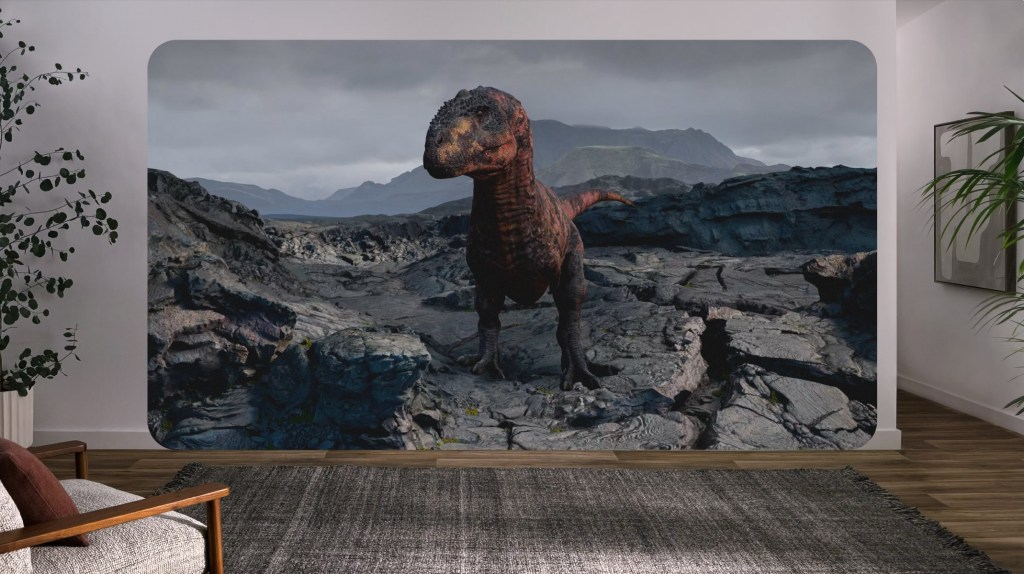
    Apple Vision Pro is out in the wild, and I’ve gone on the expected rollercoaster — from “of course I’ll get one, but only when it’s officially released here”, to “nah I think I’ll wait till the second iteration”, to the usual FOMO and wanting one as soon as possible.

    But it might not be such a terrible idea to wait for the second iteration, if one believes that it’ll come some time in the middle of 2025. Why then? I looked at how quickly second-generation products were released in Apple’s recent history, and it ranged from 11 months (iPad) to a year and five months (Apple Watch). I think a 12-month release cycle is plausible, and putting out new ones at WWDC makes sense as they’ll want to emphasize the visionOS platform for developers.

    Which might then suggest the global Vision Pro rollout this year will start in June. So international early adopters will be putting down at least $3,500 to use it for a year before they need to upgrade. And we know that selling a first generation AVP on the pre-owned market is 1) a tough job, if the second generation irons out obvious wrinkles, and 2) not something early adopters want to do anyway, given the sentimental value of keeping your ‘first spatial computing device’.

    While we’re out here predicting future releases, I think I’ve cracked why the supply chain analysts believe an AirPods Max update is coming this year with USB-C and new colors, but without an upgrade to the H2 chips (currently only found in the AirPods Pro) which enable Conversation Awareness and Adaptive Audio modes. The reaction to this rumor has generally been: “that would be a lame update to the AirPods Max after four years”, but okay what if it’s not an update? What if it’s a new variant model?

    Specifically, it could be the lower-cost, lower-weight “sport” model with different materials and/or a swappable headband that was rumored to be “coming soon” back when the AirPods Max first released. Everyone assumed it would be released a year after, but because it’s been so long, we’ve forgotten that was even supposed to be a product. A cheaper non-Max/Pro headphone model without the latest features would make the same sort of sense as the iPhone 5c, which had all the features of its premium predecessor — but funner. Then the real AirPods Max update can come in 2025, and honestly, if you’re making them well, five years between headphones is the right cadence.

    Electric toothbrushes

    It’s been about two weeks since I started using an electric toothbrush again, and the difference in efficacy and convenience is so notable that I don’t know why I stopped when my last one broke during Covid. There are so many essentially disposable models on the market now in the S$20–30 price range that I didn’t see how the S$200+ models justified themselves. Bluetooth app connectivity? It seemed ludicrous.

    To my untrained eyes, there were two basic designs: an elongated brush head that vibrates (this is the dominant kind), and a small circular head that rotates back and forth. I used an Oral-B one of the latter sort for a little while once but it hurt my gums and I ended up throwing it out. I decided to give it another go with an Oral-B Pro 2 model, but with an “ultrathin” head with gentler bristles this time, and haven’t had any problems. It cost me about S$75, presumably on account of having a rechargeable battery and dock, and I was beginning to think I should have just gone for the Pro 1 model that runs on AA batteries and costs S$30.

    But of course it’s not that simple. After more research, I discovered there are actually three categories of motorized tooth cleaning devices: electric, sonic, and ultrasonic. The Pro 1 has fewer vibrations per second than the Pro 2, but both probably still fall into the electric class, which is to say they clean with brush movements only, and don’t produce sonic vibrations that interact with fluids and help to knock plaque right off your teeth. Oral-B now has a range of toothbrushes called iO that combine an oscillating head with sonic vibrations, 3D teeth tracking AI (no, really), and you guessed it, they cost S$300–400.

    ===

    Media updates

    • I’ve never been into Grimes’s music because the few songs/videos I’ve encountered were awful, and of course her association with Elon Musk is a major turnoff. But I saw a tweet saying her breakthrough album “Visions” was turning 10 years old, with words to the effect of it being so great that the rest of her career was doomed to never top it — so of course I had to check it out. I’m pleased to report that it’s actually pretty good, maybe even great. For an electronic album, I didn’t expect it to sound so influenced by R&B? This whole separating the art from the artist thing is pretty wild.
    • That whole album was recorded in Garageband, and while I’m no musical talent, I wrangled it this weekend to finally clean up and join up the bootleg recording I made with my iPhone’s Voice Memos app back in Chiang Mai in December. It was 50 mins out of an hour-long solo piano set played by Joshua Lebofsky, amidst cafe noises of steam wands, fridges slamming shut, and people chatting. It starts super strong, with him singing an uncommon medley of Tears For Fears’ Everybody Wants to Rule the World and Lionel Richie’s Easy. I’m very happy to finally have it in my music library, ready to be revisited at any time.
    • I had a cab driver one night this week who sang along to songs on the radio. He was no great singer, but I loved the joy of it. The station miraculously queued up three great songs in a row — the aforementioned Tears For Fears song, followed by Sheryl Crow’s cover of The First Cut is the Deepest, and Phil Collins’s In the Air Tonight — which I remarked upon, and we got to talking. He told me he was really into Tears For Fears back in the day, and that they asked Phil Collins to play drums on their song Woman in Chains, wanting some of that magic touch. I promised him I’d listen to it again over the weekend, and I did.
    • It was decided (in my brain) that Easy might be my favorite song, and so I programmed our HomePods to play it throughout the entire apartment every Sunday morning at 10:00 AM as long as someone is home.
    • I was glad to hear from Michael that he loved the Slow Horses TV show, and binged three years’ worth (just 18 episodes, really) in a week. He also discovered that the theme song isn’t some Rolling Stones deep cut they licensed, but an actual new Mick Jagger song commissioned for the series!? I finally finished reading the first book but found the experience such a close retreading of the first season that I’ve decided not to read any more of them. It would just be like rewatching the existing seasons and spoiling the ones to come.
    • We got a chance to go and see the new Apple TV+ film Argylle at its local premiere. It’s an action-comedy about spies directed by Matthew Vaughn, who also directed other action-comedies about spies such as the Kingsmen series. This one primarily stars Bryce Dallas Howard, Sam Rockwell, and Henry Cavill, and is a fun enough time that I can recommend it. One thing that surprised me: the “new” Beatles song Now and Then features heavily throughout the film, with its melody forming a major recurring theme. I looked it up and they had the song for over a year before it came out and had to keep it a secret. Check out the symphonic version with a choir on the soundtrack.
    • Amazon Prime Video has put out all eight episodes of their new action-comedy series about spies, Mr. and Mrs. Smith, with Donald Glover and Maya Erskine playing reimagined Brad Pitt and Angelina Jolie roles. We’ve seen two so far and it’s going very well.
  • Week 3.24

    Week 3.24

    I have come down from last week’s AI overpositivity and retaken control of this week’s update. I don’t know what came over me, especially when it’s so easy to see the issues that this current gen AI fever,this onslaught of enshittification, has yet to unleash. We’re poisoning a well, or maybe an orchard, that many people have spent decades building and many more depend on even if they don’t know it. I had two conversations on Monday, one about the disadvantageous state of jobs for 20-somethings and another about the Apple Vision Pro, and found myself in both of them articulating a deep pessimism that I haven’t been able to shake. Even if you buy into accelerationism, there’s clearly a risk of multi-decade spoilage here that future generations will hate us for.

    On Apple Vision (which is what I think the overall product family is called), I mentioned to Brian that I’ve been seeing a lot of Meta’s Quest 3 TV advertising whenever I tune into programs on the UK’s Channel 4, and how they’ve gone from selling immersive VR experiences with the Quest 2 to AR use cases like learning to play the piano — the same territory that Apple’s staking out. And how it won’t be very long before the Android equivalents of the Vision Pro will gain market share, on account of being several times more affordable, but hoovering up eye movement data revealing customers’ intents, attention, and probably physiological info because none of these other manufacturers will take pains to deny developers access like Apple does. We’ve seen these playbooks before.

    Brian and I have also previously discussed the ability of conversational AI products to deeply profile their users, not just by knowing what you want to know about, but how you think, react, speak, and write — what kind of person you are. A conversational interface with generative AI, trained on large amounts of data, is nothing short of a profiling machine that sees you at a behavioral and psychological level. Combine that with knowledge about what draws your eyes and sets your heart racing, and an ad-supported AR headset with built-in AI assistant is a nightmare product that will inevitably be a hit at $499.

    Thinking of the battles that ethically minded designers will have to fight and probably lose, deep in organizations intent on deploying AR/VR dopamine and AI-powered enterprise doodads without question, is what makes me tired these days.

    Later in the week, Jose shared this update on the Fujitsu postal service software debacle in the UK, a case of irresponsibly deployed technology that literally ruined and ended human lives. And that’s just the legacy stuff without any newfangled AI.

    ===

    • I’m finding the first Slow Horses book to be less enjoyable than I expected, mostly because it feels like I’m just rewatching the first season of the Apple TV+ show, nothing less and nothing more. I sort of expected more side story or entertainment than was possible to film, but it’s a rather straightforward procedural. The TV series might be the rare adaptation that’s on par with its source material, in which case I won’t read the rest after this one and will wait to watch Gary Oldman fart his way through them instead.
    • The second season of Reacher fell into the sequel trap, going for more action, more teamwork, more humor, more repeated catchphrases (this did NOT work), and losing something of its charm in the process. They decided to portray him as a sort of humorless Arnie-type killing machine who doesn’t understand normal people’s thoughts, and that doesn’t seem right to me based on his characterization as an astute detective/observer of human nature in the books. I was also hoping they’d go the Slow Horses route and just make the books in order, but they instead jumped to the 11th novel, Bad Blood and Trouble, for this season. Reading this interview with showrunner Nick Santora though, I got the feeling that making Reacher indefinitely is not something anyone on the team takes for granted, so why not go for broke while the Amazon money is flowing? Still, the thrill of seeing Reacher with his team is a payoff that has to be earned, and it’s not the same if you haven’t seen him wandering America solo for ten seasons beforehand.
    • We’ve started season 3 of True Detective, and I’m really liking some of the things they do with blending the recollections of an old man fighting a fading mind, with the disorientation and terror of his present life; they are literally blended and linked with match cuts and unifying objects — in one flashback a full moon disappears above the detective, and we come back to the present to see a fill light has gone out during the interview, and he’s shaken out of his memories.
    • I’m new to the music of Claud, but their superb album Supermodel would have made one of my lists in 2023.
    • I fired up Lightroom to see what new features they’ve added, and there was a new Denoise tool that seems to use AI to generate missing detail — fine, it’s unavoidable — and AI-powered preset recommendations. With one click, I applied a dramatic preset to an old RAW file which made it extremely noisy, and with another click removed all of it and landed on an incredibly sharp and clean image. I’m a little sad about how hard it is for small indies to compete with Adobe on this stuff. Photomator has an ML-based auto enhance feature that really doesn’t work well, often overexposing and making white balance look worse, whereas the Auto button in Lightroom makes improvements 90% of the time.
  • Week 2.24

    Week 2.24

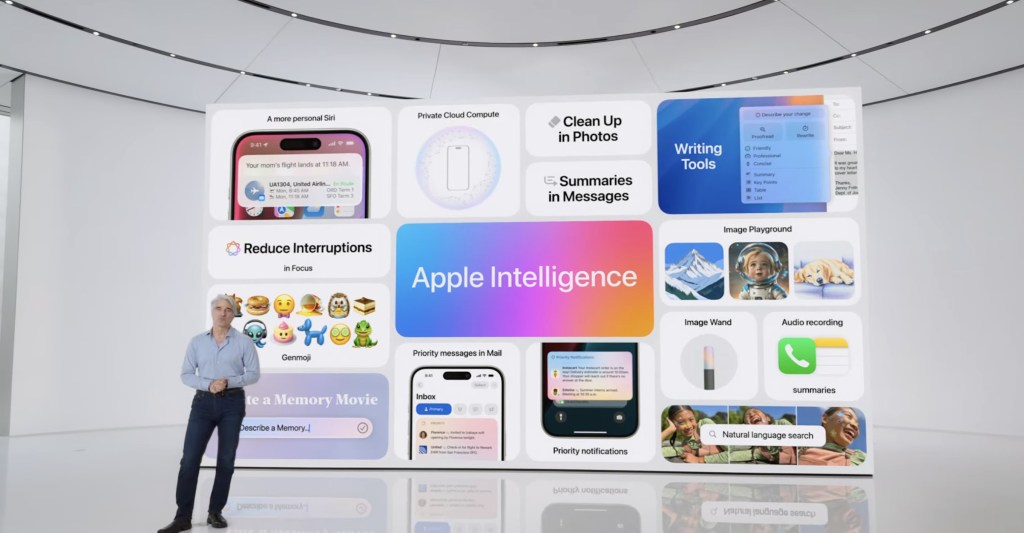
    This post was partly written by my blog assistant GPT from notes I gave, and partly transcribed by a Whisper-powered dictation app I’m testing, so it’s just dripping with that AI filth (but the human did edit).

    I’ll probably remember this week for feeling like the future finally arrived, thanks to three long-awaited developments taking up headlines.

    1. Apple Vision Pro – The Dawn of Spatial Computing

    • The Apple Vision Pro got its pre-order and launch dates. Sadly, it’s US-only for now, leaving me and many others on the sidelines. It promises to usher in a world where computing isn’t confined to screens and devices, but blends seamlessly with our physical spaces. Along with AI, we may see a new era of interface and interaction design land sooner than expected, alongside new levels of realism and intelligence I don’t think anyone is ready for. But as a sure sign that this early adopter is growing old, I’m feeling surprisingly wary of and unready for such a transition.

    2. A Milestone for Bitcoin: Spot ETFs approved in the US

    • In a historic move, the SEC approved 11 spot Bitcoin ETFs and they began trading on Thursday with a record-breaking amount of volume. Although against the original ethos of decentralization, this is still a big deal which legitimizes the cryptocurrency for audiences who want some exposure but can’t self-custody for some reason. After a decade of anticipation, this decision bridges the digital world with traditional finance, making a fully digital asset accessible through familiar investment channels.

    3. OpenAI GPT Store Finally Launches: A New Playground for AI Enthusiasts

    • As someone who’s been creating custom GPTs with ChatGPT, the launch of the OpenAI GPT Store is particularly interesting. Originally scheduled for last November, it finally went live but hasn’t set my feeds on fire just yet. To make things worse, the promised revenue sharing model won’t start until later, and again, only in the US at first. Still, this could be the App Store for a fast-evolving space. I’ve already seen a few advanced applications on the front page and will be keeping an eye on it.

    These advancements in computing, finance, and AI aren’t just incremental steps; they’re giant leaps in their respective fields. The Apple Vision Pro is set to literally put technology everywhere, the Bitcoin ETFs are proof that a “digital gold” can be taken as seriously as the real thing, and the OpenAI GPT Store shows how generative AI can let anyone become a “developer”. It’s like watching history being made in real-time.

    By the way, I made a fun new GPT called How We Got Here.

    ===

    So I’m watching this show, True Detective, which you may remember from like 10 years ago. The first season starred Matthew McConaughey and it was a huge hit for HBO that I liked a lot.

    But then when the second season came out, before I could get started, a lot of reviews came out calling it like the worst show ever. And even though Rachel McAdams and Colin Farrell were in it, it just wasn’t a hit the way the first one was. So I never got around to watching it.

    And here we are years later and Season FOUR is about to come out today with Jodie Foster and a whole new showrunner/director/writer involved and it’s getting a lot of buzz. People are excited for it.

    That’s when I realized that there was a Season Three, like I didn’t even know that it existed. So now I’m spending my weekend binging seasons two and three to get ready for four.

    Now this is not strictly necessary because every season is a completely new story with its own set of characters, but I just feel like the need to be complete about my True Detective experience.

    If you’re wondering how I have the time for this, it’s because Kim is again away on business, which also means that I can’t watch this week’s episode of Reacher. So I guess we’re going to watch the final two episodes back-to-back next weekend. I can’t believe it’s already over — reading the rest of the books will have to tide me over until next year.

  • How We Got Here

    Reverse engineers images to uncover the chain of events that led to them.

    Available with ChatGPT Plus

    I’ve seen a lot of GPTs that do interesting things with image recognition and DALL•E, like analyzing an image to understand the scene and then recreating it from scratch as a painting.

    But I wanted to do something different, like, “what if we could guess the stories behind the pictures?”. Obviously it’s for laughs, so this GPT is called “How We Got Here” and it theorizes a possible chain of events that took place before the picture to result in what you see. It works for any given scene or an object, but because of OpenAI’s restrictions it will refuse to comment on images of famous people.

    Here’s an example:

    1. A parliament session started with the introduction of a controversial bill: The Mandatory Karaoke Performance Act.
    2. The opposition leader, known for his baritone renditions of “My Way”, vehemently opposes the bill, fearing unfair advantages for tenors.
    3. During the debate, an amendment is proposed: All speeches must be sung to the tune of popular folk songs.
    4. The finance minister, a secret shower-singer, is thrilled and immediately begins to belt out budget allocations in A-minor.
    5. The amendment passes by one vote, thanks to a swing voter who misunderstood the motion, thinking it was about free concert tickets.
    6. The session escalates as a counter-amendment is suggested: All sung speeches must be auto-tuned for fairness.
    7. Chaos ensues when the auto-tune machine malfunctions, making everyone sound like rogue robots.
    8. In a bid to shut down the malfunctioning device, a scramble erupts, with one member accidentally broadcasting his vocal warm-up scales live on national television.
    9. The image captures the exact moment when the tech-savvy intern is summoned to fix the auto-tuner, while the rest try to cover up the incident by looking deeply concerned about fiscal policies.

    Try How We Got Here with your own photos.

  • Zine: B’Fast

    I mentioned last week that I’d started making a zine about breakfast using AI tools to write all the text and make the pictures, leaving the final job of laying it out to my own (inexperienced) human hands.

    Well, here it is. It was a lot of fun to put together, and I got a crash course in print design while trying to evolve it from a word processor document into something a little more creative and fun. You can sort of see the gradual improvement from beginning to end, as things become a little neater and more coherent — much like the mind in the morning as you make your way through breakfast.

    I’d say the final content is 98% AI generated; I made some cuts and changed just a handful of specific phrases: in one place to avoid possible offense, and most of the others were in a poem at the end, to make it suck less.

    I did it with the help of my custom GPT: InstaZine, which I encourage you to check out if you want to do something like this. It will brainstorm a bunch of different article ideas for your approval, then write them in a range of different authorial voices, hopefully giving the final product more diversity and interest than if you just did it the normal way with ChatGPT.

    You can read the zine below in the embedded Issuu viewer, or download the PDF. Let me know how you like it!


    Some additional tips for using InstaZine: Start by telling it what the subject of the zine should be, and describe what it should be like if you know. Ask it to create a list of article ideas — it should suggest a bunch of titles with a short abstract of each one, usually with a fictional author’s name and some description of the style and approach it will take. If you’re happy with this list, you should copy it off to the side in your own notes and play these descriptions back to the GPT before asking it to write each one. The reason is… the context window still isn’t great with ChatGPT as of Dec 2023, and it won’t necessarily do a great job if you don’t remind it of the brief after 20 messages of writing other articles and generating the images for them. By default, it creates colorful minimalist illustrations suited for a certain kind of magazine I like, but you should override this with whatever style you want.

  • Week 49.23

    Week 49.23

    As usual, I find myself in disbelief that another year is nearing its end. My Goodreads Reading Challenge count stands at 11 out of 12, and I’m halfway through a book right now, so I guess I’ll just make it before New Year’s. Which, incidentally, I’ll now be spending overseas thanks to some last minute plans. I’ll say where and post some photos after I’m back.

    On reflection, it’s a bit of a shame that almost all the books I’ve read this year were just 3-star affairs. It’s like I’ve held back from tackling the big names on my reading list, choosing lighter and more inconsequential fare. In some ways, this has been a calmly chaotic year, with instability in the wider world putting everyone on edge, and that may have influenced my need for soothing, low-stakes entertainment. I saw a mention somewhere that the self-care industry is “sedating women”, making them focus on trying to fix something in themselves instead of fixing the problems out there. I can relate.

    The holiday overeating has begun (although I may have forgotten to stop after last year), which I think is linked to a feeling of letting go and treating yourself in the evenings as work slows down (or seems less important) at this time of the year. We ended up eating out a fair few times, and as I write this I’m looking forward to another trip to Maji Curry this evening.

    It’s not just fat cushioning my bones — while at Tokyu Hands this week (now simply called Hands), I saw a $75 wavy seat cushion and decided I had to have it for all the sitting around I do when working from home. Does it do anything for me? I don’t really know! But I’m treating myself. And then on the weekend we wandered into some kind of fancy organic bedding store and walked out with a pair of new pillows. Kim unfortunately may have chosen the wrong height/density for her sleeping style, but after one night I can cautiously report that mine cradles my noggin just fine.

    ===

    Where’s the usual AI garbage, Brandon? I can hear you thinking it! Well okay, so Peishan mentioned she’d made a new zine, which reminded me of a project idea I’d written down and filed away. It was to make a zine on the subject of “Breakfast”, but using only AI-generated words and images.

    If you’re thinking that sounds like a pretty mediocre zine, then you understand the challenge here. We’re now at a point where generative AI’s infinite supply threatens to drive down the perceived value of all but the best; content vs. art. So I’d like to see if my human labor of directing an AI worker to deliver above-average quality and packaging its output as a coherent product, can create something worth looking at. The only way to find out is to make it! And now that we can do custom GPTs, I decided to start by making one that acts like a diverse team of writers and artists, with a range of different styles, which can then be applied to a zine on any topic you like.

    I’m still testing it out, but so far I’ve gotten a handful of articles. And in doing so, I’ve realized that I know nearly nothing about print layouts or how to design an attractive zine. I’ve read my share of mags, of course, but without effectively taking in their details. I’m making it with Pages on my Mac, and using its “Free Layout Mode” has been the best approach I’ve found. It’s sort of like a digital version of making a physical zine: I’m moving chunks of text and cut-out imagery around on A4 canvases; almost like scrapbooking. I just need more fonts and more imagination and more time.

    ===

    • I listened to no new music this week.
    • I didn’t turn my Switch on once.
    • I haven’t seen any films.
    • We did start Season 2 of Bosch Legacy though, and that’s still as great as ever. Not just the modern noir vibes and great jazz soundtrack. It’s a show that respects its audience and their time, without overelaborating on plot points or explaining every term or acronym that comes up. We’re already on episode 7 of 10, and I’ll be sad when it’s over. Thankfully a third season has been confirmed!

    (This week’s featured image was taken while walking around Tiong Bahru, edited with a Ricoh GR Positive Film effect simulation preset I made.)

  • Week 48.23

    Week 48.23

    Some things I asked the internet/AI this week:

    • Why do people never rinse their mouths out after brushing their teeth in the movies?
    • Isn’t it misleading and bad for oral hygiene education if directors leave it out for pacing reasons?
    • What’s the recipe for a Vesper martini?
    • How might a wealthy Indonesian put their billions of IDR to work beyond investing? (asking for a friend, I swear)

    Aside: ‘Asking the internet’ used to be our go-to phrase, but in an era where AI might be the one answering, does the term need revising? We used to be able to say ‘asking the internet’ but what about when you’re really asking an AI? They live on the internet and were certainly trained on internet content, but the old definition meant looking up content and new replies created by people; what do we call it when the answers AI generated? Keeping in mind that these answers may well be wrong, and in ways different from how a human might be wrong, it doesn’t feel like we should use the same terms. Or maybe we’ll keep referring to any hive mind as the internet?

    Can I go a week without talking about AI? I think those days may be behind us.

    Even iA Writer, the Markdown text editor I use for these updates, released a new update with an AI-related feature. No, it’s not automatically finishing your sentences or summarizing your essays. They’re all about the writing experience and process, and so they’re embracing how people use ChatGPT as a writing assistant, but helping them to preserve their own authentic voices. Text pasted from ChatGPT can be visually differentiated from text you wrote yourself, so you can see the Frankensteinian stitches on your monster. It also saves this info in the metadata for provenance.

    This suggests that many users send text back and forth to ChatGPT so often that they end up forgetting which bits they wrote themselves, which isn’t a problem I’ve had so far, but going forward, who knows? It’s a good idea and one I’m glad they’re testing, but iA Writer has always been a niche tool for a certain kind of user. I thnk word processors with integrated AI are going to be so widely used and loved by the end of 2024 that no one will care about who did what part.

    ===

    I made and released a new GPT, a game called Chrono Quest where you go back in time to improve humanity’s chances of beating an alien invasion. You can read more about it in my post here, but there are many ways to succeed, limited only by your imagination and problem solving inclinations. As a kid playing text adventure games, I never thought I’d see the day they could write themselves as you played. It even creates illustrations along the way, although those aren’t strictly necessary.

    I’ve got some other game ideas I’ll probably get on soon over the Christmas break. OpenAI announced yesterday that the GPT “App Store” meant to open in November was being delayed until early 2024. I guess that gives me more time to learn.

    ===

    It’s not accurate to say I didn’t get anything during the Black Friday/Cyber Monday sales. Pixelmator Pro for Mac was 50% off, and I thought it was time I upgraded to it from regular ol’ Pixelmator, which I must have bought over ten years ago for personal use as a substitute for Photoshop. Those were the days of per-once, use-forever software. To the developers’ credit, Pixelmator Pro is still offered through that model, although their newest app, Photomator, prefers a subscription pricing plan. The latter just won Apple’s Mac App of the Year award, by the way.

    Pixelmator Pro is more than just a Photoshop-type editor now, it’s also a video and vector image editor, and comes with lots of templates for creating posters, logos, and so on. And like Photomator, it has useful ML-based features for correcting color, removing noise, and increasingly resolution of photos. These are pretty old-school and conservative by the standards of generative AI — see the recent development of Magnific AI, a tool confusingly billed as “upscaling” when it’s really closer to hallucination. It can subjectively improve the quality of photos by generating plausible (but inaccurate) pixels.

    Check out this “upscaling” of Tomb Raider 1.

    ===

    Stumbling into the New York jazz scene by accident, I found two jazz artists I’d like to recommend: Brandee Younger and Samara Joy. Both already have a couple of albums out.

    Younger is a harpist who blends genres and leans modern. You’ll hear some hip-hop production, and it’s really not what you think when you hear the word “harp”. Her new album is Brand New Life, and is apparently based on and inspired the work of legendary harpist Dorothy Ashby, who I was also ignorant of. This is a weird observation, but hear me out. The opening track, the previously unrecorded, Ashby-written piece You’re A Girl For One Man Only, has a haunting melodic fragment that I think I recognize from… the soundtrack of the Japanese game/anime Steins;Gate of all things?!

    Samara Joy is a much more traditional vocalist, but what an incredible instrument her voice is. I’ll leave a video of her covering Lush Life below and you’ll see what I mean. I’m about to put her Christmas EP, A Joyful Holiday, on and get some lunch. See y’all later.

    (This week’s featured image was taken at a new mall that’s sprung up in Holland Village this weekend. It’s disconcerting; the massive development has been hidden behind hoardings for the past few years, and now revealed, it’s an unexpected contrast to the other old buildings and shopfronts, like a bionic arm of mediocre high street brands slapped onto an aging body.)

  • Chrono Quest

    A thrilling adventure through time to give humanity a fighting chance!

    Chrono Quest is an interactive fiction game, like the Choose-Your-Own-Adventure stories of old. There are occasional graphics generated by DALL•E, just like how those books would have illustrations every now and then. Unlike those books, it’s a GPT that writes a different story each time, one that responds to your inputs and imagination. You can stick to the provided multiple choice options, or respond freely with your own ideas.

    The set up: An alien invasion threatens earth, and recently discovered time travel technology is our only hope. You must go back in time to change history and prepare humanity to meet this challenge.

    Play Now with ChatGPT

    Things I’ve tried (mild spoilers): I’ve done some ridiculous things in this game. I’ve gone back to find Jesus and recorded a video message of him appealing to people of the future to work together against the invaders. I prevented Hitler from taking power by stealing his playbook and being an even bigger Hitler. I imbued primitive cavemen with modern human DNA, to accelerate our evolution (and found myself the dumbest and shortest man in the world upon my return to the future). I also stopped the Fall of Constantinople with Semtex plastic explosives, prevented the Library of Alexandria from burning by building a firebreak , and became Leonardo da Vinci’s best mate after stumbling into his workshop with a fake stab wound. My colleague Brian played it and beat the aliens by uniting the world under a single market economy and rewriting property laws.

    ===

    This is the first game I’ve made since the launch of custom GPTs a few weeks ago. I played a bunch of text adventures as a kid, and just with books versus movies, they can be more immersive and fun than AAA games made for millions of dollars.

    AI Dungeon blew my mind when it came out a few years ago, unstable and liable to forget or misunderstand context as it was, it fulfilled many childhood dreams by being a flexible “dungeon master” that could take a story almost anywhere you asked it to. Wanted to pull out a gun in a medieval story, or use diplomatic words to get out of a situation? It was up to you. That was three years ago and built on GPT-2. It’s now three years later, and anyone can make their own custom story/game powered by GPT-4 — with virtually every shortcoming of AI Dungeon solved. Stories are incredibly coherent, natural, and well written.

    You can use normal ChatGPT to play interactive fiction games, and the story of Chrono Quest was one of the first I experimented with earlier this year. You can have a pretty good time even with GPT-3.5! But the advantage of custom GPTs is that you can craft a game world and share it with other people to play, specifying a certain style, and keeping an element of surprise when it comes to how the game plays out and interacts with the player.

    I might make more, I don’t know! Your thoughts are welcome.