It was a four-day work week but things were so hectic it didn’t feel like one at all. We took Monday off and went to check out Carne, the new-in-town burger joint that’s been getting the hype treatment on account of its ties to a three-Michelin-starred restaurant in France. Regretfully, it was only good and not great. Maybe because we had the new chimichurri burger exclusive to Singapore, which didn’t really leave the beef any room to impress. Maybe they’re still sorting out kinks. Maybe I’m a pleb. The disappointment reminded me of how everyone else loved Omakase Burger but I just couldn’t understand why. I’ll give them another chance many months from now.
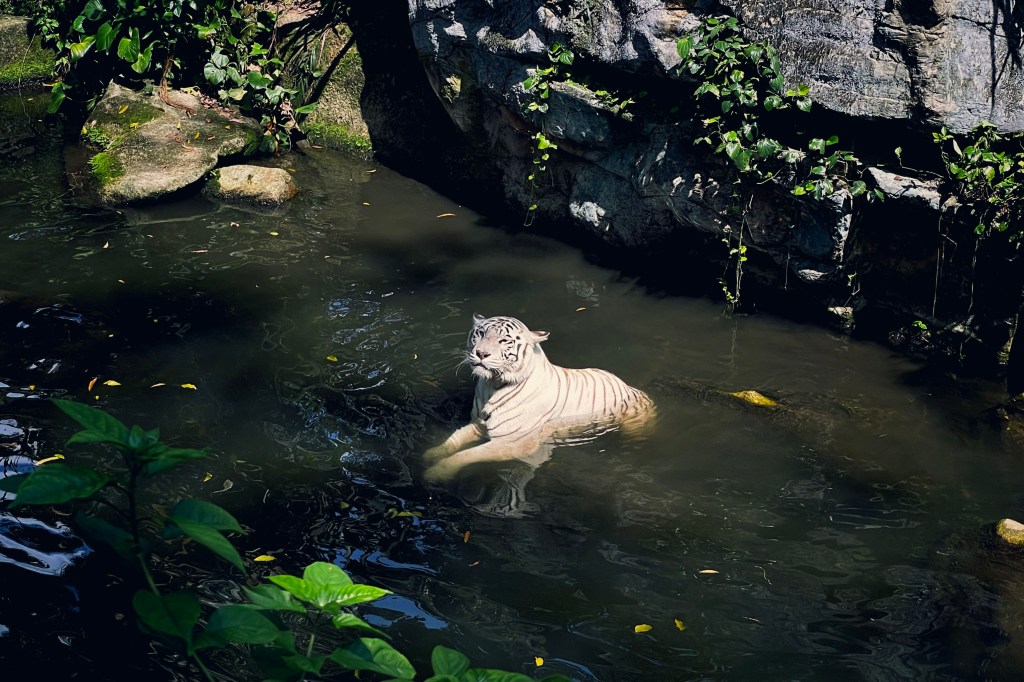
Afterwards, with the afternoon wide open, we decided to visit the zoo and use our “Singapore ReDiscovers” vouchers — S$100 government stimulus checks aimed at boosting domestic tourism. It had been a long while since I last visited, and the layout resembled nothing in memory. We spent about three hours wandering about in very sunny, humid conditions, but it was a pretty relaxing change from the everyday (animal captivity notwithstanding). On reflection, it was also a welcome break from the usual weekday routine of staring at screens. Maybe that’s the role overseas holidays really played, back when they could be taken: looking at new things, in the absence of screens, when one would normally be at work. Do this more!
===
We ended the week getting a beer by the Singapore River, which was a lot quieter than it used to be. Brewerkz, for one, is doing a quarter of the business it would have on a Sunday evening in the past, if not less. Which was unexpected; many restaurants and bars in town look to be doing very well these days. Maybe the riverside area relied too much on expats, and some of them have gone home.

===
I’m revisiting the records of Duke Ellington and Lester Young, two musicians I had on heavy rotation in my teens and 20s and then hardly played in recent times. I started with pretty mellow late night jazz tastes and then found comfort in frenetic discordance. That seems like such a long time ago, and putting them on now has that retro-transportative quality you sometimes get with music or scents if you’re lucky. It’s also fantastic that I am able to hear them in much higher quality today than I did back when a pair of PC speakers was what I played everything on.
Oh, remember those integrated “mini hi-fis” you would buy at the department store? I just looked some up and they’re still a thing! Sony makes a few, ranging from garish LED-equipped ones they must think appeal to the teens who grew up on Michael Bay’s Transformers, to sleeker units that might be silver-painted plastic if they’re anything like what I grew up with. But hey, I’d be delighted if you can get a good sounding system at those prices. For about the same price as Sonos units, these support Bluetooth/AirPlay with the added benefit of CD/DVD playback that one of Sony’s copywriters has absolutely no illusions about.

===
I mostly read Saifedean Ammous’s The Bitcoin Standard in a day, with a bit of skimming. It’s a 10-chapter book that doesn’t get into Bitcoin until about Chapter 8, which is not the structure I would have chosen, but the long set-up is a pretty good primer on money and the history of gold as a currency.
Not having paid any attention during my economics classes (I failed), there were some ideas here I found interesting. Namely the connections between having a stable, global monetary standard and people having longer time horizons (or lower time preferences, as they’re called here) with which to approach their work and lives. He links the economic stability of the gold standard era to people investing in longer-term bets, which resulted in some of human history’s most significant advances in art and science, higher functioning family units, and even the preservation of world peace (up until WWI). It’s probably obvious to anyone who’s studied it, but I’d never considered the systemic effects of pegging a few currencies to a precious metal that way before.
===
I read a tweet that said it’s not working hard that causes burnout. Teams can apparently burn out working normal hours on things that don’t feel worthwhile. I wonder if there’s a leisure equivalent of burn out, when you realize your hobbies are a waste of time. What happens then?





 sangsara.net