Category: General

  • An idle year in review

    An idle year in review

    Before heading back into the working world tomorrow, I took some time today to review the past year of these weekly blog posts. You don’t realize how long it’s really been until you review all the news events (daily Covid numbers jumped from two digits to four) and things you did. It’s probably not a good idea to question whether they were worth doing in the first place. Ah what the hell, let’s do it.

    Here are some ironic bits I pulled out, because hindsight:

    I’ve always envied people who find the hobbies/obsessions just for them (damage to finances and relationships aside). I’ve never met a game I loved so much that I would spend hundreds or thousands of dollars on buying its in-app purchases. Or shoes, bicycles, etc. I know people who do, though. They seem to buy almost thoughtlessly and without regret. [Week 26.21]

    That was me wishing I had a hobby I liked enough to spend on it without thinking. Not long after writing that, I bought my first NFT. Over the next few months, I would fall out of love with the idea, and then back again. At present, there are days when I spend hours browsing interesting new releases and have the urge to just catch ‘em all. I don’t even know if it’s rational, if these artworks are real, or if this web3 mode of acquisition is legit, the way it might verifiably be in the real world. I justify it by saying this intersects with my work and my interests, but the simple truth is I’ve found my version of sneaker collecting. Be careful what you wish for.

    Rather than continue reading Firebreak this week, I looked into a few topics I’ve been feeling ignorant of: what’s going on with social tokens? What do people mean exactly when they say “metaverse”, since they can’t literally imagine it’s Snow Crash, (insert Princess Amidala face) right? [Week 33.21]

    A little while later, the metaverse hype train really took off (or derailed, depending on your POV) with Facebook’s rebranding to Meta, and every other company having some interest in exploring the space. Sadly, it seems that some people really do want life to be like in Snow Crash.

    Prompted by a friend’s reports of how well their investments in the Luna token were doing, I looked into the Terra ecosystem out of Korea and was impressed by its vision — insomuch as someone with little background in economics can certify a financial flywheel logical and brilliant. I don’t know what I don’t know, but it sure looks good to me. [Week 34.21]

    Narrator: Yup, he was indeed unqualified to certify any financial flywheels.

    This tweet helped me to see that it does take longer than you’d think to disconnect from work/overwork. I thought I’d gotten to a good place in just a couple of weeks, but looking back, I’ve been giving myself a hard time about not being productive enough, not doing enough each week to learn new things, or start new hobbies, or have enough fun — and all of that is a psychological holdover from the rhythms of work/overwork. [Week 37.21]

    I’m not ready yet to sit down and properly reflect on the entire period, what I learnt and how/if it’s changed me, but the short answer I’ve been giving people along the way is based on the above. For me at least, it’s impossible to take time off and just disconnect without going through several loops of trying to relax, trying to make productive use of the time, and feeling upset that I suck at taking time off.

    The first half was more deliberately used: I planned things, I met up with people, I took stock at the end of every day to ask what I could have done instead. Fooling around with the Misery Men project was probably healthy; a way to feel like I was making something without the usual worry of whether it mattered.

    Emotionally, the volatility probably went down in the second half — I wasn’t worried too much about how the time was used because it felt like there so much of it; maybe similar to how rich people don’t think too hard about their daily expenses. At the start of this sabbatical, one of the ways I phrased my objective was “to find boredom”, by which I meant total leisure satiation. It’s not possible, of course, just an ideal, because I could goof off forever. My guess is that it was only in the final third of the year that I started to live in the right mental neighborhood. I don’t feel completely renewed and energized or anything like that, but I take the emergence of my Subconscious Heirlooms project last week as a good sign. A year ago, I would not have suddenly found the will and courage to dash off 39 drawings in a week and put them up in public to be laughed at.

    In terms of all the media activity I recorded, it looks like I watched a hell of a lot of TV, mostly disposable Netflix crap. Could have done with less of that. I spent enough time playing games, but still failed to get around to Yakuza Kiwami 2, Yakuza: Like A Dragon, Lost Judgment, Astral Chain, Unpacking, Paradise Killer, A.I. The Somnium Files, VA-11 Hall-A, and a couple more still! I didn’t read as many books as I’d have liked, and that’s a bigger regret than not clearing the games backlog. Either I get better at squeezing gaming and reading into the rhythms of daily working life, or I’ll have to take another year off soon.

    Writing anything down, whether in my journal, to friends, or in these blog posts, never felt like a waste.
  • Week 15.22: Location apps

    I’ve been a user of Foursquare, and then Swarm, for many years. Since November 2009, says my profile page. I know that I’m giving an advertising company too much information about my location, movements, and preferences. But there’s definitely a value exchange here. Without this “lifelog”, I couldn’t remember everywhere I’ve been, or the last time I was at such and such a place. And there have been occasions where I was able to, quite magically, summon the name of a great restaurant in another city and immediately see how it’s been doing since, so that I could recommend it to a friend.

    I’ve been a fan of location-based apps and social networks since maybe 2006 or 2007, when I got my first Nokia that qualified as a smartphone. I especially recall an app named Brightkite that existed briefly. It allowed for serendipitous moments like going to a foreign country and seeing tips and reflections left around the city (maybe in your hotel!) by a friend who’d come the same way years before. Swarm still allows for this experience today, and it evokes a kind of love.

    One day, Brightkite malfunctioned and read my GPS location as being in Tokyo, just for a moment. I think it allowed me to see people and their check-ins in the mistakenly assumed area, and so I interacted with some of them… giving them stars or a follow or whatever. One such stranger became part of my permanent friends’ list, and when I migrated to Foursquare, she ended up on my list there too. It’s now over a decade later, and we are still weirdly and peripherally aware of each other’s lives, on Swarm and Instagram, without ever having spoken. It’s a distanced closeness that could only happen with the internet. Once, when I happened to be visiting Tokyo on holiday, we were both checked in around the Ginza area at the same time. We may have crossed paths; I’ll never know.

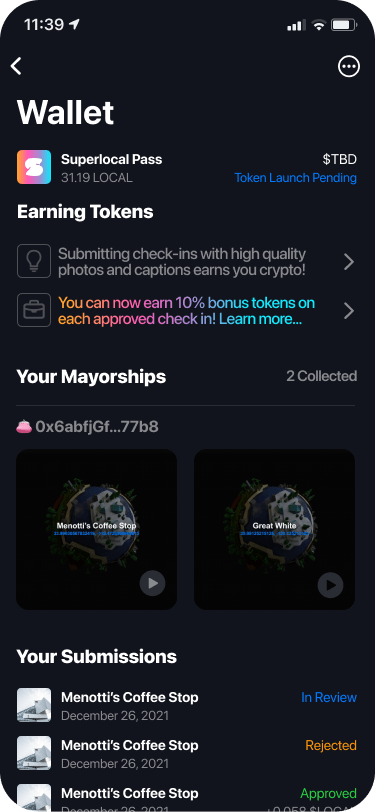
    Screenshot of the Superlocal app, taken off their website

    This week, an app called Superlocal came to my attention via a crypto/web3 newsletter called Milk Road that’s worth subscribing to, if that’s your thing. Suoerlocal seems like an attempt to remake Swarm with a new revenue model. Like many web3 ventures, instead of selling your data to advertisers, it tries to support itself by being intrinsically financial: checking in and providing quality photos earns you tokens called LOCAL (which may someday have value), and being the mayor of a place doesn’t only earn you derision/respect, but also some LOCAL whenever people check in. How does money enter the ecosystem? Becoming the mayor of a place means minting an NFT for it. It’s currently in an early access phase, which also requires an NFT (or invite from a friend) to gain entry.

    I have mixed feelings about all this, as I do with NFTs and web3 in general. We should definitely explore new business models and build services that don’t rely on users making a privacy compromise. If a small group of super engaged users can fund the experience on behalf of everyone, and be happy doing it, all the better. But at least in this iteration, we’re just trading one problem for another. For instance, holding a bunch of mayorship NFTs in your Ethereum wallet doxxes your location and behaviors too, and probably in a worse way because they’re public for anyone (instead of just Foursquare Inc. and a couple hundred of their favorite clients) to see. This stems from the poor privacy design of Ethereum, of course, but it’s now the biggest smart contract blockchain so what are gonna do? There are still so many things that need to be done differently for this technology to scale and be safe and easy enough for everyone to use. That means I don’t believe Superlocal is going to become ubiquitous any time soon, but hopefully we’ll all learn what and what not to do as they keep building.

    Until then, I’ll still be checking in on Swarm.

    PS: I’ve been told about the virtues of using Google Maps’ Timeline, which also lets you keep a log of your movements each day, but without the social and gamey elements. I tried it briefly, but it was less fun, and I’ve been quite successful so far in cutting all the Google out of my life. Yes, I’m aware my rules seem arbitrary and illogical.


    Media activity:

    • Finally finished the book How To Do Nothing after about two months, which isn’t the positive review it appears to be. I found it such a joyless and obtuse slog that I fought myself every time I thought to pick it up and finish it. And because I have a dumb rule about not reading two books at the same time, that blockage has fucked up my Goodreads annual challenge for the year. A lot of catching up to do and I don’t think I will.
    • Started a new book anyway, Grace D. Li’s Portrait of a Thief, which is billed as Oceans Eleven meets The Farewell.
    • Watched Kenneth Branagh’s Death on the Nile. Dreadful. He’s done some work in the past that I truly loved, but this has little to recommend it. The art direction is slipshod, with CGI background compositing that looks straight out of the CD-ROM FMV games era, and the radioactive Armie Hammer is in one of the lead roles. Branagh’s Poirot is also mysteriously unlikable and inconsistent, with a couple of rude and temperamental outbursts that feel like if Superman suddenly gave someone on the street a middle finger.
    • Severance on Apple TV+ is not dreadful. Mild spoilers follow. I wasn’t expecting to be impressed, and the first episode takes awhile to get going, but it’s really excellent. This despite veering a little close to corny with some scenes on the “severed floor”. The sinister, faux 70s megacorp with forced cheerfulness felt copped from the environmental storytelling of games like Portal, Fallout, and Bioshock, and maybe the Dharma Initiative out of Lost.
    • Now out on Apple Arcade is Gear.Club Stradale which was teased during their last online event, and I’m very much enjoying it with my Backbone One gamepad. The original Gear.Club was an okay free-to-play racer on iOS which was later released on the Nintendo Switch as a premium game (no in-app purchases). It also got a sequel on consoles, but I don’t know how that went. This new iteration is streamlined: it’s all set in Italy, and the UI lets you move quickly around the workshop and upgrade your cars without having to fiddle around in too many submenus. Instead of the usual giant catalog with tons of cars to swipe through, a small selection of up to three cars for sale, refreshed daily. This is a superior design for a game intended to be played in short bursts over a period of time. Ping me if you want to join my crew!
  • Memes, Myths, and Machines

    This is an addendum to the last weekly update (3.22).

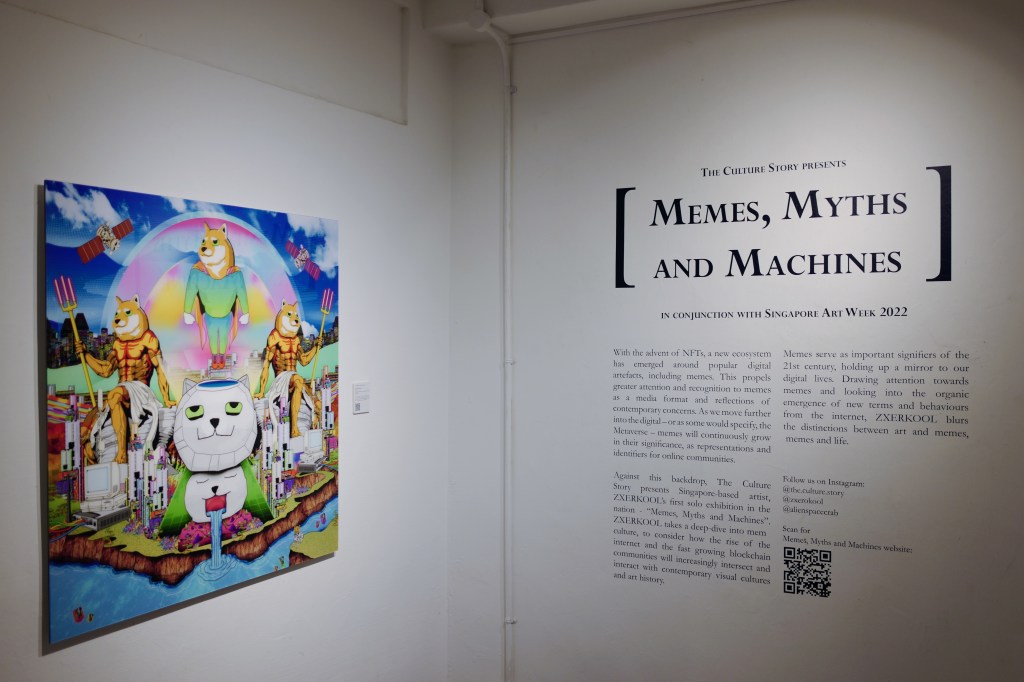
    As part of Singapore Art Week 2022, we visited The Culture Story on Sunday afternoon to see ZXEROKOOL’s first local exhibition entitled Memes, Myths and Machines. He’s done a new series of NFTs that were presented as large format prints, and we spoke briefly about how a new class of art buyers are excited by the flexibility of printing these pieces at whatever size suits their needs or residences, while retaining ownership certification through the NFTs in their wallets.

    These were of course familiar arguments for the technology, but his anecdote about a previous exhibition in China and the concern of buyers there about the veracity of a limited run brought home the need for this control, held by the artist, limiting run size as intended. Personally I love that artists can continue to get a cut each time a work changes hands, which is an innovation I don’t think was feasible before smart contracts.

    ZXEROKOOL explaining his work to a journalist

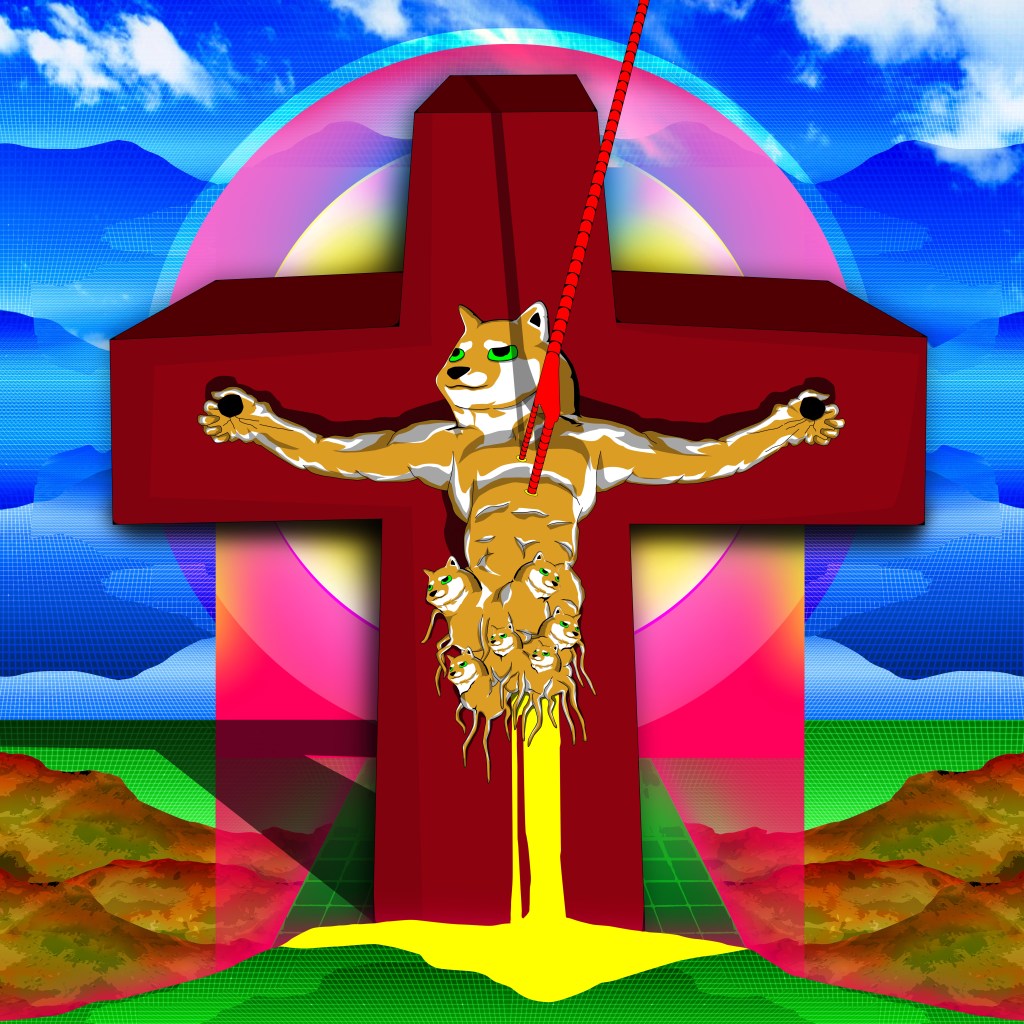
    I had two favorites at the show: Meme-vangelion and The Garden of Internet Delights. The former is a mashup of Shiba Inu and Evangelion imagery, complete with the Spear of Longinus piercing the puppy’s heart. I left wanting to buy one of them, but by the time I got around to it the next day, some other fan had bought the last edition of The Garden of Internet Delights. No matter, Meme-vangelion isn’t a consolation prize. Though the whole collection plays with the visual vocabulary of the internet as many of us have experienced it over the last decade, I think this work stands alone in its astute selection of two icons that will surely stand the test of time?

    Meme-vangelion
  • Caveats in paint (digital)

    While taking a break from my Misery Men series of profile pics, I’ve been trying to draw other things. Bear in mind that I’m in the process of learning to draw at all, through trial and error. Yes I could/should probably look up proper resources or watch a YouTube video on some basic techniques, but it’s kinda fun to just bumble my way through this?

    It started with this living room scene with our Christmas tree that I included in the last weekly update.

    Remembrance of a Christmas tree (the red rug is a fiction), 2021.

    In doing it, I learnt how the “oil paint” brush works in Procreate for iPad (used it for the fire on the TV). I also attempted two things that seemed like professional ideas to me: starting with a rough pencil tracing to block out the space before inking/coloring, and trying to render light emanating from the TV onto the tree, the Nintendo Switch beside it, and some of the floor. I guess all drawing is deciding how much realism you can/want to trade off?

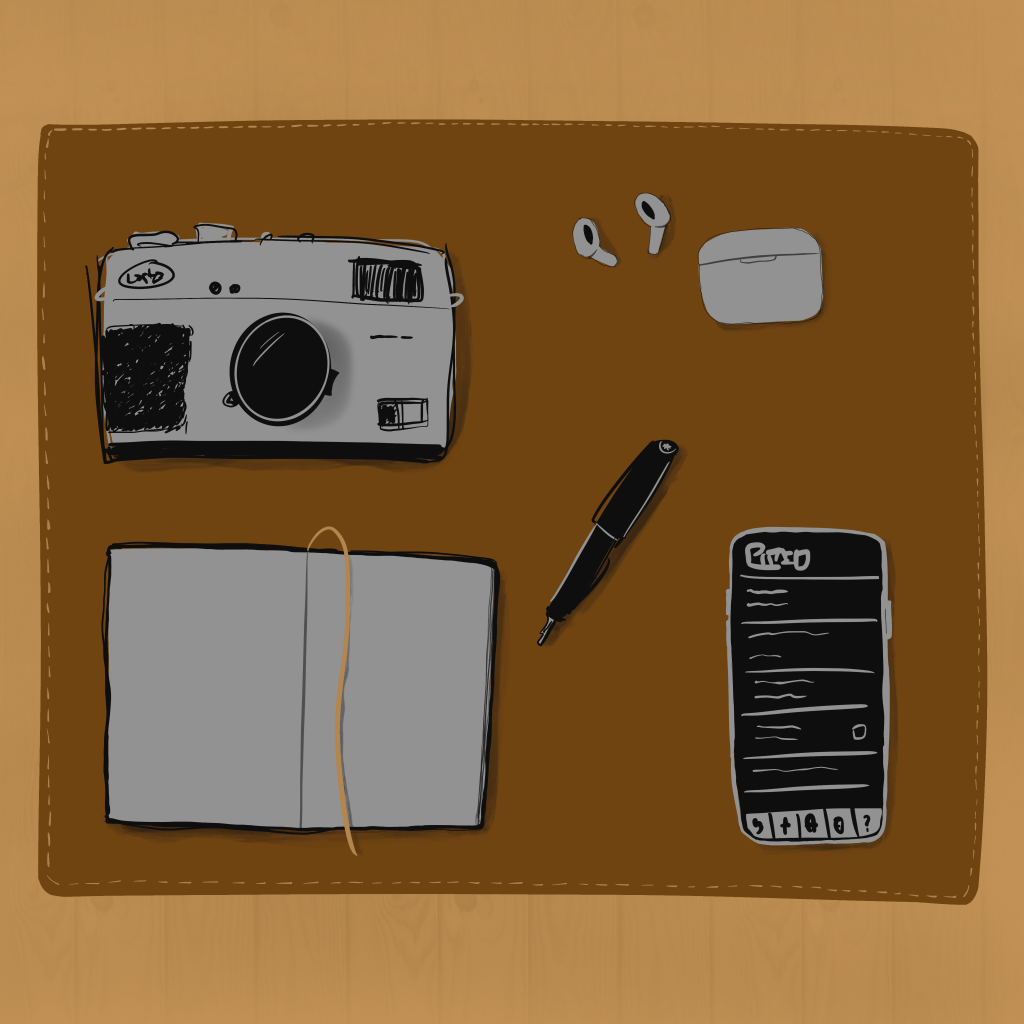
    Hypothetical (thoroughly imagined) desktop of the artist (generously defined) based on resource allocation (time + money squandered), 2021.

    The next day I started doodling a camera and decided to do this imaginary scene of a leather pad on a desk, with some objects that represent my hobbies and how I spend most of my free time. I wouldn’t say any single area took more effort than the other, but I figured out early on that everything would just be black and gray, and it seemed to work well.

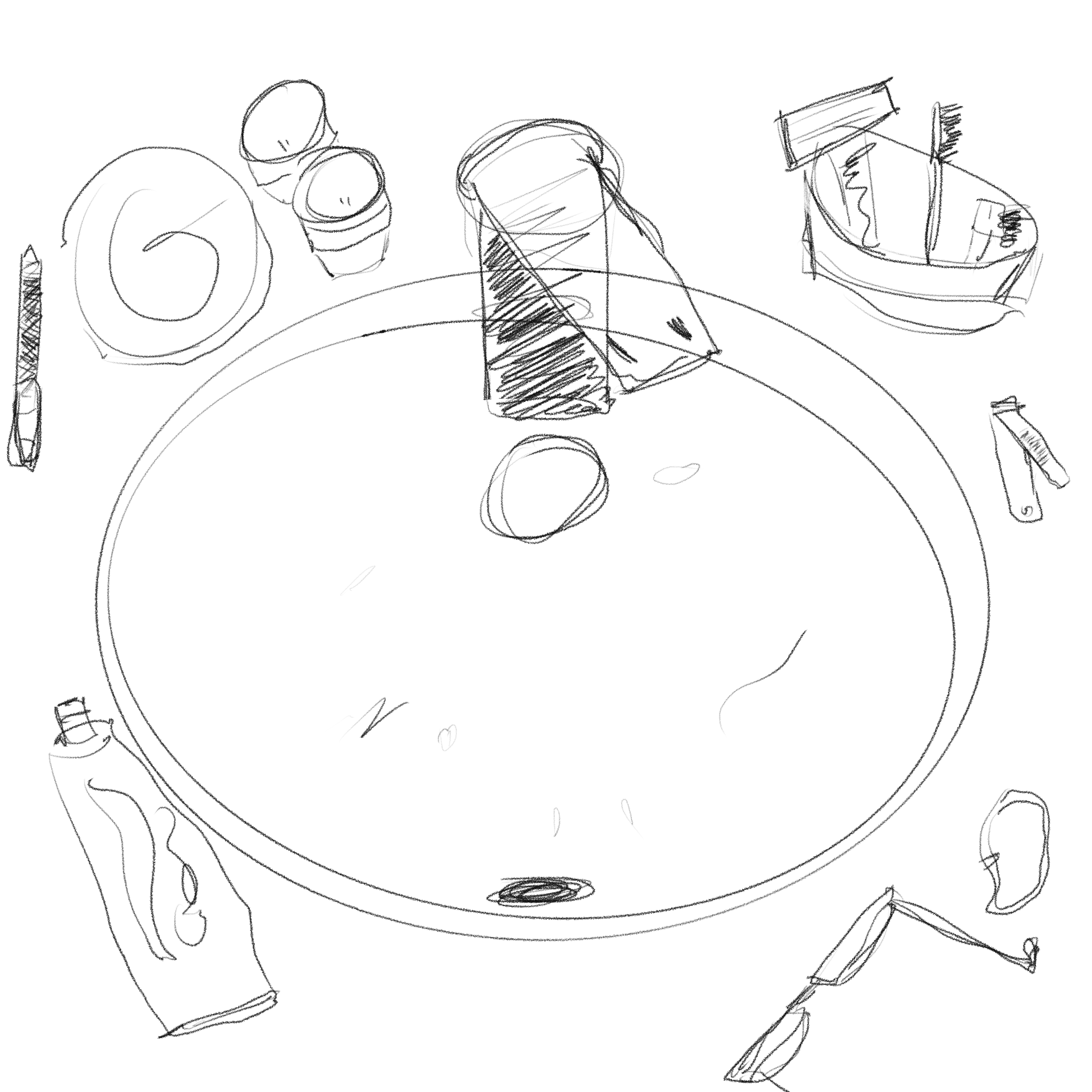
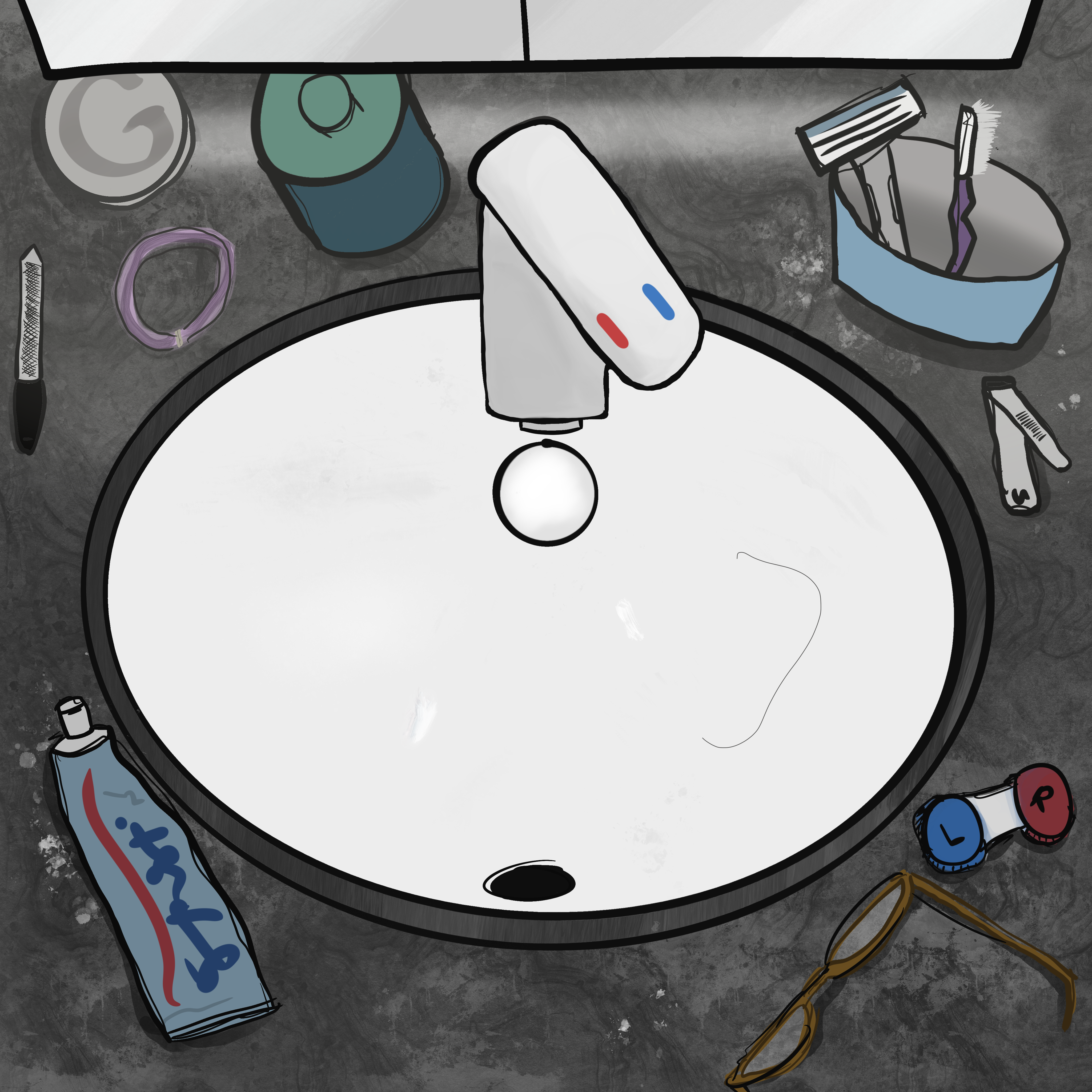
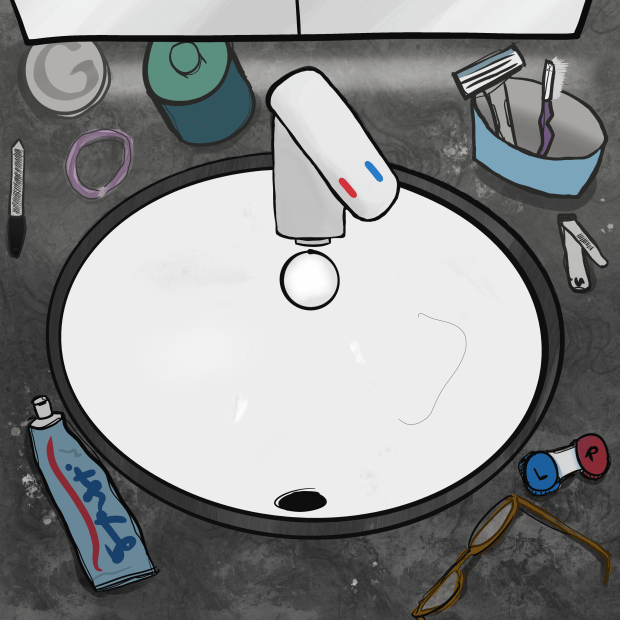
    The next day’s challenge was to draw a top-down view inspired by our bathroom sink, which I have plenty of time to stare at every day while brushing my teeth. I wanted to work from memory only, so again I started with a pencil outline to compose the space. Trying to do the marble texture on the counter was the hardest bit by far, and I still wasn’t happy with it after the first pass. You should see a widget above with a slider that lets you compare the sketch with the first draft.

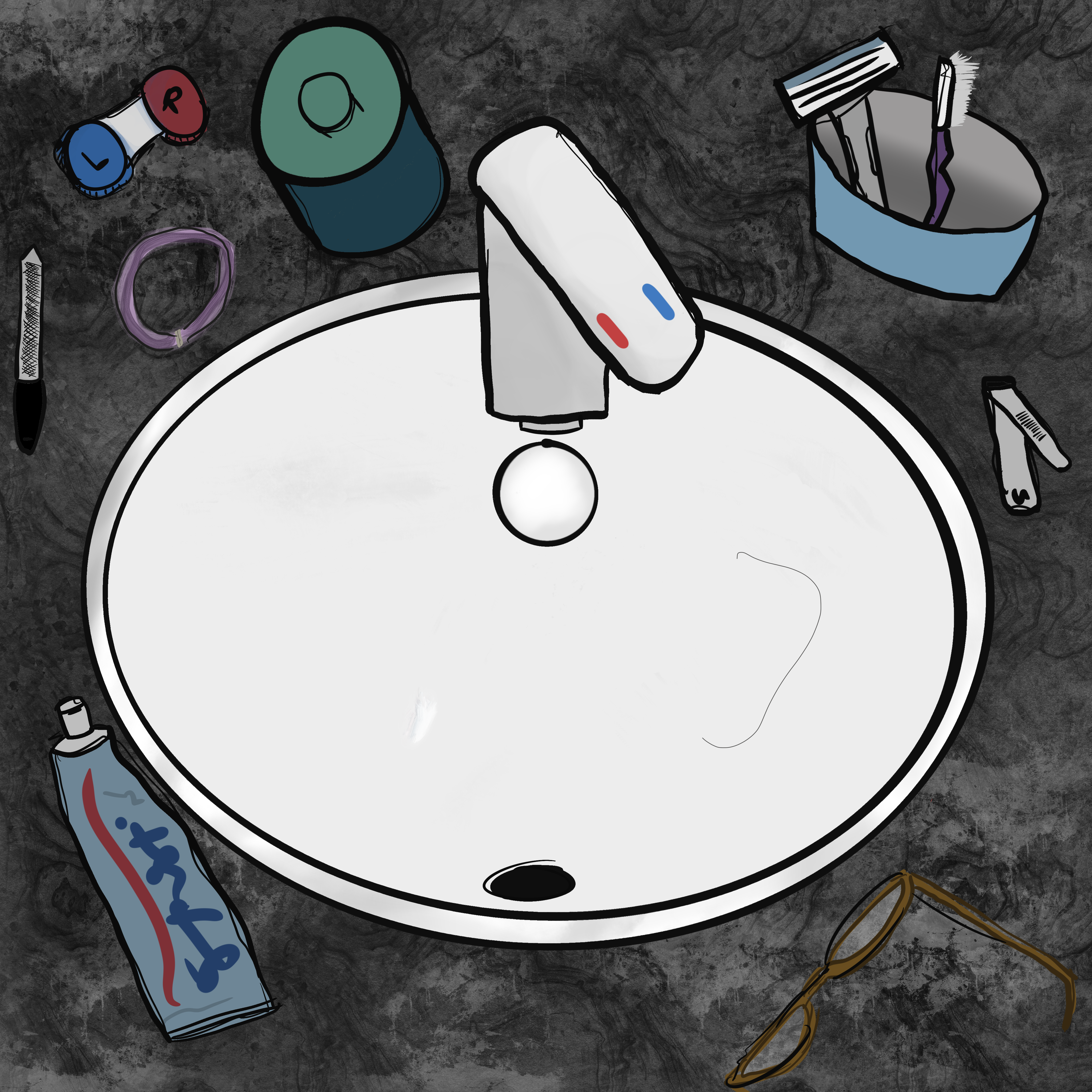
    From there I tried to make something presentable out of it. In addition to adding dried toothpaste everywhere, I moved some objects around, added shadows, put a mirrored medicine cabinet above, and added an ambient glow and the reflection of its underside fluorescent tube to the marble countertop, which was smoothed out.

    Here’s the final state of it:

    Standing over (with an amateur’s understanding of perspective) bathroom sink with peripheral clutter (understated), 2021.

    I know there are super impressive time-lapses out there of artists slapping incredible lighting effects onto proper scenes like their brains just know how to see light, but I’m just a little bit happy that I managed to figure this out myself as an amateur! Let me have it!

    I may do some more, I don’t know when. But since I’ve enjoyed titling them with stage-whispered apologies and side comments, I’ll be calling this series Caveats In Paint (Digital) and that will be the name of my eventual exhibition to which you are all invited.

  • Quick thoughts on Apple’s MagSafe Battery Pack (2021)

    Quick thoughts on Apple’s MagSafe Battery Pack (2021)

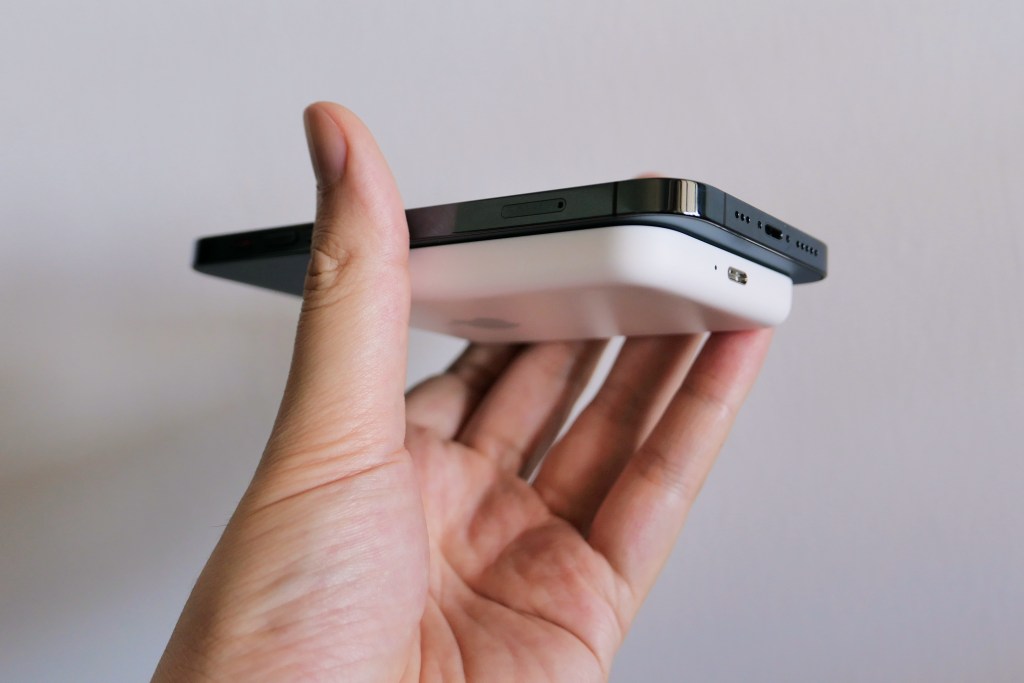
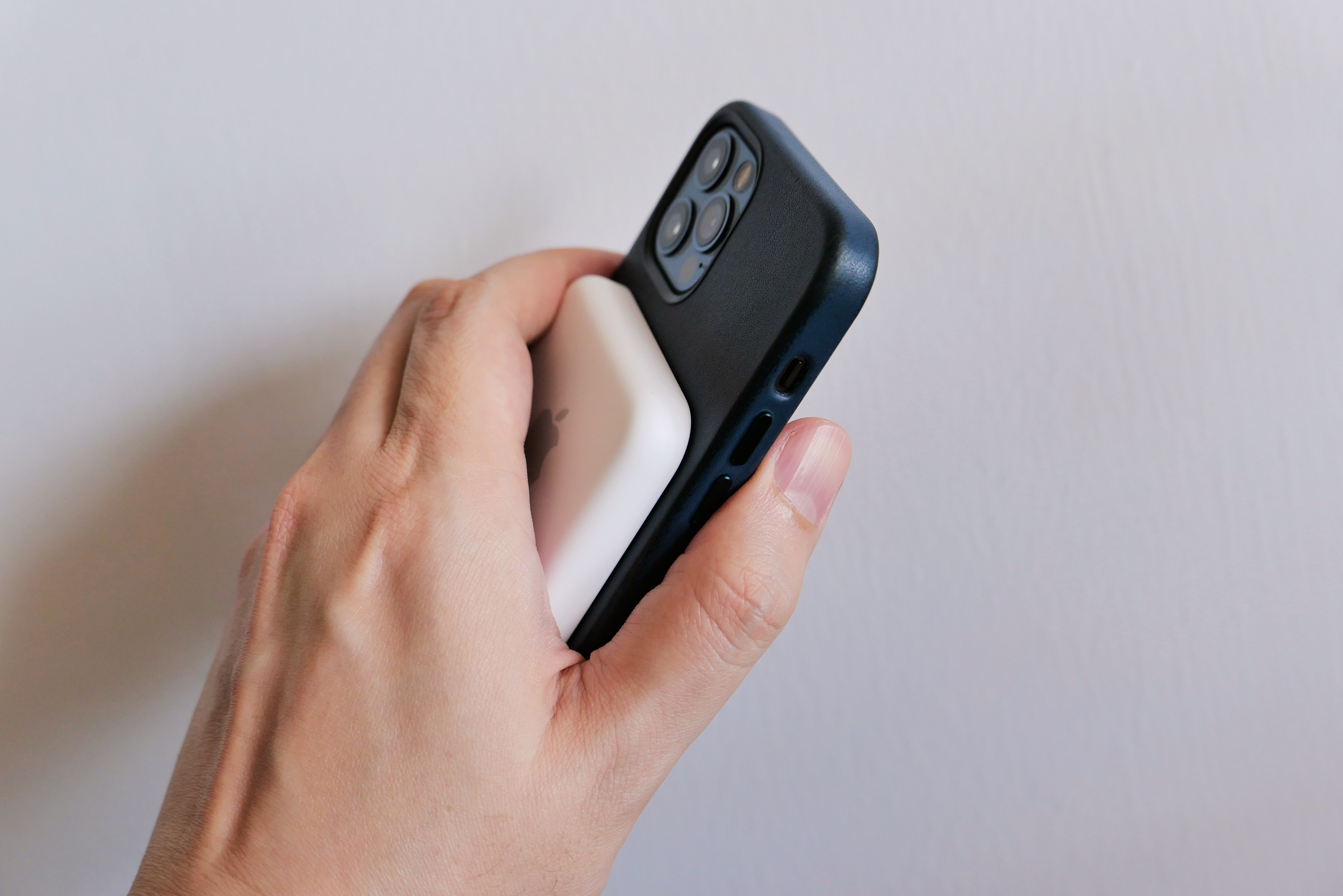
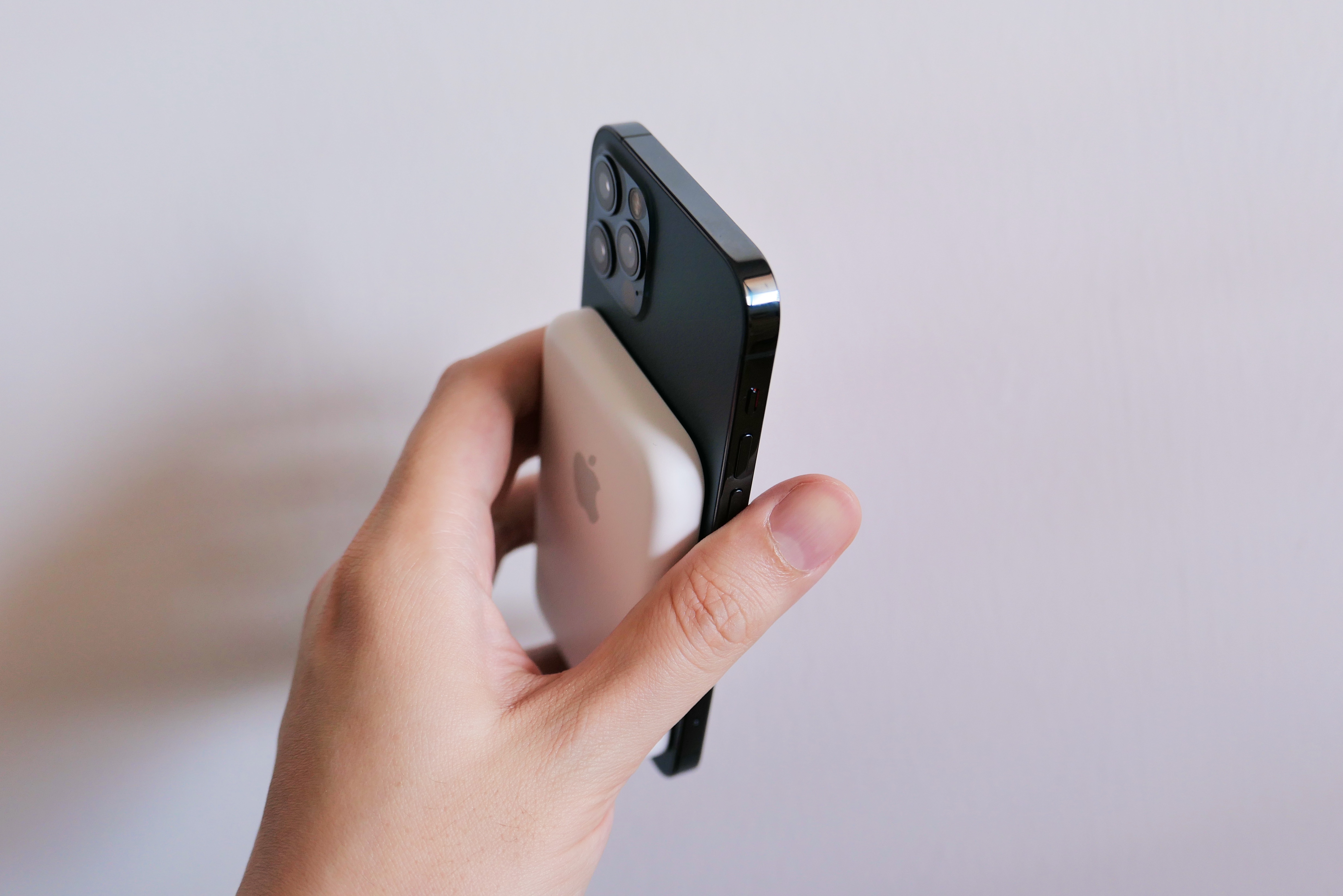
    This week, Apple released an iPhone power accessory that’s been anticipated since the release of the iPhone 12 series late last year. In recent years, they’ve put out “battery cases” shortly after new phones — you’ve probably seen them: rubbery phone cases with a hump on the back, often ridiculed. With the MagSafe infrastructure on the new phones, everyone’s been waiting for a battery pack (or power bank) that you can just slap on the back.

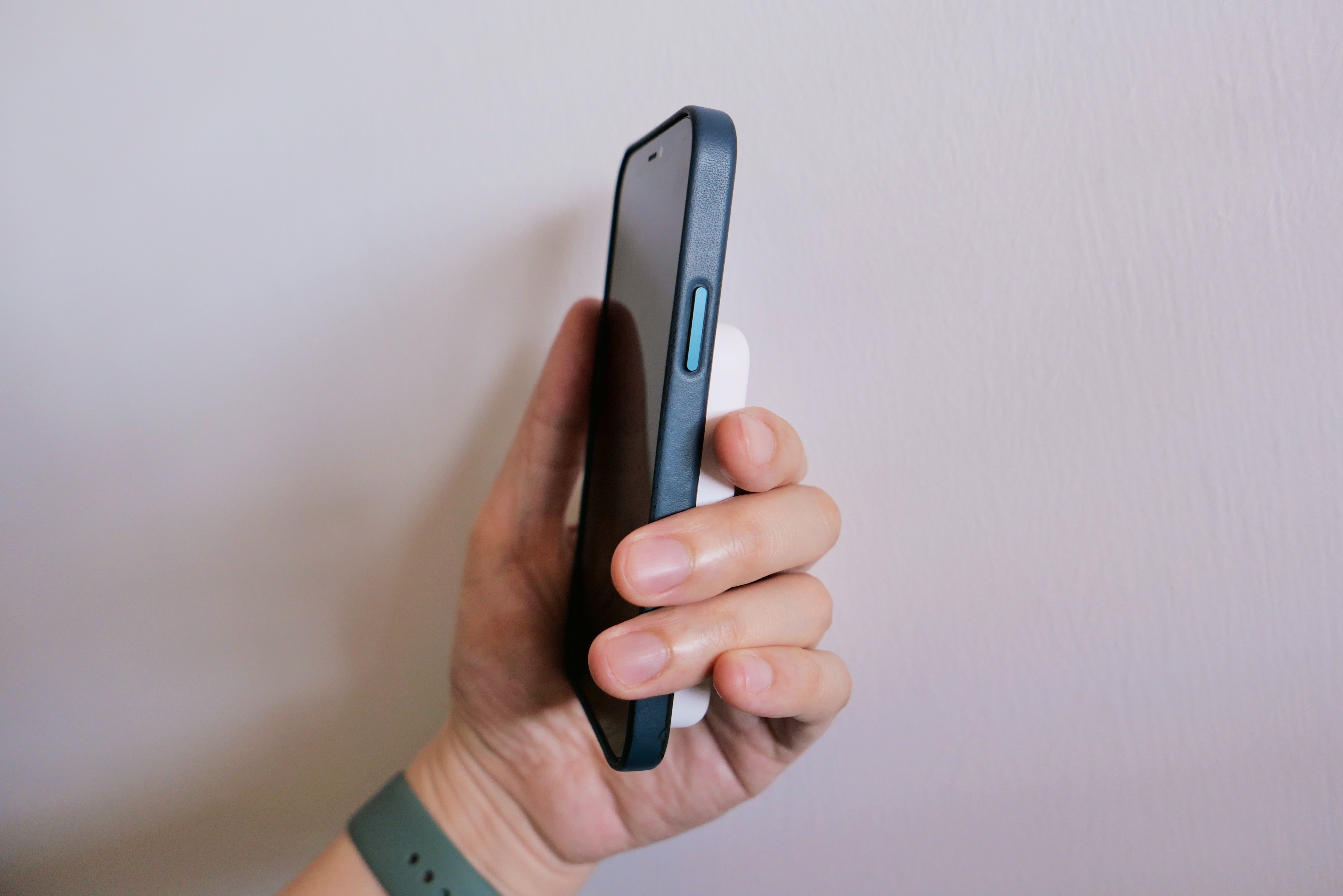
    After some delay, it’s finally arrived for USD$99 or S$139 and only in white. Bit of a missed opportunity to add some pops of color there, like the MagSafe card wallets they make in yellow and blue leather. I think it’ll pair quite well with this Cloud Blue silicone case though.

    On the price: Apple offers an intriguing spread of products at the $99 mark. You can get a HomePod mini in some countries, which is a great sounding smart speaker with serious processing power equivalent to an old iPhone. Or you could get a first-generation Pencil to use with most iPads still on sale. And least apparently worth the value is the braided solo loop, a strap for the Apple Watch made from recycled yarn. I think this battery pack sits squarely in the middle in terms of value.

    The Good:

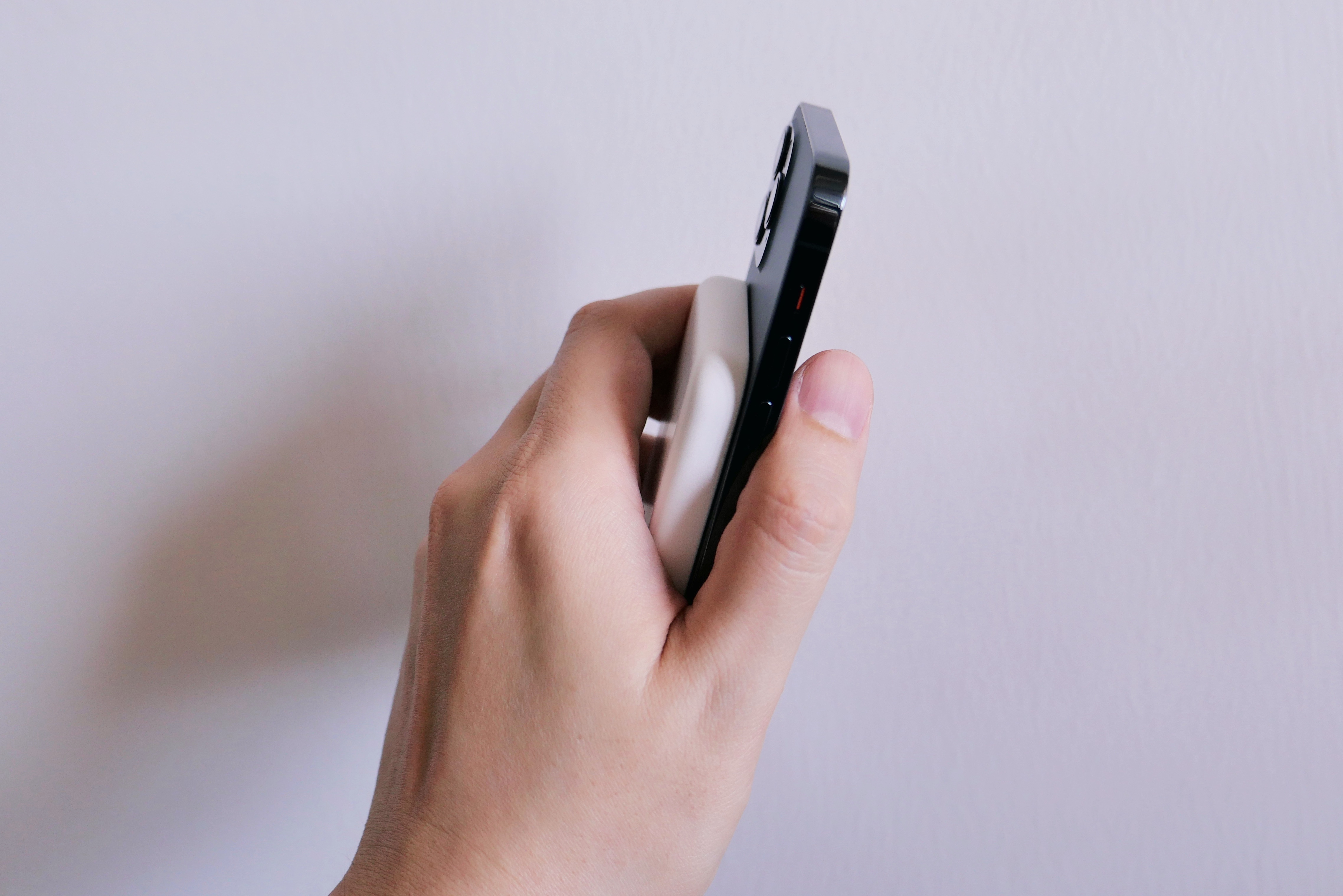
    • Slim (1.25cm) and lightweight as power banks go.
    • iPhone 12 Pro stays usable and comfortable enough to hold when in use (YMMV, my hands are large).
    • Starts charging your phone when attached; no buttons to mess with.
    • Integrates with iOS and foolproof to manage. Your iPhone will slowly draw power and keep temperatures low, stopping the recharge at 80% or 90% to preserve your battery’s lifespan.

    The Bad:

    • Small capacity. Holds about as much power as an iPhone 12’s battery, but due to the inefficiencies of wireless charging, you can only expect it to impart an extra 50% or 60%, based on my experience so far. (Edit: I’ve tested it further and I think it may actually get you close to 80% of a full charge on an iPhone 12/12 Pro.)
    • It does its job pretty slowly, so while traveling and using your phone to take photos, it may make more sense to make a fast-charge pitstop from a regular wired power bank than to go about your day with this slab attached.
    • The pack can’t itself be charged wirelessly with a MagSafe charger or Qi pad. It may be technically possible since reverse charging from an iPhone works, but hasn’t been implemented.

    My use case

    I’m home most days, and if I were working I’d be doing that from a desk at home with MagSafe chargers, Qi chargers, USB-C to Lightning cables, and all sorts of equipment within reach. Why did I even buy this? Curiosity, boredom, and utter laziness to rise from the couch to plug my phone in as I drain it over the course of the day playing games and checking Twitter.

    It’s worth mentioning that my 9-month-old iPhone 12 Pro currently has a battery health rating of 90%, which is abysmal. Most of the time, my iPhones rate about 97% after a full year of use. I don’t know what’s caused this one to degrade so rapidly: a manufacturing defect? My charging routine? My use of a wireless charging pad each night?

    I wanted a way to conveniently extend the life of my iPhone so it can make it through a day without draining down past the 20% mark. When I do go out, I’m constantly worried about ending up with a flat battery. I need my iPhone to pay for things, take public transport, or get a cab at the end of a night. But I want to go out unencumbered, no bag, just pockets. With Apple Pay and other mobile payment platforms, I no longer carry a wallet most times.

    Alternative solutions

    As mentioned, one could use a regular power bank with a cable. They offer much larger capacities, are cheaper, and can charge faster (up to the 18W USB-C PD supported by iPhones). This does require carrying a bag or wearing cargo pants that have wires coming out of one pocket and going into another, though.

    Or if a magnetic wireless solution is preferred, then there are again lower-cost alternatives from Anker, Hyper, Mophie, and many OEMs. These are usually half the price of Apple’s, slightly thicker and more unsightly, but offer a little more battery life. They also lack the OS integration and you have to start/stop charging with a button, although it’s easy to imagine future models hacking some iOS support the way fake Chinese AirPods are able to show up in the battery widget.

    Personally, I think I’ll be keeping this for the peace of mind it gives when I leave the house empty-handed. It’s easy to carry separately in a jeans pocket, smaller than a phone or wallet, and has enough power to extend even a failing phone battery to last through a day and night of usage. It won’t get you through two days, but I don’t think that’s what it’s for. It’s a safety net, and a solution for lazy couch charging at home.

  • Week 18.21

    • COVID cases have re-emerged in the community here, after many months of quiet, just a week after Bloomberg put Singapore at the top of a worldwide list of the safest cities to be right now. The main cluster is centered around a hospital where I believe a nurse was infected, and 27 linked cases have been discovered so far. The entire ward has been quarantined and thousands of patients in the hospital have been tested. Somehow, there are also cases at a secondary school, and I saw a headline about a spa technician being another one. So the scope of this will probably expand a little over the next week.
    • Already, the government has backtracked on its previous recommendations to have the majority of employees return to offices. We’re now being told to work from home where possible. It’s my opinion that this should simply be the default recommendation forevermore.
    • We tried watching more Runaways on Disney+ after last weekend, but it’s not sticking anymore. Its initial narrative energy, all nitrous borrowed from its subversive premise, has burnt out. Each episode is now a meandering, time-wasting YA cringefest. I think we’re going to quit it at this point in the middle of season 1.
    • I was in the mood for a dumb action movie over the weekend but had a lot of trouble finding one quickly on Netflix. I eventually settled on Bloodshot, which is a Universal Soldier-alike vehicle for Vin Diesel, who I remember starting out as a likable personality but by all accounts today is a horrible person/co-worker and something of a modern day Steven Seagal on the set. I made it maybe halfway through before quitting out of boredom.
    • If you’re looking for a recommendation: Without Remorse, starring Michael B. Jordan and out now on Amazon Prime Video, is not a shit film at all. In fact, it has fresh ideas that make for a couple of original-feeling set pieces.
    • Birdy has a new album out, which I discovered through this video for the single, Second Hand News. Apple Music’s liner notes says she had writer’s block after a breakup, and these new songs were shaken loose after she rediscovered Joni Mitchell’s “conversational songwriting”. I love it. It does feel a little Joni.

    ===

    Right after I published last week’s post with a picture of my new HEY.com t-shirt, the founders of the company released a controversial statement about how they wouldn’t allow “distracting” non-work discussions in the workplace anymore, which resulted in a PR shitshow and about 30% of their company publicly quitting on Twitter.

    I haven’t looked deeply into the details, but some parts I skimmed suggested a toxic environment and leadership style mixed with the ever-inflamed issues of race and politics in the US. Who knows if they’ll get the message and rebuild their culture, but I’d be upset if it means I’ll have to change my email address again. The amount of mental time spent on that deliberation last year was enough for another decade. I really like the service so far and would subscribe for a second year.

    ===

    Not at all related to a toxic workplace is the small announcement I can now make that I’ll be taking some time off in a few weeks to enjoy a long-wished-for sabbatical. The Currently Reading/Playing/Watching aspects of these updates will probably expand. I can’t wait to start on my backlog of games and books.

    As mentioned several times in the past few months, I’ve been feeling in need of a recharge and also interested in the concept of mini-retirements throughout life. Granted, I can’t travel in this current climate, but there’s still plenty of room to develop new interests, ideas, and directions. As I enter the second half (hopefully not third) of my so-called career, it seems like it’s worth taking a wider view of what other kinds of value can be extracted from the ever-diminishing energy and light of this short stay on Earth. Maybe I’ll get into finger painting?

    A few weeks ago while writing one of these posts, I referenced an article about the nature of work, and was slightly irritated by its very broad definition. It used “work” to encompass all labor, whether for the purposes of making a living or not. Contributions to society, to one’s family, towards your own interests and goals — all of it was called work. I preferred using the word to mean paid labor only, and thought it was quite a privileged stance to include all sorts of things one freely chooses to do. There are too many people toiling at their limits to stay fed and sheltered, dreaming of the day they can finally rest in the absence of work: retirement, the promised realm of reward.

    However now that I’m on the precipice of free time, I can see a little dimly through that lens. For those with the opportunity to opt out of paid labor, even if only for a little while, a new terror appears in the form of questioning “am I relevant? Am I valuable?” Freed from our contracts, we want to fill the gaping hole in our calendars with Meaningful and Impactful activities. We want to do work in any form. If we’re raising a child, we tell everyone it’s “a full-time job”. If we’re volunteering out of passion at a non-profit organization, we say we’re finally “doing our lives’ work”.

    I don’t disagree with this use of the word now. It’s not that we should label everything we do as work; it’s that all purposeful activity can fairly be called work. Anything that takes something out of you to produce an outcome is work, and we should all engage in it for as long as we can, even after we stop being traditionally employed. Your work can be about learning, teaching, or doing. It can find you producing or repairing, supporting or leading, communicating or meditating. It can be social or entirely solitary. Even when we take the time to rest, it’s in service of our work. Retirement might be the wrong state to aspire to, after all. It’s dying, becoming inert; all subtraction and invisibility.

    In this tiredness, I so badly want to do nothing, but I’m also afraid I won’t let myself. Or that I shouldn’t. We’ll see what comes of it in the months to come.

  • Dispo Day 1

    You may have heard the buzz this week around the new beta version of Dispo, the app formerly known as David’s Disposable, as in Vine/YouTuber David Dobrik’s version of those camera apps that simulate the look (and sometimes also the experience of waiting for photos to develop) of disposable film cameras. David himself notoriously shoots his exciting life with tons of those cameras, so the app made sense as a spinoff business. It wasn’t the first of its kind on the App Store, and there were so many others with knockoff names like Huji (Fuji) and Gudak (Kodak). So while David’s fans probably used it, the first version of the app wasn’t thoughtfully designed or original enough to be an essential camera app. Now, the next version is being taken seriously with millions invested and a full-time team hired.

    Side note: This reminds me that one of the first app ideas I had and sketched out in the early years of the iPhone was for something similar. Obviously I never had the guts to make it, which is the main gap between ideas and profit. I was thinking you could “buy” and load rolls of film into a camera (complete with having to thread the initial end bit onto a wind-up spool before shutting the door) and then send them off to the lab when you’d shot 36 or so images. And after an hour or a day had elapsed, you’d return to the app to see a yellow paper envelope slide across a store counter to you, and be able to tear it open to see your shots (and the included negatives). I remember feeling kinda bummed when the first camera app to do the enforced waiting time gimmick came out. It wasn’t as skeuomorphically cool. I think it was 1-Hour Photo by Nevercenter.

    Anyway, Dispo 2.0 is currently in beta and I only just got in. My first batch of photos came out this morning at 9am (the predefined time for all photo deliveries), and they look fine. You get a lightly push processed, slightly cool-temperatured shot in a 16:9 aspect ratio. I don’t understand why it’s not 3:2 like normal 35mm film. The flash is on by default as a core part of the disposable aesthetic. All EXIF data is stripped out, including the actual time of capture.

    There’s a lot to like here so far, but it’s also a little unusual as social apps go. The tutorial doesn’t cover some of its sharing features, so you have to figure them out. There are “rolls” that can be public or private, solo or with others. I suppose they are really “albums”. Before you shoot a scene, you may load multiple rolls in the camera that you would like to contribute the resulting photo to. Which breaks the metaphor of the film roll somewhat, because disposable cameras don’t normally shoot onto four rolls of film simultaneously (nor do they have replaceable film)! After a shot is developed, however, you can manually add it to any roll.

    Each roll can only have 69 contributors, so the emphasis is on doing it with your friend group, but there’s no limit to how many members of the public can follow a roll and see it on their feeds. David Dobrik himself seems to be using rolls to capture short events, like throwaway albums, rather than as curated, ongoing thematic feeds like I see some others doing for their pet, food, or “good vibes” photography. Perhaps the idea is still being tuned, or maybe they’re fine with people using them however they like.

    Beta testers are not supposed to share screenshots, so I won’t. But it’s an example of non-cookie cutter UX design that asks you to work a little to figure it out; Snapchat and at least one redesign of VSCO often get credited for attempting personality in a post-iOS 7 world. Outside of games, it seems it’s often camera/photo apps that still go for it.

    On the other hand, Hipstamatic has devolved into such a confused and cluttered app that you have to really work to figure it out. No fun at all. I miss the old Hipstamatic, and Dispo looks like it might bring some of that magic back: you’re encouraged to shoot without chimping, frame loosely through a tiny viewfinder, and be happy with even the crappy shots.

    It actually reminded me today that Hipstamatic once tried an app called DSPO, pretty similar in concept. You had virtual rolls of film that you’d have to shoot fully before developing, and you could invite friends to share a disposable camera in real time. Two people in two cities could shoot a roll of film together. I remember it crashed a lot for me, and it was a struggle to convince anyone to install it. So it failed. Good idea, wrong time and execution. At least amongst millennials and zoomers in the US now, Dispo seems to have avoided that trap: the TestFlight beta is fully subscribed.

  • Listening Remembering 2020

    Listening Remembering 2020

    I considered not making one of these playlists this year, but someone said that traditions are most worth protecting when everything else has changed. My instinct with traditions is sometimes just to snap old things off and find something new to do. Maybe a couple of years of therapy will tell me why, but until then, I figured it was pretty low stakes to just make one.

    And to my surprise (happens every time), it was an enjoyable exercise and I’m reasonably happy with the result, even though it contains some really basic hits and I probably left out a whole lot of other great stuff.

    One thing I noticed as I was pulling in favorites I’d saved throughout the year: there was a tendency towards quiet or mid-tempo songs this time around. Probably a reflection of staying home amidst an apocalypse unfolding in slow motion. In trying to balance that out, I rediscovered a few songs I’d saved but never got back to, like the opening song Don’t Die. As usual, I tried to build in continuity of themes and good transitions, and there are a few intentional jokes in the sequencing of titles.

    Edit: Looking back, I discovered many of these songs serendipitously outside of recommendation engines and so on. Apple Music does offer personalized weekly new music picks, but I tend to find new songs by tuning in to the Apple Music 1 live radio station (née Beats 1), or checking in on their curated genre playlists. Algorithms, don’t trust them.

    Listen on Apple Music | Spotify

    1. Don’t Die — NOBRO
    2. Shook Shook — Awich
    3. Cool With Me (feat. M1llionz) — Dutchavelli
    4. Inside Out — Grouplove
    5. Together — beabadoobee
    6. Mood (feat. iann dior) — 24kGoldn
    7. fuck, i luv my friends — renforshort
    8. you broke me first — Tate McRae
    9. PAIN — King Princess
    10. Say So (Japanese Version) — Rainych
    11. Laugh Now Cry Later (feat. Lil Durk) — Drake
    12. I Dunno (feat. Dutchavelli & Stormzy) — Tion Wayne
    13. Apricots — Bicep
    14. The Hill — Model Man
    15. People, I’ve been sad — Christine and the Queens
    16. Kids Again — Sam Smith
    17. Eugene — Arlo Parks
    18. Lover — G Flip
    19. Young Americans — Durand Jones & The Indications
    20. Lockdown — Anderson .Paak
    21. It’s Hard (feat. Email Sandé) — Giggs
    22. Show Me Love (feat. Miguel) — Alicia Keys
    23. snow jam — Rinne
    24. Holy (feat. Chance the Rapper) — Justin Bieber
    25. death bed (feat. beabadoobee) — Powfu
    26. Devil That I Know — Jacob Banks
    27. Believe — Anna of the North
    28. the 1 — Taylor Swift
    29. You’re Still the One — Okay Kaya
    30. Good News — Mac Miller

    Comment section

    Don’t Die — NOBRO
    Not only a fun song with a great animated video, but an obvious message to open with? Don’t die!

    Shook Shook — Awich
    I don’t understand why someone whose husband died from being shot would make a song that appears to glorify gun violence, but it’s a banger.

    (more…)