• Ten Days with the iPhone 6 Plus

    Ten Days with the iPhone 6 Plus

    Moving from any of the earlier iPhones to the new 6 Plus is challenging, even if you’re acquainted with one of the larger smartphones on the market. In part, this is because it won’t feel like an iPhone when you first start. Of course, I’m talking about the larger screen and the digital gymnastics required to operate it, although the way it fits in your clothing (you actually notice it for once) will also give you pause. My first experience with a larger phone was in 2012 when I bought (and eventually sold off) a Samsung Galaxy S III.

    At the end of that 10-day experiment, I concluded:

    I don’t want to mess with battery settings and tweaks. I don’t want the ‘freedom’ to spend hours scouring the web for ways to make my phone better. I want a phone made by a solid company that I trust, optimized to the best of their ability in a combination of software and hardware design, so that I cannot possibly believe that I could do better myself. Because that frees me to do everything else. But I also want that phone to have a larger screen.

    I went back to my comparatively tiny 4S, and upgraded to the slightly better iPhone 5 when it came out. But now, with the new 2014 iPhones, I’ve finally gotten what I wished for: A great phone. A big screen. And not as two separate things.

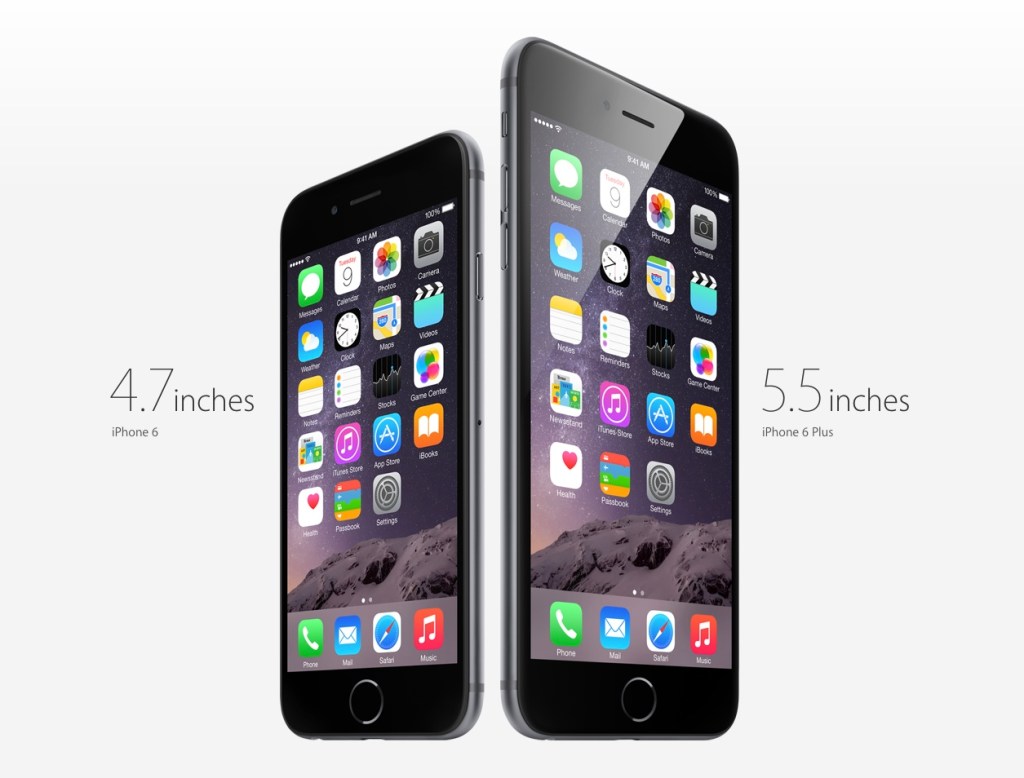
    Why the Plus and not the regular 6? Fear of missing out, really. It’s funny how the Samsung’s screen felt gigantic at 4.8” back then, but now Apple’s 4.7” seems so conservative; too small a leap for all the time I’ve waited for them to do this. The iPhone 6 was perfect for 2012, but we live in extreme times, us 2014-ers.

    Handling and Design

    So, the challenges. It’s been an uncertain 10 days. My theory is that the 6 Plus is a polarizing device if you are a smaller person/have smaller hands. You either know whether you’re okay with the compromises or not. I’ve spoken with women who use Galaxy Note phones, and a common sentiment has been “I can’t use most of the other large phones one-handed anyway (or put them in a pocket), so I just went for the biggest one”. It seems that if you have small hands, you either want a really small phone (iPhone 4-5 series), or go all the way with a 5”+ display and hold it all the time or stow it in a bag.

    But if you have larger hands like me (I can just about hold a basketball with one hand), you could technically use the thing one-handed, but that doesn’t mean you should. It’s still a dangerous balancing act each time, and I swear I’m using muscles I haven’t before, causing a slight ache in the forearms. I’ve read laments that you can’t use it one-handed while lying in bed. Untrue; I’ve done it for hours at a time, hence the pain. Deciding whether one should do all the things one technically could is the hard stuff life is made of. Most people aren’t ready for decisions like this until they’ve had a few kids.

    And remember how the iPhone 5 looked “terrible” when it first leaked online, and many wished it wasn’t real? The odd two-toned back, the suboptimal placement of the camera lens against the rounded corner and, later, the broken look of an inevitably dinged-up chamfered edge? Now those same people look back and consider it, all in all, a handsome design. I was one of those people, and this makes me feel unqualified to comment at length on the iPhone 6 family now. But damn if it ain’t ugly with that protruding camera module and those fat, rubbery antenna lines!

    But the phone’s roundness serves a functional purpose that I appreciate. Many sleek, obsidian phones appeal visually, but don’t feel right in the hands. Sony and other manufacturers have put out a bunch of very nice slabs, but nestle their bottom corners into the fleshy pad under your thumb for a 20-minute news reading session and you’ll see. The iPhone 4 was a similarly beautiful device. It felt pretty good too, but that design wouldn’t hold up when enlarged to accommodate a 5.5” screen. I’d say the iPhone 6 and 6 Plus are the “right” shape for what they need to do.

    Nevertheless, I very much disagree with the smoothness of its back, coupled with such a thin body. Once you add one of the Apple leather cases, it becomes much easier to pick up, hold securely, and use comfortably. It’s a case that fixes just about all of the phone’s superficial design flaws. Leather’s tactility and softness actually allows you to feel more of a connection to the device.

    Others have noted Apple’s adherence to the classic iPhone look for the 6 Plus, with thick top and bottom borders despite the larger screen. This of course allows for a large physical Home/TouchID button, and visual balance. Held in the hand, the phone seems comically tall, and if you can only grasp it below the midpoint, its weight distribution wants to tip itself forward and outward. But use the phone in landscape, and the need for symmetrical weight distribution is obvious. The same goes for the borders: many Android phones have a “right” way to hold them in landscape; merely touch the wrong edge and you’ve accidentally hit a hidden capacitive button that takes you back to the Home menu. I much prefer Apple’s grabbable safe zones.

    Give It Time

    In the first week, I was completely undecided. I looked at the smaller iPhones my friends and colleagues had ordered, and wondered if I’d made a mistake I would have to live with for a whole year. #Bendgate/#Bendghazi didn’t help, but that worry passed within a couple of days. It’s a strong phone, my tight jeans from Uniqlo have a bit of stretch to them, and most importantly, I have AppleCare+ and faith in their customer service.

    I found myself fondling other people’s iPhone 6s, and remembering the times when I could enclose an entire phone in my hand. They grow up so fast! And then at some point after the first week, it just clicked. Somewhat unbeknownst to my conscious brain, it became the perfect size for an iPhone. Later that day, I picked up a friend’s iPhone 6 and waited for the regret to kick in. Nada.

    Switching to an inherently inconvenient form factor that prevents you from carrying and interacting with your most-used computer in the ways that you’re accustomed to is bound to be uncomfortable. I figure even if you’ve made rational peace with all the factors you’re well informed about, it takes a little bit of time for the heart to come around. That’s a problem for Apple in the showroom. I wonder how many people immediately chose the 6 when they might have been happier with a 6 Plus. Next year’s 6S Plus sales will tell the story.

    Off-Screen Considerations

    Battery Life

    The second-biggest new feature for many is the 6 Plus’s enhanced battery life. During the final weeks of my old iPhone’s tenure, its inability to stay functional from morning to night was a bigger annoyance than the small screen. Finally, that problem has also been licked.

    So far, it’s been tremendous1. Also, if you imagine that you may someday be unhappy enough with the iPhone 6’s battery that you’ll buy a Mophie battery case or similar, remember that it will essentially make for an overall bigger and heavier device than the iPhone 6 Plus, which probably won’t need one. That makes for a pretty clear choice. My best example to recall is one particularly busy day with lots of messaging, photo sharing, a 20-minute phone call, GPS directions for a short trip, playing a 3D racing game for a bit, and streaming Spotify music at “Extreme” quality over 4G during my commute, and still making it home 12 hours later with 20% to spare.

    Gaming

    If you play games, you’ll find the 6 Plus an amazing machine. Its screen is bigger, brighter, and better than that of any portable on the market, including Sony’s PS Vita and Nintendo’s 3DS XL. There’s a common argument against the smartphone as a challenger to these systems, and it involves the lack of physical controls. I won’t get into that discussion here; suffice it to say I’ve played hours of Real Racing 3 (free) on my phone and never missed the joystick. Also, if you’ve ever squinted at tiny enemies in an FPS on your old iPhone, and struggled with having two thumbs blocking the action, you’ll recognize that the 6 Plus has the potential to help some genres take off on mobile. I’m planning to give X-COM another go now that everything will be more discernible, and keep in mind that was a console game ported over from the Xbox 360.

    As I understand it, iOS 8’s “Metal” graphics architecture also allows game developers to squeeze more of the kind of performance out of Apple’s chips that they’re able to on dedicated gaming machines, which don’t have to worry about accommodating many of the other features that a general purpose ~~phone~~ computer supports. Games are going to look ridiculously good.

    Photography

    It’s better. It’s astoundingly good for a smartphone. Yes, the optical image stabilization gives you an extra f-stop in low light when photographing still scenes, but you shouldn’t be using the default Camera.app for those anyway. The Cortex Camera app takes longer exposures with very good software stabilization, and supersamples/averages out sensor noise in dark scenes almost completely.

    Productivity

    Everybody talks about landscape mode, but the benefits are still questionable to me, 10 days in. Fire up Mail.app and you’ll see that it’s a little too cramped to be more useful. The information density improves if you turn your system-wide dynamic text size down to one of the lowest settings, which takes more advantage of the HD resolution and 400ppi display. But it’s not for everyone, and I suspect that for a good chunk of people (for example, those over 40), the 5.5” display is best employed as a big screen, not a dense screen.

    Typing is a mixed bag because I’d gotten really good at the old iOS keyboard. In apps that haven’t been updated for the new phones, the default keyboard appears larger, which messes with your muscle memory. Since iOS 8 launched, I’ve mostly used SwiftKey (it beat out Swype in accuracy). Its swipe mode helps with one-handed input when that’s necessary — having a thumb in continuous contact with the screen just feels more stable than lifting and tapping.

    I think the most productive thing about the bigger screen will be the ability to sketch things of moderate complexity. In the past, you might get some basic shapes down before having to pinch-zoom around a lot to create anything useful. Usually I’d feel stupid within 20 seconds of trying, and give up. Now, I think you might be able to sketch a decent wireframe on your phone. No more napkins.

    In particular, I can’t wait for a version of Paper by FiftyThree, or Penultimate, that takes advantage of the 6 Plus. I’d love to complement my Evernote and Moleskine notebooks with some quick and editable digital drawings. I have to mention that every time I’ve tried out a Galaxy Note and stylus, the software has been the most terrible part of the experience. Samsung bundles some in-house notes app with an incomprehensible and dated-looking UI when they really should have partnered with an established third-party app to provide one. I don’t know that there are any on Android, though. Seems like a real miss that they’ve had these larger devices on the market for so longer and didn’t nail the sketching use case.

    Conclusion

    After 10 days, I’m definitely bullish on this form factor. It took awhile to get over the hump, and if we enjoyed the generous return policies that customers in the U.S. seem to have, I might have been tempted to trade it in for the more familiar iPhone 6. But quite a few pundits have called the Plus a new kind of device (for Apple), one that asks you to reset your expectations of an iPhone in exchange for a more capable companion, and they’re quite right2.

    In the years between the iPhones 4 and 6, I was often beguiled by larger devices (in spite of the Android OS), and bought the Galaxy S III, Nexus 4, and XiaoMi RedMi and Mi3 phones for research/secondary phone purposes. Each time, I went back to the iPhone in relief — seeing its small screen as the weakest link in a strong Mac and iOS product ecosystem — and cursed the seeming necessity of compromise in every aspect of this mortal coil. Now at last, that itch is dead.


    1. Although iOS is meant to prevent apps from misbehaving and sucking your battery dry, there are exceptions. Some take every opportunity to wake up in the background, using location data for geofencing and refreshing streams. I’ve found Normal: Battery Analytics to be a useful app, even with iOS 8’s new ability to show which apps use the most power. Normal goes a step further, comparing your battery stats with other users to let you know if your problems are in the minority, and predicting how many hours of standby time you’d claw back by forcing those apps to quit instead of just leaving them in the background. I’d always believed that a backgrounded app couldn’t abuse your battery in iOS, but from the sounds of their literature, I might have been wrong. 
    2. Apart from sketching, writing and editing text on the 6 Plus is itself a very different experience. It’s liberating to see a taller expanse of your document rising above the keyboard, especially in full-screen capable apps like iA Writer Pro, which I used for this post, switching between Mac and iPhone. It feels less like you’re wrestling your phrases into place, and more like they can come out and lie anywhere they want on the floor and it’s exactly what you wanted. 

  • Tumbling Lots

    Why is Tumblr so easy to post to? I rebooted mine a scant 11 days ago, and so far I’ve managed 101 posts, with 7 more in the publishing queue. Why have I never used this WordPress blog in that way?

    Does the word ‘blog’ carry some kind of expectation? I know why I don’t tweet that much: I’m a bit of a long-winded person. I’ll share a link or two, but it’s unsatisfying to say just one little thing beside it. Tumblr feels like a long-form Twitter, occasionally visual, and the Dashboard really feeds interaction and inspiration by giving you things you like and would want to pass on. Retweeting on Twitter draws a line between the things you saw and the things you said. The character limit, again, prevents you from adding your own words. I don’t see Pinterest as anywhere the same thing, although people tend to think Tumblr and Pinterest are playing in the same space. Pinterest is nothing like Twitter, for example.

    Anyway, really enjoying it so far, even though posting from the mobile app isn’t very good. You can format far better (such as grabbing a photo from a site you’re linking to and using it as the image) on the desktop using their bookmarklet.

    Visit if so inclined: http://sangsara.tumblr.com until I buy a domain for it.*

    * My friend Ci’en made a great observation: we start projects, then we buy a domain name to get serious, then we feel the crushing and boring weight of commitment, and then we abandon them completely.


  • The Project Graveyard is Adjacent to the Project Factory

    The Project Graveyard is Adjacent to the Project Factory

    20140618-000434-274970.jpg

    I have a bad habit of jumping into projects without thinking them through, and then wrestling with whether to abandon them or work with what I’ve gotten myself into. Some don’t really matter too much, because they don’t matter to anybody else.

    The Round Down newsletter was a blast to do for a year, and then we had to take a break as free time to do unpaid work quickly ran out with new family commitments on both sides. I don’t know yet when we’ll renew its metaphorical print run. The job of finite, packaged news gathering and delivery has been picked up by a few more professional outlets since we started, and I enjoy a few of them myself.

    I also wanted to do a blog called T-Axis for a little bit, and started posting a few things to a Tumblr to get a feel for it. The T being for Tech, and the idea being a look at stories of transformation in various markets and professions as a result of technological advances. That impulse will now probably continue as a research project at work.

    But I liked getting back into posting at Tumblr, and longed to produce with it the way tumblelogs are meant to: a mix of wordless visuals, reflexively reblogged elemental units of interest, links, quotes, and dumb GIFs. It never felt right doing that here on my personal blog, although I’ve tried it out several times over the past 13(?) years.

    So now I’ve rebooted my main Tumblr at http://sangsara.tumblr.com, tentatively called “Business Suit and Cat Ears”, which is also the general editorial direction. Do follow if you like the sound of UX design and apps rubbing up against pixel art of Mt. Fuji.

    The other current project I’ll be a little busy with right now is getting a house furnished and moved into ASAP. The recent photo above was from a somewhat fruitless day of visiting warehouse showrooms, looking for the perfect couch (3-seater with chaise, dark fabric, raised off the ground, firm cushions, wide armrests). I’m beginning to think it doesn’t exist. Consumer electronics makers take note: I’m not even going to consider a next-gen console or 4K TV until your friends in the furniture industry get their act together.


  • ➟ Dean Kamen’s Prosthetic Arm, Luke, Cleared by the FDA

    Mind-controlled prosthetic arm from Segway inventor gets FDA approval
    By Dante D’Orazio, theverge.com

    The Food and Drug Administration (FDA) has granted its approval to one of the projects that came from that effort: a mind-controlled prosthetic limb called the DEKA Arm. A number of other scientists and engineers around the world are working on similar devices, but this is the first such prosthetic to get FDA approval. The prosthetic device comes from a company founded by Segway inventor Dean Kamen, and it is roughly the size and weight of an adult arm.

    Four decades after television audiences were treated to a bionic man and woman, we finally have the technology to replace lost arms with something more human and natural than the crude poles many have to use today. In the opening credits to a movie where soldiers spend days instead of years recovering from injuries, and society comes to terms with its members turning part machine, and an internet of limbs becomes a ripe battlefield for cyberwarfare, this development begins the spinning newspaper montage.


  • ➟ “Open” Makeup as a Disruption of the Beauty Industry

    The Woman Who Figured Out How To 3-D Print Makeup Explains How It Works
    Jillian D’Onfro Tech May. 10, 2014, 2:31 AM, businessinsider.sg

    Choi has created a prototype for a printer called “Mink” that will let users choose any color imaginable and then print out makeup in that exact same hue (at this point, she’s only done demonstrations with blush). By allowing people to skip the expensive department store prices to make the perfectly colored products themselves, Mink could completely revolutionize the makeup industry.

    She’s being deceptively conservative when she says this product would be targeted at teenaged girls; it has far larger implications for the beauty industry.

    If every shade and the chemically simple products that allow people to sport them are fully open and commoditized, and large brands have few qualities to offer beyond “packaging”, and the customer knows it, what will happen? Will advertising continue to be able to sustain them by selling a lifestyle, or will the images of beauty grow wider in scope and fragment as new tastemakers emerge from online communities, e.g. YouTube stars? Sure they exist now, but the collapse of beauty brands as a chief influence for consumers would create a vacuum for new ideas to take hold.

    What happens in societies where billions of advertising dollars currently spent by a few large entities, to push narrowly defined images of beauty, just evaporates?


  • ➟ The Beats Question

    Apple’s Pursuit of Beats May Foretell a Shift
    By BEN SISARIO, nytimes.com

    If Apple makes a major marketing push for Beats’s subscription model — or, even better, if Apple integrates Beats into its ecosystem of online services and physical products — it could mean a big lift for streaming.

    Apple entering the streaming music market (virtually overnight) with the clout and installed user base of iTunes would be massive, and it’s probably not an exaggeration to say Spotify’s days as currently structured would be numbered. Looks like we’re in for the next phase of music industry economics.

    Since the rumor surfaced a couple of days ago, people have tried to rationalize why Apple would buy the headphone and services company. Some good theories and analysis of both brands have resulted; I think it’s fantastic to have lots of smart people simultaneously indulge in a thought exercise, the answers to which we will probably have in the near future.

    My resistance to the idea has largely been because I’ve heard several pairs of Beats headphones myself, and haven’t been impressed. It’s not about being overpriced, but being bad experiences, functionally. A pair of BeoPlay H6 headphones at S$700 is subject to many of the same criticisms one might use against Beats: they’re too expensive, they’re made in China, the margins are criminally high, you’re paying for the brand, and so on — except the H6s really do deliver on the music experience. I suppose many Beats owners will say the same, but there are an awful lot of people with taste who disagree. Apple’s brand, to me, has always been on the opposite end of that spectrum. Perhaps this is an effort to change who we currently think of as their customers.

    The Beats Music service, on the other hand, has been really impressive in my short time testing it out. There’s a feature called “The Sentence”, where you fill in a statement that defines the mood and situation you’re in, and Beats Music provides the appropriate soundtrack. I wish Spotify had something like it. I said in a tweet the other day that $3.2bn was the complacency tax of being asleep at the wheel of the world’s largest digital music store, and @craigmod noted that it was a rather low price to pay, in that case. Quite true.

    The iTunes reluctance to play the streaming library game appears to be a legacy of Steve Jobs’s (and the senior executive team’s) approach to music as a tangible possession. He used to rationalize the download model by explaining how people prefer to own their music, and have collections, possibly informed by his own experiences with vinyls and CDs and so on. While it may have been true in the early days of the iTunes Store, I’ve observed even in my own listening habits as an older person that it’s no longer true. Collections matter, but song access is becoming ubiquitous and hence irrelevant. In a world where everyone pays $10/mo for music, we can build all the collections we want, without having to think about first buying a digital copy or worry about losing access. Why should you? It’s $10/mo for the rest of your life and everybody stays afloat and happy. Sold.

    I wouldn’t be surprised if Beats Music became the backbone of a new iTunes Unlimited offering, and the headphones remained a standalone brand, sold prominently (as ever) in Apple retail locations.

    [I first wrote this entry on my experimental blog about technological change, entitled T-Axis. I’ll be cross-posting stuff here for awhile.]


  • ➟ Turning Paper to Pixels with a New Game Design Tool

    From Paper to iPad, Pixel Press Turns Drawings Into Videogames
    Bonnie Cha, recode.net

    I loved play­ing videogames as a kid, but I can’t say that I ever spent any time sketch­ing out ideas for my own games like my broth­er and his friends did. (My doo­dles usu­al­ly involved cute ani­mals or spelling out my crush’s name in bub­ble…

    The core concept is every kid’s dream: designing their own games for friends to play through, or just for the heck of it. But without some serious inspiration, what you can do in a short platformer level is very limited. I remember a D&D game maker tool for PCs in the 90s; that was infinitely better because you could create a STORY, and set up narrative funnels for your players. 20 years later, our idea of imaginative play can’t be restricted to letting kids carve out crude worlds in 3D chunks and 2D lines.


  • LINE Pop-Up Store Singapore, May 2014

    LINE Pop-Up Store Singapore, May 2014

    Japanese-Korean messaging app LINE has opened their first pop-up store in Singapore, on a prominent stretch of the core shopping boulevard of Orchard Road. It will run for a month and reap immeasurable marketing value from the high visibility and sure-to-grow lines of fans eager to buy their cleverly designed character merchandise.1

    I dropped by on its first evening tonight with some colleagues, and we spent between $20–60 each. I would have spent $100, but put down a pack of 100 art postcards ($55) at the last minute. This is on top of the $40 I’ve spent on in-app purchase stickers over the last year or two of being on the platform. I don’t think any other messenger currently comes close in terms of having built brand loyalty or monetization potential that doesn’t involve serving ads or selling personal data.

    Standing outside and watching the crowd, I remarked to a UX designer colleague that no other messaging app could pull off something like this in the middle of town, not WhatsApp, not WeChat. He correctly observed that none of the others have strong IP from which to make their own merchandise to even sell in a store.

    “And it’s all this bloody kiddy stuff!”, I said, clutching a plastic bag filled with stickers and a pair of mugs that look like the faces of a bear and a bird. “It’s not kiddy,” he started to protest before going, “Oh alright, I guess it is.” Takeaway: “Kiddy” is largely irrelevant in Asia.


    18-to-29-year-old females are its “core target,” says (U.S. CEO Jeanie) Han, explaining that in Asia, once girls were using Line, boys followed – and then this young “hip” user base helped bring in older users “like a domino effect.”

    “People, especially young folks, are really adopting our stickers,” she says. “The ratio of people who are buying things online like our stickers is actually quite high in the U.S., as well as the people who are using our games inside our platform relative to the total number of users, so we’re quite optimistic in terms of our market in the U.S.” — Techcrunch, March 2013


    The crowd lining up tonight was about 2:1 female to male, which seems in line with LINE’s targeting strategy. There were a few people who definitely looked over 40, and everyone present was walking out with stuffed toys, diaries, notebooks, plastic folders, tote bags, mugs, badges and the like, all emblazoned with Brown, Cony, Moon, Leonard, Sally, James, and other characters I can name because I see and employ their images in chat conversations on a daily basis. LINE is lovable, obsessionable. Few others are by design.

    Against Facebook Messenger’s 200M monthly active users, LINE is said to have virtually the same MAU (out of 400M registered accounts). In comparison, WeChat (dominant in China) has 355M MAU, and WhatsApp has over 500M. I don’t consider WhatsApp and Facebook Messenger users to be the same thing2, and LINE has the greatest growth potential outside of its home country, especially in Asian countries with an affinity for Japanese culture, whereas the Chinese WeChat is likely to have a harder time. I’m pretty bullish about LINE’s success, even if their apps have a lot to improve on. For the record, LINE also reports significant revenues — $338M in 2013 — versus about $200M for KakaoTalk and $20M for WhatsApp.


    1. Within minutes of our arrival, I overheard a mom asking her two teenaged daughters, “What’s this about?”, to which they replied, “it’s kind of like WhatsApp.” 
    2. For one thing, WhatsApp is not functionally part of a platform, and probably won’t be merging with Facebook’s in the near future for various reasons. All the other messaging networks are at some stage of offering content, ecommerce, games, and enhanced communication services such as video-calling.