- Thursday was my first day back at work, and after a decade now of fixed employment it occurred to me that I’ve lost the freelancer’s mindset that was once key to my mental peace. Namely the idea that I’m doing whatever this is just for awhile, to get a specific job done, free of attachment, and could reevaluate and stop anytime I wanted. You can obviously look at most forms of work that way (because it’s true), but what I probably liked was the centering and comforting reminder that I worked for and answered to no one but myself.
- A decade ago, though, I was pretty much a drifter who wasn’t saving enough so best not to over-romanticize those days. That said, somewhere in between could work. In one conversation this week, we discussed the idea of mini temporary retirements — why wait till 65 to have all the free time on your hands when you can start to have some of it at 35, 45, 55? You’d probably make better use of it, such as developing hobby projects or new skills that you could fold back into “real work” when you returned. Or maybe even finding a different way back altogether. Hard to do that when your brain is full of other people’s problems.
- With the three days I did have off, I managed to do more reading than last week. I finished all three available volumes of Andreas Antonopoulos’s The Internet of Money, which are admittedly slim compilations of talks he’s given on Bitcoin and Ethereum over the past 9 years or so. I can recommend them to anyone interested in why this technology might be important, beyond the fact that it’s digital money (what money isn’t these days), appreciating fast (people are gonna get ruined), and scary (it’s used to fund terrorism). He’s been likening it to the dawn of the internet in the 90s, where few people saw a fad instead of world-changing potential. He’s convincing when he says our concepts of money and banking are still stuck in the pre-internet era, centralized, and this stuff is going to enable greater freedom and opportunity on a global scale.
- After being only peripherally aware of advancements in the Dapp space, I started looking into things and found really cool projects from art galleries selling collectible one-of-a-kind digital pieces (yes that sounds crazy) to autonomous lending platforms. I’ll probably dip a toe into PoolTogether, which is a lottery where no one loses any money (apart from the currently hefty Ethereum gas fees). Participants buy tickets with their tokenized money, which gets lent out to earn interest, which forms the prize pool. At the end of every week, the accumulated prize money is given to one randomly selected ticket holder. The original money is never lost and can be withdrawn at any time. Pretty ingenious!
- Speaking of collectibles, we discovered that an old Beanie Baby that we’ve had lying around the house for ages might actually be a rare one worth hundreds of dollars. Or not. I don’t really want to find out because she’s perfect the way she is.
Tag: Technology
-
Week 3.21
-
Week 46.20
- Time has felt a little broken this week, in that 11.11 feels like it happened long ago. In case you’re wondering, that’s Nov 11, or Singles Day, which is now an official shopping day in these parts after having been imported from China. We never really had a tradition of Black Friday sales, so this is it.
- I bought several bottles of bourbon and yet another pair of headphones: the Sony WH1000XM4s, which, in further evidence of a fault in time’s mechanics, launched back in August at the list price of S$550 and was now purchased by yours truly for just S$385. That’s a full 30% off for a brand new product; perhaps a year ahead of when it would have normally been discounted to such levels. The Sony brand just doesn’t hold value like it used to.
- I bought the Mark 1 model about four years ago, intrigued by its DSEE HX (Digital Sound Enhancement Engine) feature which claimed to upsample compressed music and restore “near Hi-Res Audio levels of fidelity”. Great headphones, but the Mark 4 promises a more comfortable design, the best noise canceling tech on the market, and DSEE Extreme which now has AI magic dust all over it. Was it a necessary purchase? No… but I love a good bargain.
- The PS5 also launched this week, but I have no interest in replacing my PS4 Pro just yet. Apart from sentimental value (it was a farewell gift, bearing the signatures of my former colleagues), it’s small and discreet. The PS5 is decidedly not, and seems to be launching with no extraordinary games. Looking back, all my Microsoft and Sony console purchases only happened years into the cycle. Nintendo consoles, I buy the day they come out. I can’t say why.
- Oh yeah and Apple announced the first Macs with their own silicon this week, exceeding everyone’s expectations of what the M1 chip does for performance and battery life. It was an exciting event to watch, until I remembered that there’s no place in my life anymore for a personal Mac.
- Doesn’t this feel like it happened ages ago? How messed up was work this week for it to feel this way?
- In the early days of lockdown and working from home this year, I was hooked on Animal Crossing: New Horizons. I and many others joked about it being like a virtual vacation in lieu of being able to go anywhere. And I think the little controllable/knowable world, gentle soundtrack, and sense of community amongst everyone playing at the same time created to a sense of calm, routine, and positivity that got me through that period with little fatigue or stress. And then after about 200 hours or something, I put it aside and didn’t return even after the Summer and Fall and Halloween updates launched.
- Prompted by the fact that some friends have picked it up again, I think I could use a return to my island now. Hopefully there’ll be time for that this week. In other gaming news, I’ve graduated to that next level of Call of Duty Mobile addiction: buying a “Battle Pass” for USD$4.99. It’s completely unnecessary, but gives you cosmetic upgrades and more of a reason to play in the form of a ladder of rewards to unlock. Play enough, and you’ll earn enough currency to buy the next season’s Battle Pass without any real world money. It’s a trap? I’m bored? But I also want to understand the mobile gaming economy better?

I left the house exactly once this week, to see my parents and eat this lovely Japanese beef. -
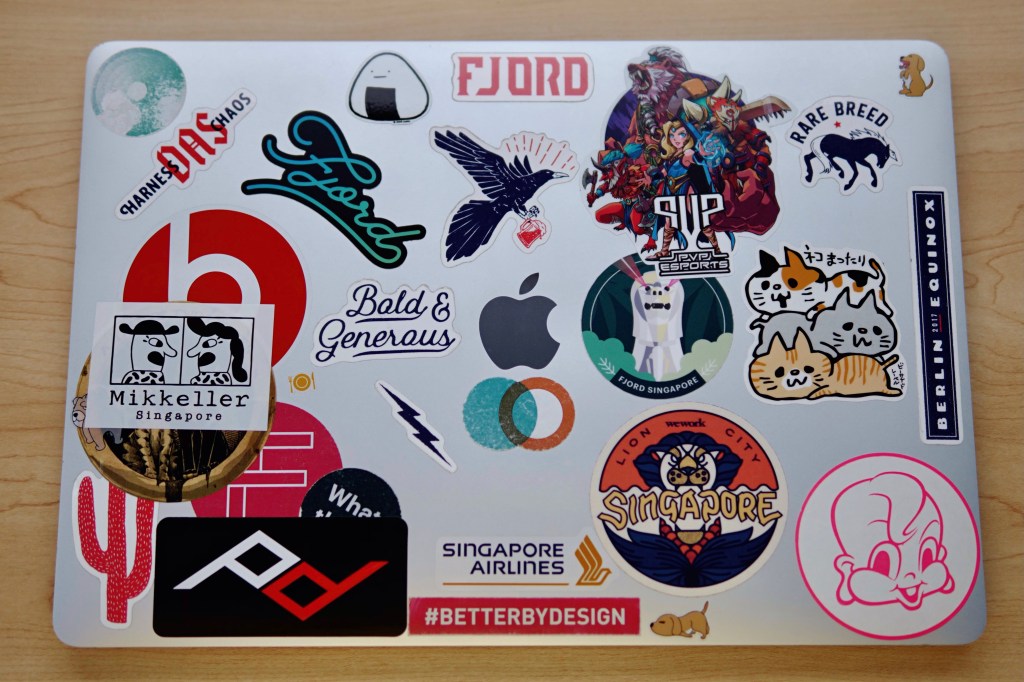
Goodbye, 2016 MacBook Pro
In large companies, you measure time by project and work-based milestones, sure, but the mandatory password change pop-ups and automated ‘congratulations on your anniversary’ emails are also sure ways to know you’ve been around for awhile. One of the strongest signals of this sort is the New Laptop Ritual, which tends to happen once every three years, depending on the nature of the job and generosity (is this really the right word?) of your employer.
My laptop replacement was due at the beginning of the year, but I put it off because I was sick of lugging a 15” MBP around to external meetings, and thought it’d be a smarter idea to wait for the 13” refresh with the improved keyboard when it came out in the middle of the year. Andddd then the pandemic hit, and we started working from home. Without an external monitor, a 13” screen would be pretty difficult for a lot of what we do now (Miro) to mitigate the constraints of remote work.
For what it’s worth, I never had any trouble with the keyboard, and it’s been a pretty dependable machine… up until the last few weeks, when the bottom started becoming uneven from what’s probably a battery bulge (!), and so it rocks slightly whenever I try to type on it. If this were a personal machine, it’d now be out of AppleCare and getting it fixed for free at the Apple Store might not be a sure thing, potential fire hazard or not.
So I’ve put in an order for a new 16” MBP which I’ll be picking up tomorrow, and saying goodbye to this sticker collection — always the hardest part of moving on from a laptop or iPad.
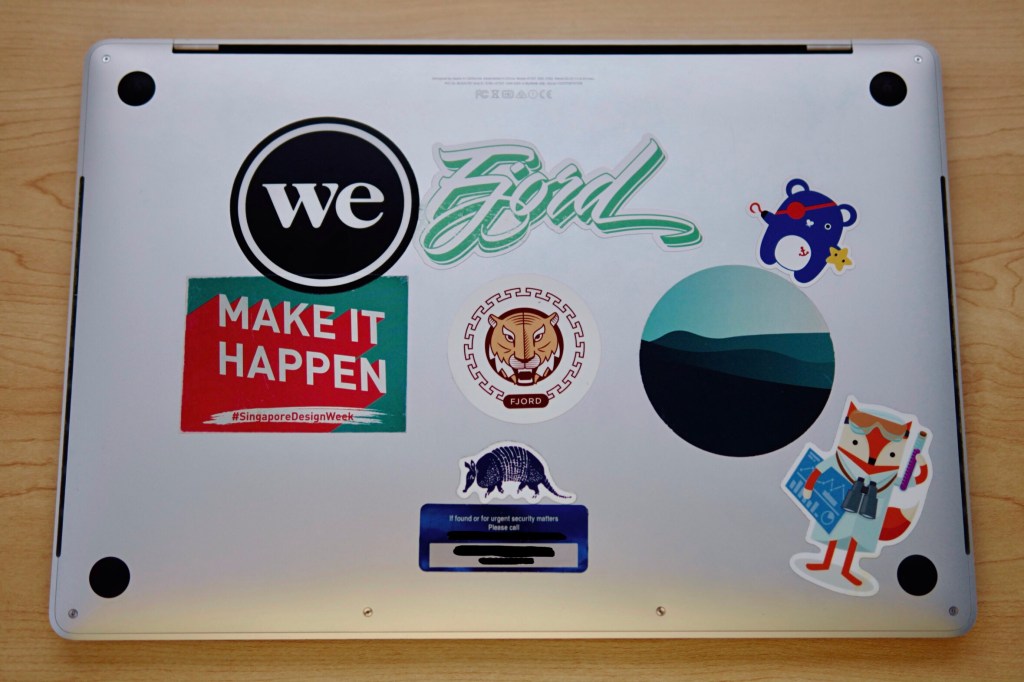
When I started running out of space on the top, I moved to the bottom. -
Week 27.20
- I’m pinching an idea from Michael Camilleri’s blog: what he calls Weeknotes. I like how the bullet format keeps things simple while the weekly cadence provides a structure that will hopefully mean I update more.
- There was some mild pain and inconvenience this week dealing with Apple over the phone for an iCloud Drive issue. My free space was 13GB less than what it was supposed to be. It’s sorted now and I wrote about it here, but little failures like this make it hard to rely on iCloud and move away from Dropbox and Google Drive.
- I was reading a lot a couple of weeks ago when I was on vacation (at home). I think I finished 9 novels in three weeks, including 1Q84 which comes close to about a thousand pages. Then I went back to work and simultaneously started on the massive Cryptonomicon, the combined effect of which has put the brakes on my Goodreads progress. Maybe because the last few things I read were mindless Jack Reacher novels, this one was an exhilarating change of pace. I’m still astonished a mere human being sat down and created something this wild, violent, complex, and also funny. I finally finished it this weekend and can’t imagine what to follow it with.
- I’ve written too much about HEY already, but you know you’re all-in on a new email address when you change your main daily logins and usernames over to it. That’s now been done.
- On the subject of email, my mom was cleaning up around the house and found some I’d sent her 20 years ago. How? She’d printed them out and kept them in a folder! She gets the last laugh, though. Not only did I forget even owning that old email address, I think all that pre-Gmail history is just gone; I don’t have any record of mails sent or received. If I had to guess, I used a hosted POP/IMAP server and a local mail client (maybe Eudora? Thunderbird?), so it was first lost during the move to Gmail — I don’t believe importing from elsewhere was supported, and I guess I’m fragmenting my email history again now by moving to HEY — and then totally lost during a PC transition. How do we still not have a universal personal data vault solution?
- Unsplash gets photographers to give their work away for exposure — a deal that never goes out of style in the creative industry. But so many have volunteered to do it that the site is now a very useful resource for people looking for free images. I often use it when I need photography for presentations, and I‘m familiar enough with some of the best photos to recognize them popping up in other people’s decks.
Since I haven’t sold any of my photos for money in quite awhile, and the idea of seeing otherwise unused photos appear someday in someone else’s deck seemed like fun, I’ve now become part of the problem. I trickled four photos in over six days, and they’ve already been viewed 3,000 times. I suppose I’ll keep going. - I switched mobile providers after a year and a half with Circles. I’m still amazed at how easy it is now, and how bad things were before. You just sign up online and someone shows up at your door the next day with a SIM card! Your number is automatically ported the day after! Used to be you had to go to a store and sign many papers and wait a week, and occasionally even call your old telco to break up with them. Not to mention contracts are out of fashion. Progress. Since working from home, I’ve barely used any mobile data since there’s WiFi. I’m sure it’s one reason why I was able to find a more generous deal on the market. They’re probably happy to hand out massive data allowances now that most people aren’t going to use them.
- On Friday night we went to hang out with a friend who lives down the street, and her kids stayed up with us as an excuse to play more Animal Crossing Pocket Camp and Minecraft. It was nice to see them tapping around proficiently and being engrossed in designing worlds. Even at the age of six! Lego has its limits, and we couldn’t work with dream material in such a direct way when we were kids.
- Season 2 of Hanna is out on Amazon Prime Video. Seems like this time it’s not just one coming of age story, it’s a genetically modified school of them. I saw the first two episodes last night and the fight scenes were so clumsy, it broke the elite assassins world-building for me.
- It was the Chinese Dragon Boat Festival recently, but I prefer its other name, the Dumpling Festival, because come on, that’s really the part we all care about. I’ve always known these pyramid-shaped rice clumps as Bak Zhang/Chang, but I guess they’re also known as Zong Zi. They look awful but are mad good, and I can’t think of a taste reference point in the world so you’ll just have to try and get some. I spent nearly an hour on Tuesday trying to find a good delivery option while salivating wildly, and eventually managed to catch the Kim Choo Kueh Chang company’s online store in a good mood (if it’s down, try, try again).

I looked for a good chart to help explain Bak Chang, but you’ll have to make do with this low-res copy someone sent me. I couldn’t even find it on on Tidbits Mag’s own website. -

Continue Apple Arcade? 9… 8… 7…
It was with some dismay that I read Apple Arcade is looking to change up their curatorial strategy, and cancelled some games in the process. Hopefully the affected developers will be able to fund and continue their projects via Kickstarter or something.
What made the service so refreshing at the start was its dedication to art and quality, stickiness and engagement metrics be damned. You paid a subscription fee, and got access to a peaceful library of games that didn’t try to milk wallet-attached endorphins out of your brain. We got delightful little experiences like Assemble with Care and WHAT THE GOLF?, and I stuck around on the promise that we’d get a steady stream of those. Well, it seems that train has stopped because somebody upstairs wants more addictive games that will keep people subscribed past the free trial.
One example of what Apple wants, according to Bloomberg, is Grindstone. I personally love it; a fun pick-up-and-play puzzler, and an evergreen game you could easily be playing years from now. But not every game needs to be a Grindstone, and there’s only room for one or two Grindstones in my life at any time. These are games you use to soak up free time, go-to icons for when a moment appears while in line for something, or on the bus. There are plenty of them already on the App Store, so Apple Arcade should supply a breadth of other experiences.
I see the potential of Apple Arcade as analogous to the Apple TV+ strategy : quality over quantity, unique visions only. A change of course so soon comes across as a lack of courage. It’s a long game, so to speak. If people aren’t staying past the trial, maybe they’re not reaching enough of the right people who’ll be their early adopters. Even Airpods didn’t take off immediately.
-
iCloud Drive and Calibre compatibility
About 7 years ago, I wrote a post about how the ebook library management app Calibre can contribute to problems with Amazon Kindle e-readers: it basically screws their battery life. I detailed a workaround for it, and to this day, I still get visits to that page, so neither Calibre nor Amazon must have gotten around to fixing it.
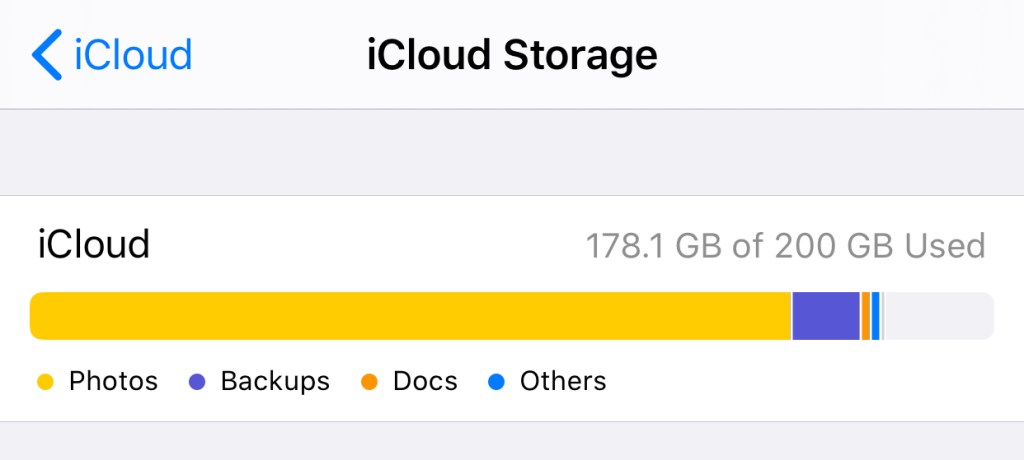
At one point, I had a large orange chunk on the bar above dedicated to “Documents” that weren’t actually there. I now have a suspicion that Calibre also causes problems with iCloud Drive, so I’m leaving this here for anyone it might affect. Some scenarios for the search engines below:
- If you store your Calibre Library folder on iCloud Drive, and have noticed that your remaining space does not reflect the storage you’re using, this is for you.
- If you have deleted files on iCloud Drive but find that the free space reported by iCloud.com or your device does not immediately update to reflect the deletion, or…
- If you have removed everything on iCloud Drive but still find space allocated to “Documents” in the “Manage Storage” section of iCloud settings on your iPhone/iPad — in other words, if you expect to have free space, and have done everything including a check of the “Recently Deleted” area and emptied your Recycle Bin, but the amount of free space is still inaccurate, I know that feeling.
This seems to happen to a lot of people, perhaps for other reasons, but it happens. Skip ahead to “Is it you, Calibre?” if you just want my conclusion.
So here’s my experience. A couple of years ago, I had this issue, and had to call Apple Support. It took several calls to resolve, because they wanted me to sign out of iCloud on every device (not an insignificant hassle with multiple devices), and when that established that the issue was on their servers, it had to be escalated to Engineering, and the eventual fix was they wiped everything on my Drive and reset it. I had to backup all my files locally (requires a Mac!) first. I believe I still suffered some data loss.
After that, it was all good, but my confidence in iCloud Drive was shaken, and I didn’t want to use it as storage for anything important. Every year since then, they’ve made enhancements to iCloud Drive, and to the Files.app on iOS, which has made me slowly more willing to embrace it again as a cloud file system worthy of My Stuff.
And then this happened again. 13GB of space just wouldn’t come back after I’d deleted files. The files were gone, the space was not reclaimed. After putting it off for two weeks, I got on the phone with Apple again, and two calls later, they managed to “repair” my Drive using some standard tools they have (Engineering was not involved this time). So, a slightly better experience than before.
Is it you, Calibre?
I’ll say upfront that this is a hunch. I don’t have the strength anymore to experiment on my iCloud account and conclusively prove anything.
Both times this happened to my iCloud Drive, I was using it quite “normally”. Nothing fancy, except that my Calibre Library folder was on it, and I knew that the Calibre app was actively updating files on it whenever I added/removed ebooks. This last time, the problem appeared after I’d deleted a ton of files THROUGH Calibre, and as best I can recall, a similar situation took place years ago.
With the Amazon Kindle problem, there’s something about the way that Calibre writes files to the Kindle’s drive that causes it. In other words, Calibre (which is a sluggish cross-platform app that behaves in a very non-Maclike way) may have some non-standard ways of interacting with the OS and filesystem. I think the way that it writes/deletes files isn’t the same as if you manually dragged files around yourself via the Finder. It might be through some low-level UNIX operations, but this is where I’m out of my depth.
So it’s not a stretch to imagine that when you delete ebooks in Calibre, it deletes them from your drive in a way that may cause issues. Deletes them in a way that is invisible to iCloud, so it doesn’t know that the files are gone and it should give you the space back. On a local drive? It works fine, and that’s how it’s used by millions anyway. But on a weird aliased virtual cloud drive that Apple hacked together inside a folder called “Mobile Documents”? Maybe not fine!
Here’s what I’d suggest trying if you have this problem: move your Calibre Library off iCloud Drive. I’ve put mine on Dropbox and it seems fine. Do NOT put it on Google Drive. Call Apple, and have them repair or reset your drive. Some luck is required here, but they’re your only hope. Once you get your missing space back, don’t use Calibre with it again.
I’ll be here with crossed fingers too, waiting to see if this happens again.
-
Homework
In my last update here, three long months ago, I’d just set up a new WiFi system with enough reach to connect our largely neglected study, which gave me a new place to hang out and play music too loudly.
Shortly thereafter, I decided the acoustics of that room were too boomy for the Beolit speaker I’d put in, and picked up a little Sonos which can be tuned to suit the space (it’s much better).
Shortly thereafter, a measure of hell broke loose everywhere, which I don’t need to explain. In the tiny window before nationwide lockdown was called, my wife and I decided to celebrate our anniversary with a staycation since getting away was impossible. We booked ourselves in for a weekend, visited the buffets, had cocktails in the lounge, and sat by the pool that first day reading more news and feeling something in the wind.
Literally overnight, we saw the hotel reconfigure their club lounge for social distancing, cutting the capacity in half. With not much else to do but eat canapés and drink while watching the news, I distinctly recall the numbers then: 380,000 infections worldwide. Yesterday, I saw that number in the news again, for global deaths.
According to the log my teammates have been keeping, we started working from home in the third week of March, later than our other colleagues not attached to client projects at the time. For that period of about a week, showing up at a reduced occupancy office building/mall was surreal, recalling Ling Ma’s novel Severance, where the protagonist keeps going to work at her Manhattan office long after the city stops working, and we were glad when the call was made to not take any more chances.

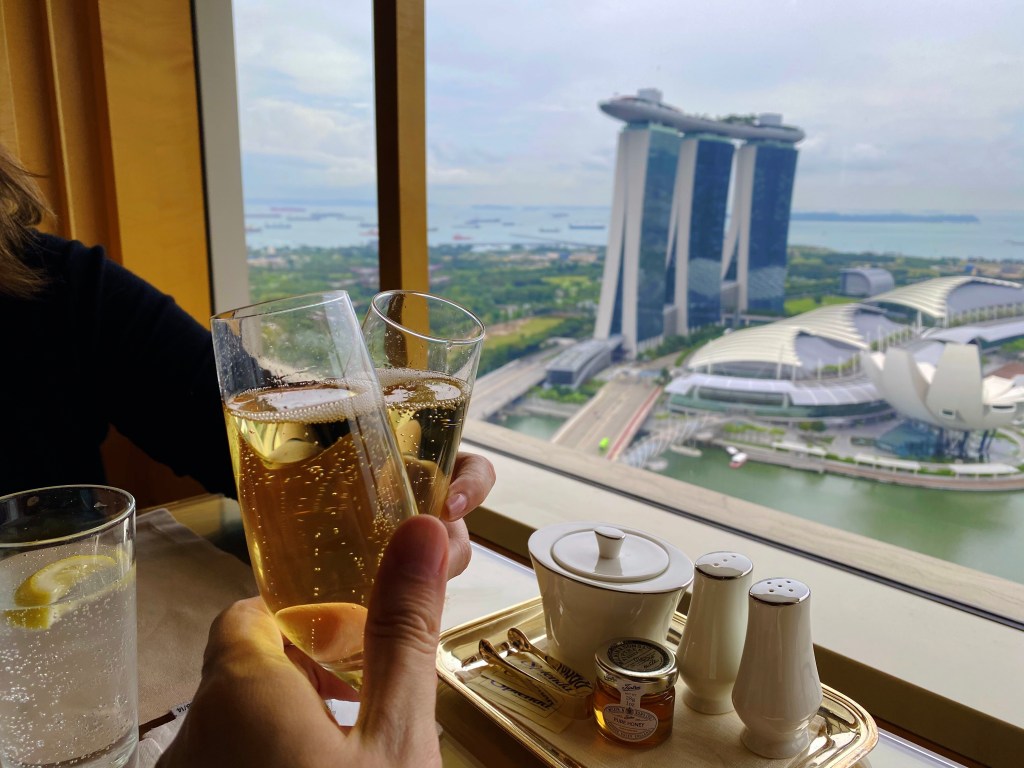
Clockwise from top-left: These stickers went up around the office shortly before a general WFH policy was declared; the last time we had a drink together at the bar after work, March 24; nobody thinks about staycations until you can’t have one That move to make our home study more usable/livable/enjoyable just before this hit, which on hindsight was just down to luck and the High Fidelity TV series, was probably the most well-timed decision I’ll make all year. It’s given me a separate workspace from my wife who’s taken to occupying the living room’s solar-facing counter. Given that we’re both on calls a lot now, if I had to be nearby for WiFi purposes, I think there’d be trouble.
A lot of what we do with clients and their customers in the business of design used to happen in person. Speaking with people, watching them at work, communicating ideas — it takes a lot of channels to supply the necessary bandwidth, from spoken words and scribblings on a board to body language and moving things around in space. It’s also true for many other professions, and is probably why many fantasize that VR will be the long-term answer in the event that there won’t be a vaccine, if we agree that plexiglass shields in the office aren’t a solution for getting back to work.
We started working from home on a Wednesday and had to figure out how we’d start interviewing people the very next day; interviews that were originally planned to be in-person conversations. For a bunch of reasons, it wasn’t as easy as sending a Zoom meeting link. We ended up keeping those sessions simple and voice only; better to get the basics right and extract some good data than get fancy and fuck it all up.
Two months later, between us and other teams across the studio, I think we’re beginning to see how many of the old activities can be done virtually. The next step will be to devise new activities that aren’t constrained by assumptions about how work should be done. Maybe we’ll go back, maybe we won’t. One thing about remote work of this sort, technology constraints (including literacy) have a huge impact on who you can involve and co-create with. Almost anyone can pick up a pen or gesture at a thing. Now try to get them to manipulate content on a Miro or Mural board using an aging laptop. Now try to get them doing it in VR. What’s the equivalent of a Post-It note for virtual work: the simplest, most flexible atom of a tool for thinking aloud with anyone? Texting in a group chat?
Otherwise, I’ve done some of the usual quarantine things. I’ve tried cutting my own hair (bought some clippers for it). I’ve been making cold brew coffee (bought a Hario bottle for it). We made that dalgona coffee one time but it was foul (
already hadturns out we actually bought the apocalypse-ready instant coffee for it). I’ve been making more cocktails and drinking IPAs at home instead of at the bar (bought the ingredients and ordered the cases, respectively). I’ve put on weight (bought a lot of takeout for it). I’ve been reading more (bought a Kobo reader for it). I’ve played upwards of 110 hours of Animal Crossing New Horizons (bought the game day one for it). Uh… having made that list, I am a little disgusted. Clearly, if life gives me lemons, I buy a juicer.

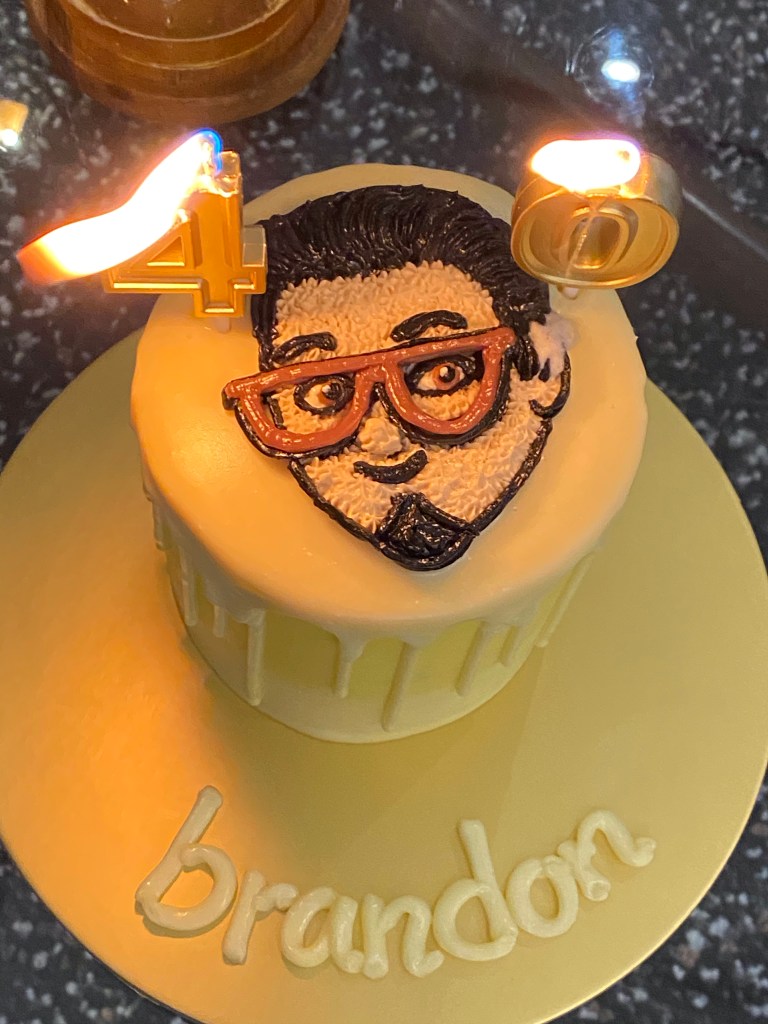
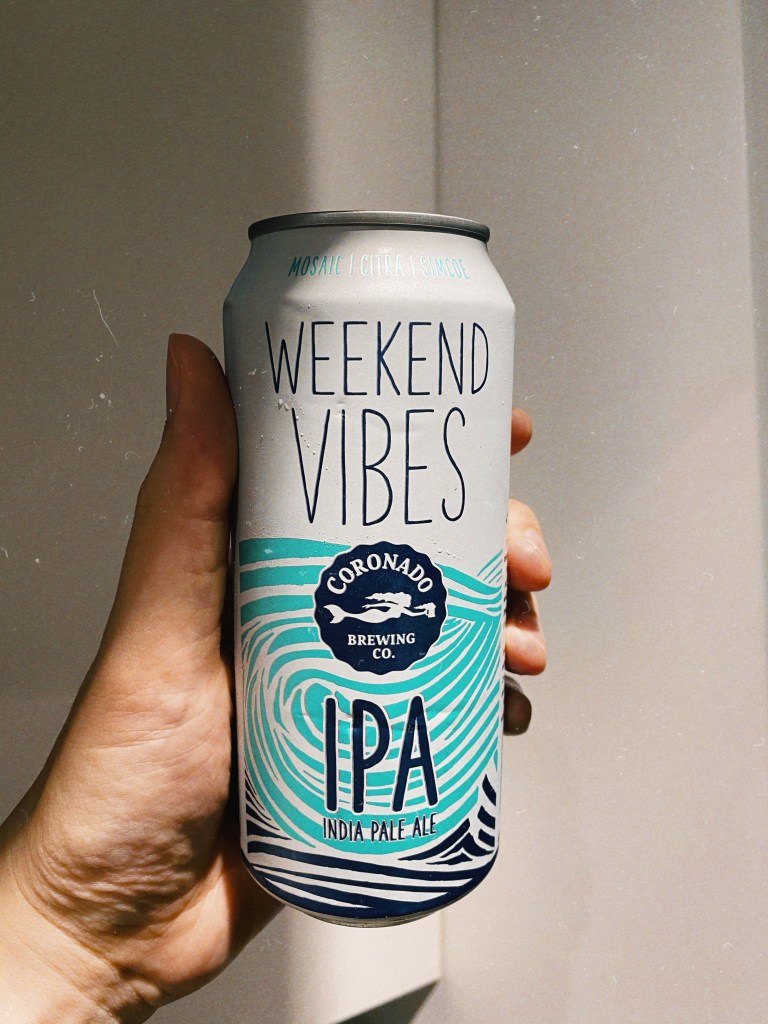
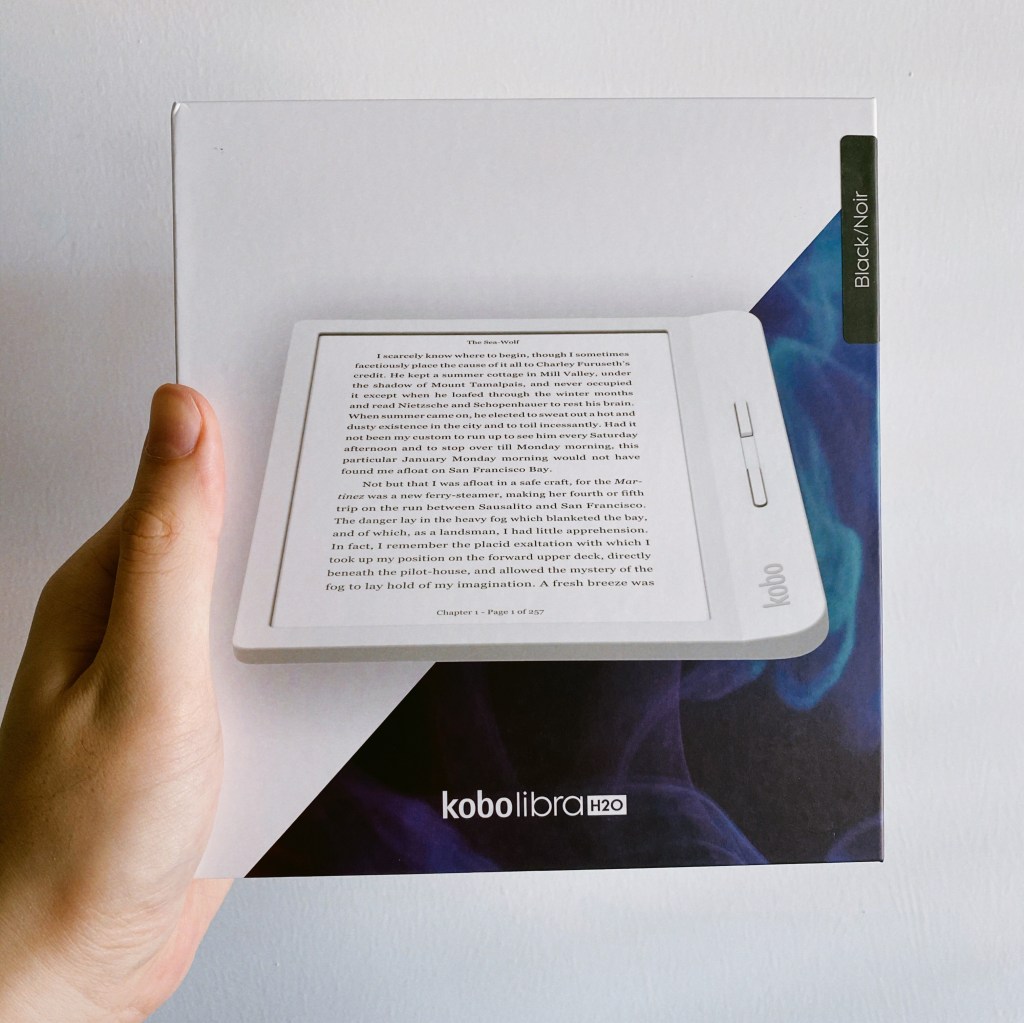
Clockwise from top-left: Meeting colleagues in Animal Crossing during our lunch break; that one time we whipped instant coffee and made a mess; pandemics tend to overshadow birthdays (no complaints); the Kobo Libra H2O can wirelessly borrow ebooks from the National Library; drinking the same beers but at home The national lockdown here in Singapore ends in name next Monday, but the cautious re-opening will surely take more than a couple of months. The first people to be allowed back into office buildings at first will be those who haven’t been able to do their jobs from home for legal or technical reasons, and I think it’ll be September before most white-collared types find out what their leaders think about ending the great WFH experiment vs. saving a ton on commercial rent.
Note: This post contains a couple of Amazon affiliate links, which I’m trying out… again? I have a vague memory of using them on a couple of my sites before.
-
Do androids dream of Chinese New Year?
Thanks to that bit of time off earlier in the month, I’m ahead of my reading goals. Nick Harkaway’s Gnomon was probably twice the length of a standard novel, and five times as elaborate. I was lured in by the SF premise — a murder in a panopticonic dystopian near future (it first occurs to me that it’s not unlike the one in the anime Psycho-Pass), where a governing AI and its human agents are stymied by an encounter with a mind they can’t read — and ended up staying for a literary mindfuck of Pynchonesque proportions. Recommended, but don’t be in a hurry.
I’ve now started reading Mike Monteiro’s Ruined by Design, and can’t wait to get started on the new William Gibson novel, Agency. I think my favorite Gibsons are Pattern Recognition and The Peripheral, and this seems to be along similar lines.
===
It’s now a few days later and I’ve quit reading Ruined by Design. It’s not that I disagree with the central premise; maybe the opposite. There are certainly designers in the world who don’t think or yet know that changing their organizations from the inside-out to be more ethical and responsible is part of the job, and maybe it takes a couple hundred pages of hitting the point over and over to get them onboard. I just stopped getting anything else out of it past the opening, and stuck around until the 70% mark to be sure. The author mentions structuring your presentations like an inverted pyramid, the way journalists are trained to do, leading with your best bits to get your audience’s precious attention, so I guess the book itself puts that into practice.
===
This year’s Chinese New Year celebrations have been a little muted, both at home and abroad. Putting aside the nCoV outbreak in the headlines, it just feels different now, like an idea that has almost run its course. The build up to this has taken place over a few years, but it’s certainly palpable now.
My parents’ generation is getting tired of organizing everything, and mine doesn’t care about observing traditions in the same way. The virus has provided a reason for canceling some of the get-togethers, but they were being scaled down anyway. Even Apple’s annual CNY shot-on-iPhone film/ad lacks its usual artistry this time around. I don’t know if it’s the 60fps look, the fact that they shot many scenes handheld, or the Smart HDR effect, but it feels more on the cheap side rather than cinematic.
Speaking of change and the fading of old ways, over at my workplace, we’ve just put out our annual trends report. It’s compiled with the input of some 1,200 employees in 33 studios, so the results should be a nearly fair representation of the global design climate. The running theme across all seven trends? Many of the fundamentals underlying daily life are being put on notice as we ponder the definition of value as consumers and consumed in an increasingly turbulent world.
One trend, called Digital Doubles, touches upon the idea of personal datasets so rich that we’ll appoint them as digital proxies for our own choices and behaviors, sort of like how you can tell a robo-advisor how much risk you’d happily tolerate before letting them go trade and rebalance your portfolios. At this point, I’m several chapters into Gibson’s Agency and one of its main threads concerns an AI product designed to do exactly that.
“but he described the product, that’s you, as a cross-platform, individually user-based, autonomous avatar. Target demographic power-uses VR, AR, gaming, next-level social media. Idea’s to sell a single unique super-avatar. Kind of a digital mini-self, able to fill in when the user can’t be online.”
 sangsara.net