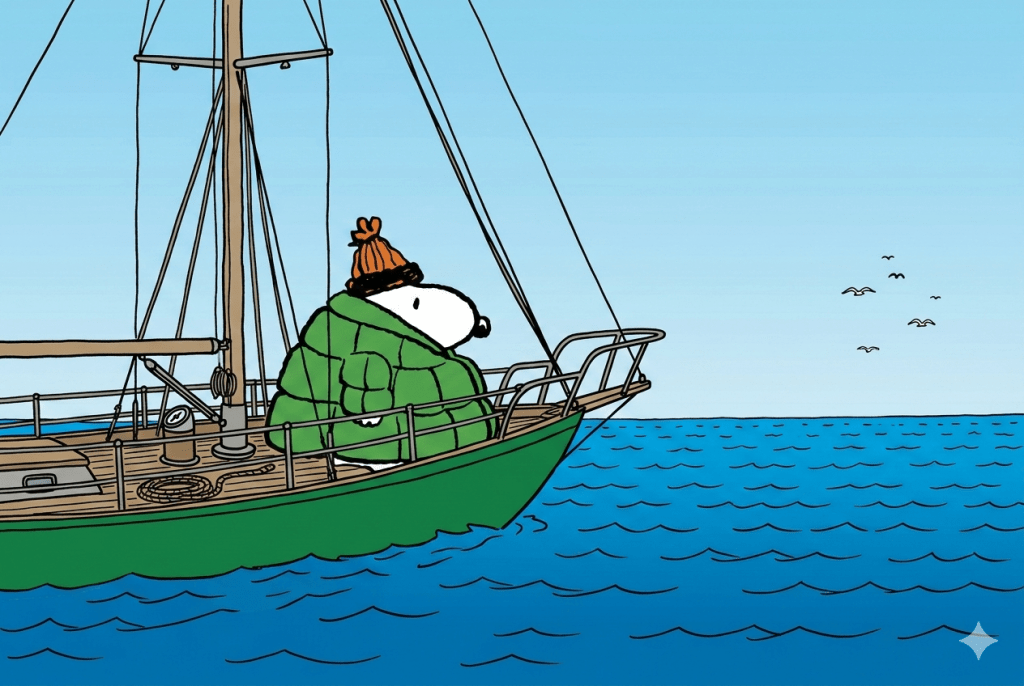
- The featured image above is the result of having Geese’s Au Pays du Cocaine in my head all day. The line about a sailor in a big green boat and a big green coat made me think of Puffer Jacket Snoopy, and of course I had to realize the joke.
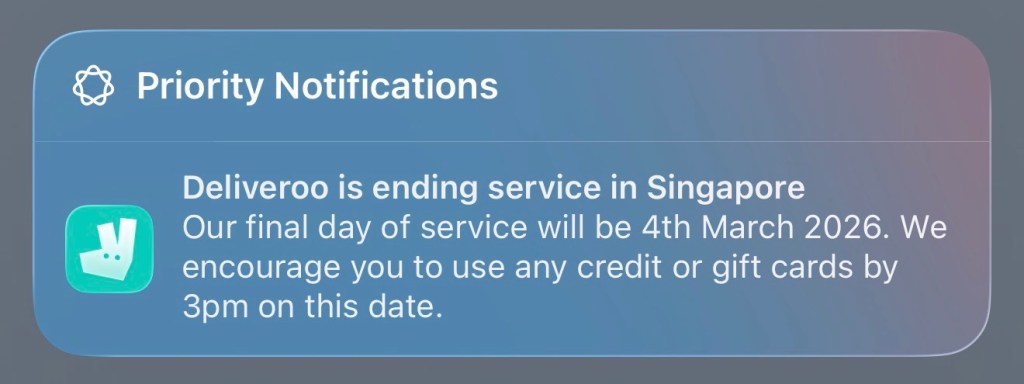
- We got the sad news that Deliveroo is shutting down operations in Singapore. This comes on the back of an acquisition by DoorDash who must have run the numbers and decided that a 7% share of the local food delivery market after a decade wasn’t worth investing further in. We use it all the time and prefer it over Grab and Foodpanda — it is by far the better app and their subscription service is better value for money, but we’ve seen this movie before. It’s like how Uber lost out to Grab; the market doesn’t always choose efficiently.
- I will probably switch to Foodpanda because Grab as a brand has the same icky halo as, say, Facebook or Spotify.
- Google released Nano Banana 2, the new version of their hit image generation model. This one is cheaper to run and kind of almost as good as Nano Banana Pro, so they’re making it the default for everyone. Paid users can still access the Pro model, but it’s hidden behind some menus. It’s a regression in quality, a slight improvement in speed, and most importantly, a boost to Google’s bottom line. Since I only do silly things with these tools, it doesn’t bother me tremendously, but imagine the same happening at an enterprise level for more important work.
- One of the new things Nano Banana 2 can do is generate very wide panoramic images, so I asked it to render some “panoramas taken with an iPhone” in various locations. I then upscaled those and opened them in my Apple Vision Pro. They don’t have the photorealistic quality of images from Nano Banana Pro, and the resolution leaves a lot to be desired, but they’re still immersive and impressive when viewed in this way. You can see where this might go.
- There’s been a lot of talk lately about how AI vibe coding could upend the SaaS market, if not replacing dependable enterprise tools with individually created ones, then at least giving IT departments a billion more unapproved apps to worry about. A viral essay from last week posited that AI coding could kill DoorDash, though I’d say they did a good job of that themselves out here. The other oft-discussed idea is that AI could replace the App Store, and everyone will just make their own apps instead of buying them from developers. Michael has been blogging about vibe-coding his own to-do list app based on Clear. I’ve been wanting to try this myself, making more little tools of my own to solve niche problems, but the opportunities have been slow to materialize.
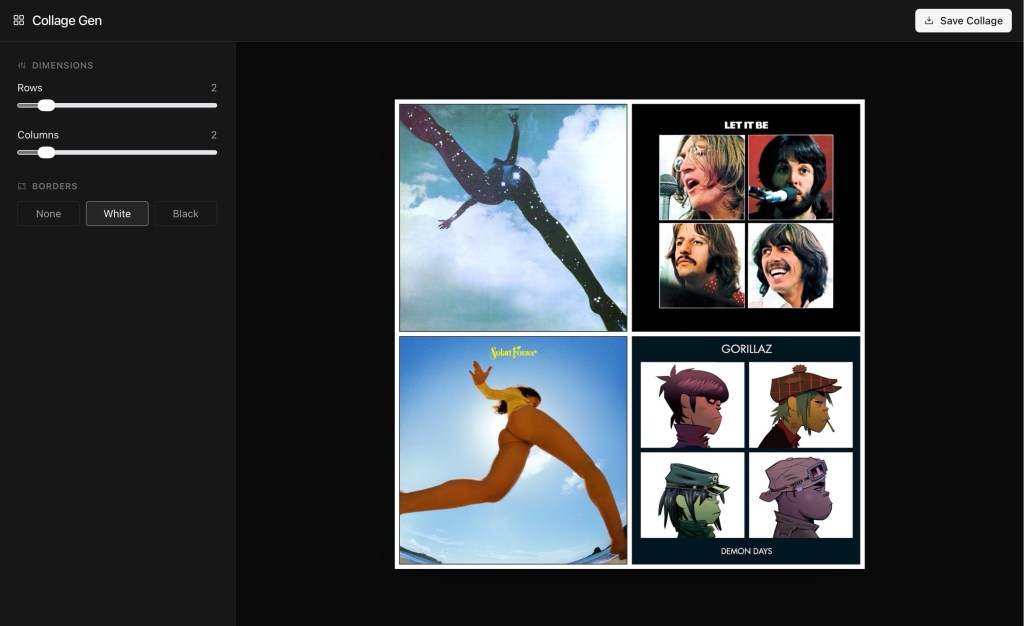
- This week the right idea presented itself and I made a web app using Gemini: an album cover collage maker that searches for the artwork or lets you upload your own. I’ve looked online for something like this before but only found a few that were quite lacking. Making one to my own specifications took maybe five minutes of prompting and testing. Then I thought it would be nice if you could drag the images to different locations. Gemini added that feature like it was nothing. I’m pretty hyped that even someone like me with zero current coding knowledge could will this into existence. If you’d like to try it, I’ve deployed it at usecollagen.netlify.app.
- Otherwise it was a sort of decompression week where I just read a lot, listened to the records I bought/ordered last week, and was regrettably glued to my phone watching day trading losses (Chekhov’s gun has fired!) and social media feeds.
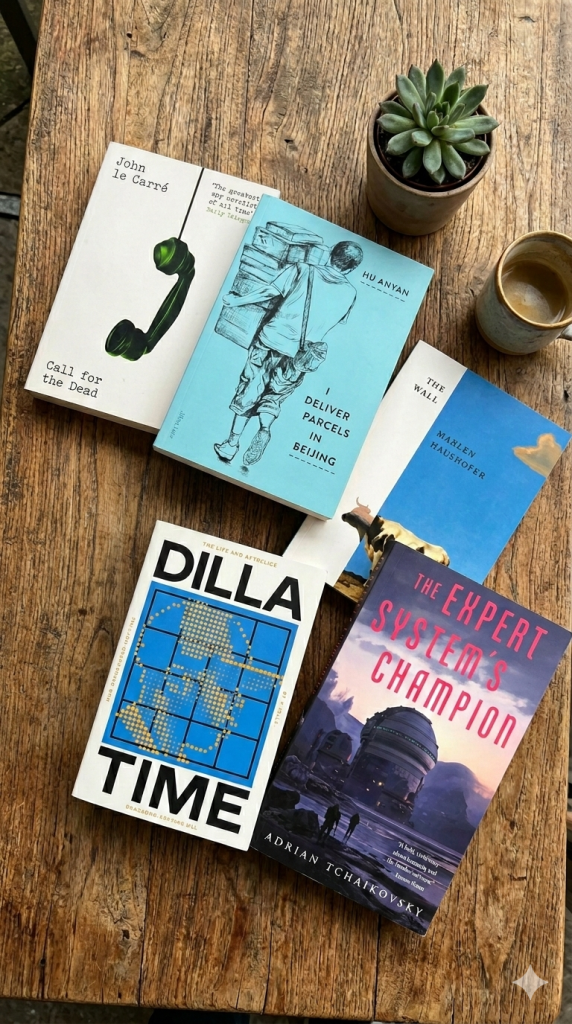
- It took a couple weeks of dawdling but I finished John Le Carré’s Call for the Dead, his first novel featuring the spy George Smiley. I may continue reading the series, seeing as his son Nick Harkaway (whose work I really enjoy) has decided to continue his father’s legacy and written one more already: Karla’s Choice. This one was a little dated and not particularly thrilling, but a fine introduction and scene setter.
- It was immediately followed by Adrian Tchaikovsky’s The Expert System’s Champion, sequel to The Expert System’s Brother which I read at the end of last year. I recommend both as examples of sci-fi stories set so far in the future that humanity has looped back around to the beginning. It reminds me of the “middle chapter” in Cloud Atlas, if you remember that.
- Then I read Hu Anyan’s I Deliver Parcels in Beijing, a modern memoir that reportedly did well in China when it came out in 2022. It details the author’s dual career as a writer and on-and-off gig economy worker, which is made more interesting by also being a portrait of what it’s like to live in the lower brackets of Chinese society today.
- I also had time to tackle Rob’s recommendation of Marlen Haushofer’s The Wall, which was written in the 1960s but doesn’t feel that way, unlike Le Carré’s spy novels. He called it the best book he read last year, so I could hardly say no. It starts off like an intriguing sci-fi novel: a woman visiting friends in the Austrian alps wakes up one morning in the log cabin to discover she’s alone, and there’s an invisible wall separating her from the outside world. Things then focus on survival and what it means to live and be human in solitude, and in nature. Which, given that I’ll be home alone next week while Kim is away again for work, means I’m already in the appropriate headspace.


Leave a comment